


| IN A NUTSHELL |
|
Researchers at the University of Southern California have developed an artificial intelligence model capable of proposing solutions to slow down climate change. Among its most promising findings is a type of concrete that can absorb carbon dioxide (CO₂). While AI has been useful for everyday tasks like organizing vacations or drafting emails, its potential extends to addressing complex global challenges. The USC team hopes their creation, Allegro-FM, which simulates over 4 billion atoms in real-time, will advance efforts to combat climate change. With an accuracy rate of 97.5%, this AI model can virtually test thousands of formulations before any real-world prototyping occurs.
The AI Revolution in Concrete Formulation
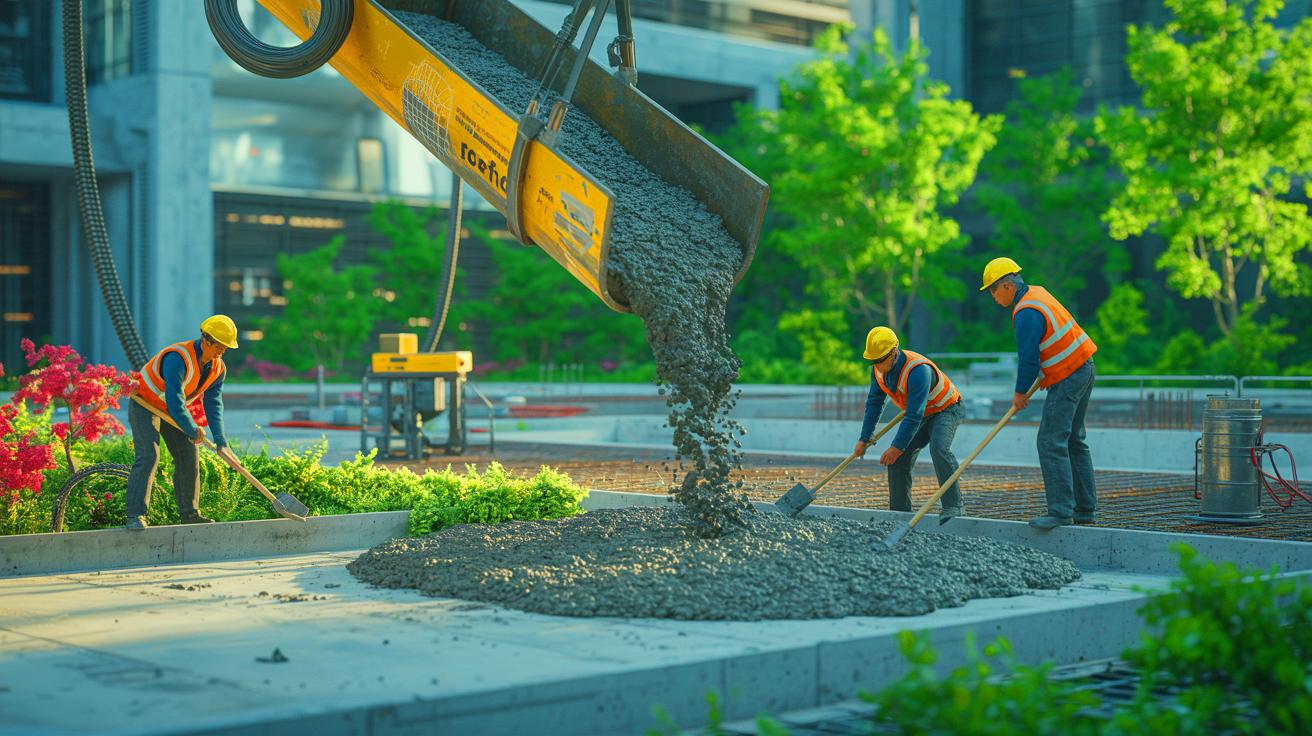
Using Allegro-FM to conduct numerous simulations, USC researchers have identified carbon-neutral concrete formulations. This innovative concrete absorbs the CO₂ released during its production, effectively storing the gas and enhancing the material’s strength. “You can simply put the CO₂ inside the concrete, and then it makes carbon-neutral concrete,” explains Aiichiro Nakano, a professor of computer science, physics, and astronomy at USC. Given that traditional concrete manufacturing is a significant CO₂ emitter, this approach offers a substantial ecological benefit. Moreover, this solution could extend the lifespan of modern concrete, which currently lasts about 100 years, far less than ancient “Roman concrete,” which has endured for over 2,000 years.
The implications of this discovery are profound, as it not only suggests a way to mitigate the environmental impact of construction but also enhances the durability of the materials we use. By reusing CO₂ efficiently, this concrete could set a new standard in sustainable building practices. The potential for such a material to transform the construction industry lies in its ability to reduce emissions while maintaining, or even improving, structural integrity.
The Challenge of Moving from Theory to Practice
Despite these potentially groundbreaking advancements, they remain theoretical for now. Developing zero-carbon concrete is not an overnight process, even with AI capable of predicting the molecular behavior of 89 chemical elements. The USC researchers must now conduct practical tests to validate the mechanical strength, confirm long-term CO₂ sequestration, and determine the cost-effectiveness compared to existing market options. If the concrete is confirmed to be environmentally beneficial, it may still take years before it is commercially available and widely used.
This period of testing and validation is crucial. It will determine whether the theoretical advantages of this new concrete can be realized in practice. The economic implications are also significant, as the cost of producing such advanced materials must be balanced against their environmental benefits. This stage of development will require close collaboration between scientists, industry leaders, and policymakers to ensure that the transition from theory to market reality is feasible and sustainable.
AI’s Role in Combating Climate Change
Despite the challenges, this discovery highlights the potential of artificial intelligence as an effective tool for addressing climate change. AI’s ability to simulate complex chemical interactions allows scientists to explore solutions that were previously unimaginable. The creation of carbon-neutral concrete is just one example of how AI can contribute to environmental sustainability. The question now is how humans can translate these theoretical advancements into practical applications.
The potential for AI to drive significant environmental change is immense. By automating and accelerating the research process, AI enables scientists to focus on the most promising solutions quickly. However, technology alone cannot solve climate change. It requires human ingenuity and determination to implement these solutions effectively, ensuring that they are viable and scalable in the real world.
Economic and Environmental Impacts
The introduction of carbon-neutral concrete could have far-reaching economic and environmental impacts. On the economic front, the challenge lies in making this innovative material cost-competitive with traditional concrete. The initial costs of research and development could be significant, but the long-term savings from reduced carbon emissions and increased durability could offset these expenses.
Environmentally, the widespread use of carbon-neutral concrete could dramatically reduce the construction industry’s carbon footprint. By transforming one of the most polluting materials into a carbon sink, this innovation could play a crucial role in global efforts to mitigate climate change. The potential benefits extend beyond construction, influencing policy decisions and encouraging further investment in green technologies.
The development of carbon-neutral concrete represents a significant step forward in the fight against climate change. As researchers continue to explore its potential, the question remains: how will industries and governments collaborate to bring this innovation from the lab to the market? The answer could define the future of sustainable construction and set a precedent for integrating cutting-edge technology with environmental stewardship.