




| IN A NUTSHELL |
|
In the realm of hygiene innovation, a new technology named Q-Field is capturing attention for its potential to revolutionize cleanliness in healthcare and residential environments. Unlike traditional methods that rely on harsh chemicals or biocides, Q-Field employs a photocatalytic process activated by ordinary indoor light. This sophisticated coating offers continuous antimicrobial protection by disrupting bacteria, viruses, and mold at a microscopic level. As a result, it promises to maintain cleaner surfaces and air quality without the need for constant manual intervention. This article delves into how Q-Field stands apart from existing solutions and examines its practical applications and benefits.
The Science Behind Q-Field: Photocatalysis Explained
At the heart of Q-Field’s technology is a process known as photocatalysis. This involves the use of light to activate semiconductors within the coating, which then produce reactive molecules capable of breaking down harmful microbes. Unlike older technologies that required ultraviolet (UV) light, Q-Field is engineered to function under visible light, such as the standard LED or fluorescent lights found in most indoor spaces. This allows it to be effective without the need for additional lighting infrastructure.
The coating acts like a self-cleaning surface, constantly working to reduce microbial load. Traditional cleaning methods provide a momentary solution, but Q-Field offers a continuous approach, ensuring surfaces remain hygienic 24/7. This technology is particularly valuable in environments where maintaining cleanliness is critical, such as hospitals and care homes.
Functionality in Darkness: The Residual Effect
One of the standout features of Q-Field is its ability to maintain antimicrobial activity even in the absence of light. During the day, the coating “charges” by storing energy from light exposure. This stored energy continues to provide antimicrobial effects through the night, ensuring persistent protection. This is particularly beneficial in settings where constant lighting is impractical, such as patient rooms in hospitals during the night.
This residual effect is achieved through a unique surface chemistry that traps reactive species even after the lights go out. The result is a surface that remains less hospitable to microbes, reducing the risk of contamination outside regular cleaning schedules.
Differentiation from Traditional Antimicrobial Coatings
Traditional antimicrobial paints and coatings often rely on chemical agents like silver or quaternary ammonium compounds. While effective, these can raise concerns about long-term safety, environmental impact, and the development of resistant strains of microbes. In contrast, Q-Field avoids these issues by using a non-leaching, light-driven approach.
The absence of harsh chemical additives makes Q-Field safer for both humans and the environment. By employing a purely physical mechanism, it minimizes the risk of creating resistant microbial strains while offering a sustainable solution for maintaining hygiene.
Practical Applications and Benefits
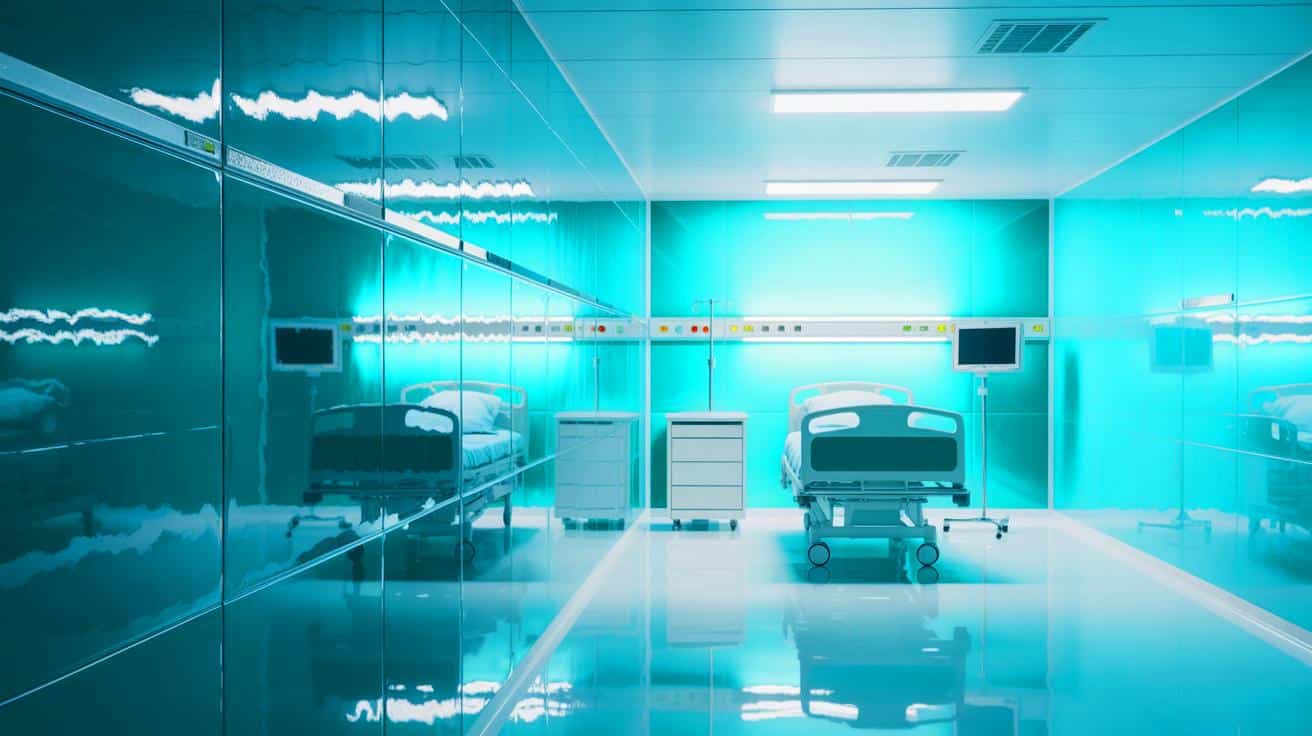
Q-Field’s versatility makes it suitable for a wide range of settings. In hospitals, it can be applied to high-touch areas such as bed rails and door handles, providing continuous microbial suppression. In care homes, it offers an additional layer of protection for residents, many of whom are vulnerable to infections. Dental and veterinary clinics can also benefit from its ability to keep surfaces cleaner between appointments.
Beyond healthcare, Q-Field is valuable in any environment where hygiene is a priority. By breaking down organic films and disrupting mold spores, it helps maintain cleaner air and surfaces, reducing the burden on cleaning staff and enhancing overall safety.
Evidence and Validation
Research supports the efficacy of visible-light photocatalysis, with numerous studies demonstrating its ability to inactivate bacteria and viruses under ordinary indoor light conditions. In hospital settings, trials have shown significant reductions in microbial contamination on treated surfaces, highlighting its potential as a valuable adjunct to traditional cleaning protocols.
Field trials have also reported long-term reductions in pathogen presence on patient-care surfaces after the application of photocatalytic coatings. Such findings underscore the practical benefits of Q-Field in real-world environments, offering a credible solution for reducing infection risks.
As technology continues to evolve, solutions like Q-Field illustrate the potential for innovation to enhance everyday hygiene practices. By offering continuous antimicrobial protection without the drawbacks of chemical agents, Q-Field represents a significant advancement in maintaining cleaner, safer environments. The question remains: how will this technology be integrated into broader infection control strategies, and what impact will it have on public health outcomes in the long term?