



| IN A NUTSHELL |
|
Astronomers have recently observed a celestial phenomenon that challenges our understanding of planetary formation. A rogue planet, identified as Cha 1107-7626, is consuming material at an unprecedented rate, offering scientists new insights into the evolution of such isolated worlds. This intriguing discovery comes from the University of St Andrews, where researchers have documented the most rapid planetary growth rate ever recorded. The findings not only shed light on the development of rogue planets but also blur the lines between stars and planets, suggesting a shared formation process. This article explores the implications of these findings and what they mean for the future of astronomy.
Catching a Cosmic Eater in the Act
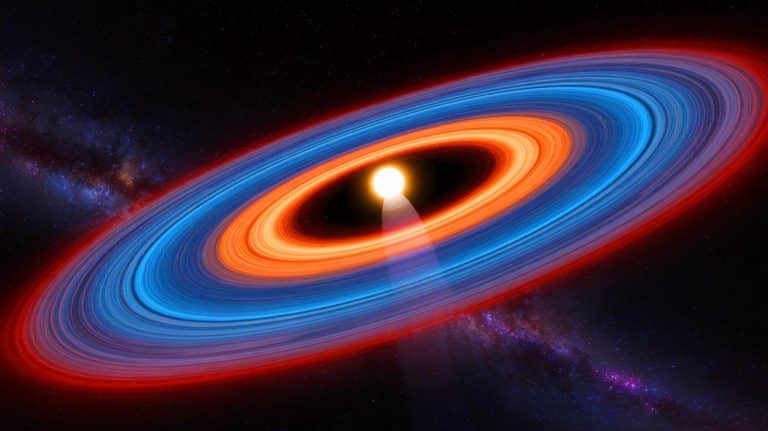
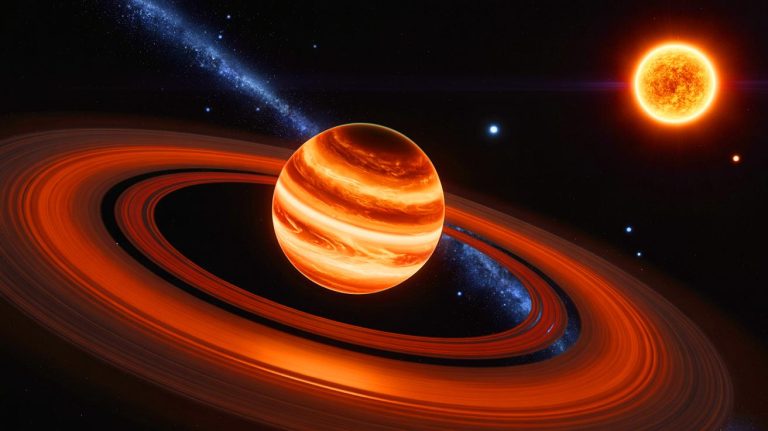
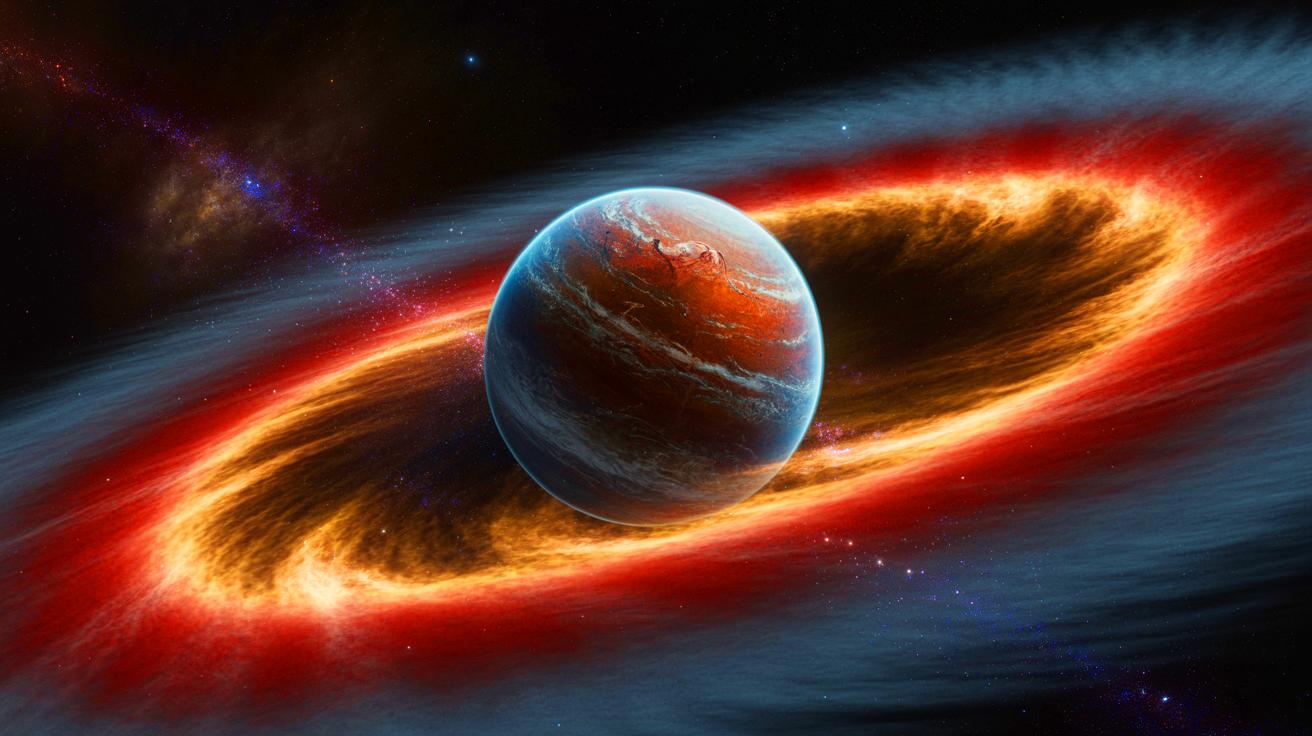
Located about 620 light-years away in the constellation of Chamaeleon, the rogue planet Cha 1107-7626 is an enormous entity, estimated to be five to ten times the mass of Jupiter. Unlike our solar system’s planets, this rogue planet floats freely through the cold expanse of interstellar space, yet it is not entirely isolated. The planet is still forming, enveloped by a dense disc of gas and dust that fuels its growth.
An international team of astronomers utilized the powerful X-shooter spectrograph on the European Southern Observatory’s Very Large Telescope in Chile to study this planetary growth. Their observations have revealed a sudden and explosive increase in the planet’s accretion rate. Material began falling onto the planet at a staggering six billion tonnes per second, a rate that is eight times faster than previously observed just a few months earlier.
This discovery marks a significant milestone in understanding how these cosmic wanderers evolve over time. It provides a unique opportunity to witness a planetary formation in real-time, offering clues about the processes that govern the growth of such isolated worlds.
Blurring the Line Between Stars and Planets
The discovery of Cha 1107-7626’s rapid growth does more than just document a planetary feeding frenzy; it challenges long-held beliefs about how celestial bodies form. The origin of free-floating planets has been a mystery: are they failed stars, or were they ejected from their native solar systems?
The recent observations suggest that at least some rogue planets may form in ways remarkably similar to stars. This dramatic burst of accretion, a phenomenon typical of young stars, indicates a shared formation pathway. As a result, the traditional boundary separating planets from stars is becoming increasingly blurred.
Adding to this, the research team discovered that magnetic activity appears to be responsible for the planet’s massive intake of material. This marks the first time such a magnetic process has been observed in a planetary mass object. This finding suggests that even low-mass wanderers like rogue planets can generate substantial magnetic fields, further paralleling the characteristics of stars.
A Changing Chemical Signature
As researchers delved deeper into their findings, they uncovered another significant discovery. By analyzing the light emitted from the system before and during the accretion burst, they detected substantial chemical changes in the planet’s surrounding disc. Notably, water vapor was present during the intense feeding episode but was absent before.
This transient chemical signature, once thought to be exclusive to stars, offers new insight into the physical conditions surrounding a growing rogue planet. It paints a picture of a chaotic, evolving environment where rapid changes leave distinct chemical markers.
Understanding these chemical signatures is crucial for deciphering the complex processes that govern the formation and evolution of rogue planets. As astronomers continue to study these phenomena, they will gain a deeper understanding of the unique conditions that distinguish rogue planets from their star-bound counterparts.
The Future of Hunting Lonely Worlds
Studying free-floating planets is notoriously challenging due to their faintness and isolation. However, the future of this field is promising. The upcoming Extremely Large Telescope, set to be operational in the Atacama Desert, is anticipated to revolutionize our understanding of these enigmatic worlds.
With its massive mirror and advanced instruments, the Extremely Large Telescope will allow astronomers to hunt for and characterize many more rogue planets. Each new discovery will add a piece to the puzzle of how these lonely giants form and evolve.
“Each new discovery will help astronomers piece together the life story of rogue planets, finally answering the question of just how star-like these dark, wandering giants truly are.”
As we continue to explore these cosmic mysteries, the boundaries of our understanding will expand, offering a richer comprehension of our universe and its myriad inhabitants.
The recent observations of Cha 1107-7626 have opened new avenues for understanding rogue planets. As astronomers continue to explore these celestial phenomena, they will uncover further insights into the formation and evolution of isolated worlds. The potential for new discoveries is vast, and with advancing technology, we are on the brink of a deeper understanding of these cosmic mysteries. What other secrets do these wandering planets hold, and how will they reshape our understanding of the universe?