




| IN A NUTSHELL |
|
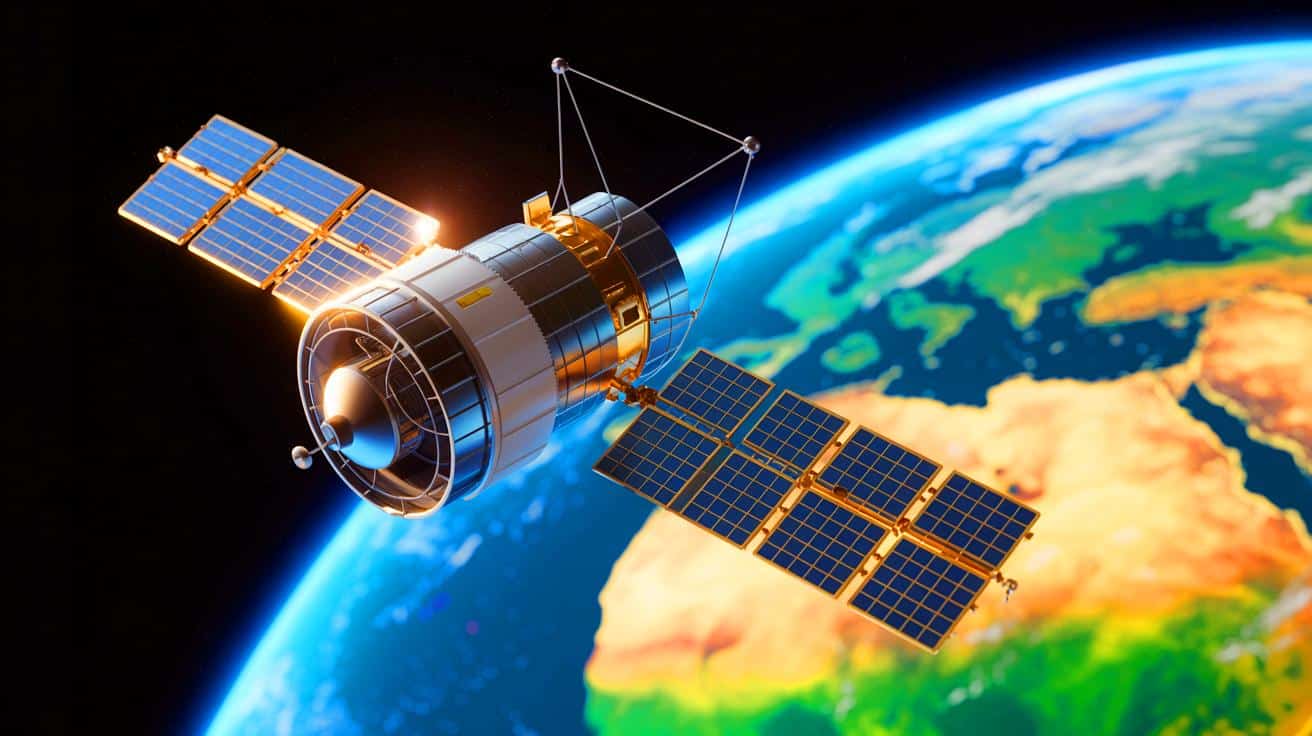
Amidst a rapidly evolving global landscape, the UK’s space sector has emerged as a beacon of innovation and growth. With the UK Space Conference taking place in Manchester, the nation is poised to elevate its status as a leader in satellite communications and space technology. The UK Space Agency’s recent announcements underscore the pivotal role of satellite communications in both economic development and national security. As the nation invests in cutting-edge projects and regional innovation, the conference serves as a testament to the UK’s commitment to fostering a robust space ecosystem.
Pioneering Satellite Communications for a New Era
The UK Space Agency’s recent unveiling of new investments marks a significant stride towards revolutionizing satellite communications. With a total funding of $5.5 million allocated to pioneering projects, the agency aims to push the boundaries of satellite-enabled 5G and 6G networks. This move is designed to enhance the UK’s capabilities in seamless connectivity and data services, which are crucial for the future.
Satellite communications have been recognized as one of five strategic space capabilities by the UK Government. This recognition is supported by figures showing the sector’s contribution of $454 billion, equivalent to 18% of the UK’s GDP. Projects like MDA Space UK’s SkyPhi mission and Orbit Fab’s radical in-orbit refueling tech highlight the UK’s dedication to cutting-edge advancements. These initiatives underscore the nation’s aspiration to lead in global connectivity and technological innovation.
Fostering Regional Growth and Innovation
Beyond technological advancements, the UK Space Agency is committed to nurturing regional innovation. With an additional $1.9 million investment, the agency aims to support the burgeoning network of space clusters across the UK. Manchester, with its rich industrial heritage and growing space presence, was the ideal location for this year’s conference. The North West, home to over 180 space organizations, exemplifies the potential for regional growth in the sector.
Local highlights include MDA Space UK’s expansion near Manchester Airport and the renowned Jodrell Bank Observatory. Dr. Paul Bate, CEO of the UK Space Agency, emphasized the importance of the agency’s increased budget to drive national capabilities and attract private investment. The conference serves as a reminder that space innovation is not only about exploration but also about economic growth and addressing key challenges.
International Collaboration and Environmental Leadership
The UK’s leadership extends beyond its borders through international collaborations. A landmark partnership between Viasat, SSTL, and MDA Space UK supports the European Space Agency’s Moonlight program, aiming to establish a commercial lunar communications and navigation system. This initiative lays the foundation for future Moon missions and positions the UK as a leader in space exploration.
On the environmental front, the UK’s role in the upcoming launch of MicroCarb, Europe’s first satellite dedicated to measuring global atmospheric CO₂, highlights its commitment to climate leadership. This joint UK-French mission, set for launch on July 25, will play a vital role in tracking emissions and informing climate policy. Such initiatives demonstrate the UK’s dedication to leveraging space technology for environmental sustainability.
Resilience Amid Economic Challenges
Despite broader economic challenges, the UK space sector continues to thrive. The recently published Size and Health of the UK Space Industry report reveals a sector that is expanding, with employment up by 7% and the number of organizations growing to 1,907. The UK Space Agency’s activities catalyzed $2.7 billion in investment and revenue last year, highlighting the sector’s resilience.
In line with this momentum, the UK has issued a $92.9 million tender for its first mission to actively remove defunct satellites from orbit. This initiative is part of a broader push to advance In-Orbit Servicing, Assembly, and Manufacturing (ISAM) capabilities. Such efforts reinforce the value of continued public funding and the sector’s potential to drive economic recovery.
As the UK Space Conference draws to a close, it leaves a lasting impression of a nation at the forefront of space innovation. Celebrating future talent with appearances from British astronauts and new ESA recruits, the event underscores the UK’s commitment to inspiring the next generation of scientists and engineers. With the space sector poised for growth, the question remains: how will the UK continue to leverage its strengths in satellite communications and space technology to shape the future?