




| IN A NUTSHELL |
|
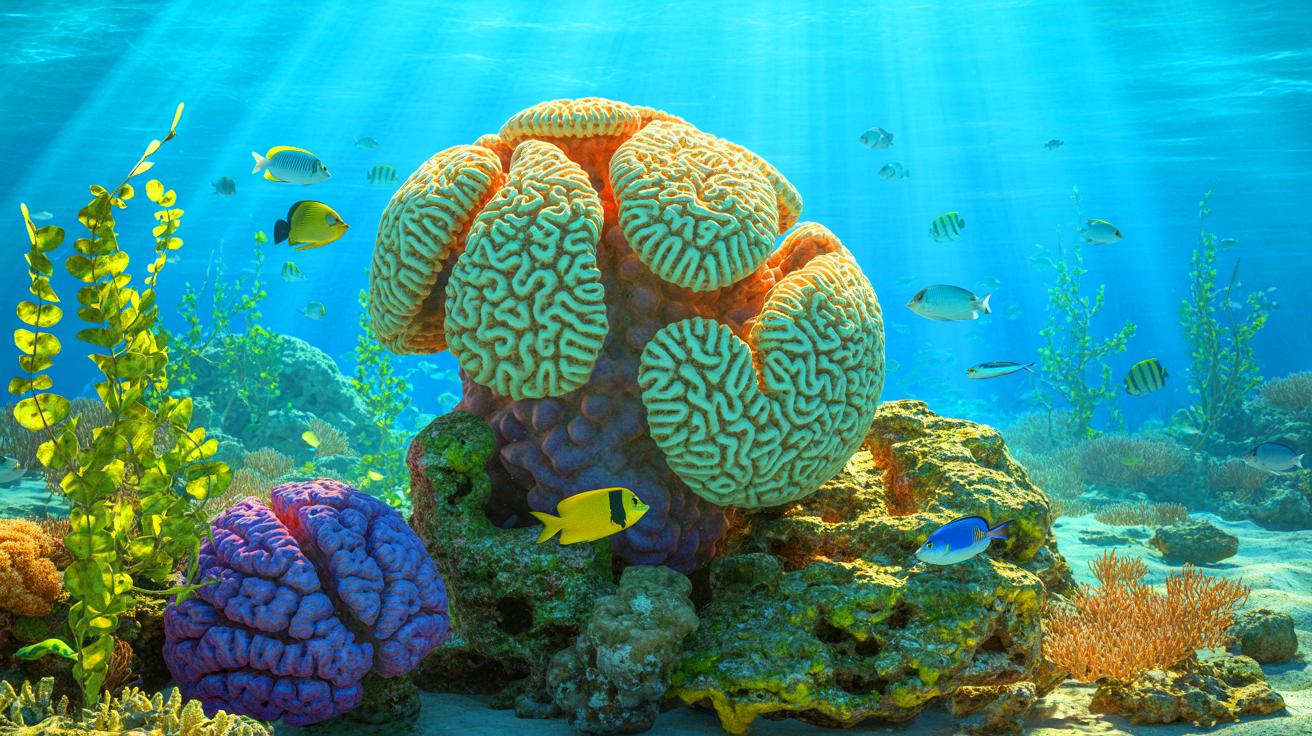
In the pristine waters of Brazil’s Alcatrazes Archipelago, brain coral is quietly playing a vital role in the global carbon cycle. Recent research has illuminated the significant impact these coral colonies have in sequestering carbon, a crucial factor in mitigating climate change. This discovery sheds light on an often-overlooked ecosystem service provided by these marine organisms. By understanding the dynamics of carbon storage in brain coral, scientists hope to gain insights into broader environmental implications and the role of subtropical coral reefs in maintaining ecological balance. As the world grapples with rising carbon emissions, these findings offer a glimmer of hope in the quest for sustainable solutions.
The Role of Brain Coral in Carbon Sequestration
Recent studies have revealed that brain coral in the Alcatrazes Archipelago produces approximately 170 tons of calcium carbonate annually. This process results in the retention of about 20 tons of carbon in mineral form each year. To put this into perspective, the amount of carbon retained by these corals is equivalent to the emissions produced by burning over 85,000 gallons of gasoline. The research involved analyzing brain coral specimens, whose skeletons are primarily composed of calcium carbonate. Through computed tomography scans, researchers were able to estimate the annual growth rates of these coral colonies and assess their role in carbon storage.
Calcium carbonate, the primary component of coral skeletons, is a compound made up of calcium, carbon, and oxygen. When brain coral forms calcium carbonate, it effectively locks carbon away in a stable mineral form. This sequestration process helps prevent carbon from being released into the atmosphere as carbon dioxide, a major greenhouse gas. As such, brain coral contributes significantly to mitigating the impacts of climate change by acting as a carbon sink.
Understanding Coral Ecosystem Services
Brain coral in the Alcatrazes Archipelago not only supports biodiversity but also offers critical ecosystem services. Aside from carbon sequestration, these coral structures provide habitat and protection for numerous marine species, many of which are vital to local fisheries. By capturing and storing carbon, brain coral plays a role in balancing the global carbon budget. The study of carbon sequestration in Alcatrazes is a step towards comprehending the broader role of subtropical coral reefs in the global carbon cycle. In contrast to tropical corals, which may release more carbon than they absorb due to high respiration rates, subtropical environments like Alcatrazes are thought to be net carbon sinks.
Moreover, the mineralized carbon stored in coral skeletons can persist for centuries or millennia, unlike organic carbon from photosynthesis, which is rapidly reintroduced into the atmosphere through respiration and decomposition. This long-term storage potential underscores the importance of protecting and conserving coral ecosystems as part of broader climate change mitigation strategies.
Calcium Carbonate Sediments and Their Impact
The research also highlights the presence of significant quantities of calcium carbonate in the sediments of the main island of Alcatrazes. These sediments result from the breakdown of coral skeletons and the structures of other calcareous organisms, such as mollusk shells. Once deposited on the seabed, these sediments can remain stable for extended periods, further contributing to carbon sequestration.
Guilherme Henrique Pereira Filho, a researcher involved in the study, emphasizes that while Alcatrazes is often valued for its role in marine protection and fisheries, its contribution to carbon storage should not be overlooked. In a world where fossil fuel combustion releases vast amounts of carbon daily, the ability of coral ecosystems to sequester carbon represents a vital ecological service that warrants increased attention and conservation efforts.
Nuclear Energy in America: ‘This Is the Only Way Forward’ for Our Economy and Society’s Future
Implications for Conservation and Policy
The findings from the Alcatrazes Archipelago have significant implications for conservation strategies and environmental policy. By highlighting the carbon sequestration capabilities of brain coral, the research underscores the need to protect and preserve coral ecosystems as part of broader climate action plans. Policy-makers and conservationists are encouraged to consider these findings when developing strategies to mitigate climate change and protect marine biodiversity.
The study also calls for further research into the mechanisms by which subtropical coral reefs, like those in Alcatrazes, contribute to carbon sequestration. Understanding these processes can inform more effective conservation practices and enhance the resilience of coral ecosystems in the face of climate change. As scientists continue to uncover the complexities of coral ecosystems, the role of brain coral as a natural ally in combating climate change becomes increasingly evident.
As we strive to address the challenges posed by climate change, the role of ecosystems like the brain coral in Alcatrazes emerges as a critical component of a sustainable future. How can we leverage these natural processes to create more effective climate strategies and ensure the preservation of vital ecosystems for generations to come?