




| IN A NUTSHELL |
|
The UK’s Online Safety Act is reshaping the digital landscape, prompting platforms like Spotify to enforce strict age verification measures. With the law’s implementation, millions of daily age checks have surged, and VPN use is spiking as Brits navigate these new regulations. Users are now met with prompts to verify their age before accessing explicit content on Spotify, a measure aimed at aligning with the new legal requirements. As these changes unfold, debates around privacy and accessibility are intensifying, highlighting the complex balance between safety and personal freedom in the digital age.
Spotify and the Online Safety Act
Spotify’s recent move to implement age verification measures is a direct response to the UK’s Online Safety Act, which went into effect last week. This law mandates that digital platforms enforce strict age checks to restrict access to content harmful to children. The implications are significant; platforms like Spotify face severe penalties for non-compliance, including fines up to 10 percent of global revenue or criminal prosecution.
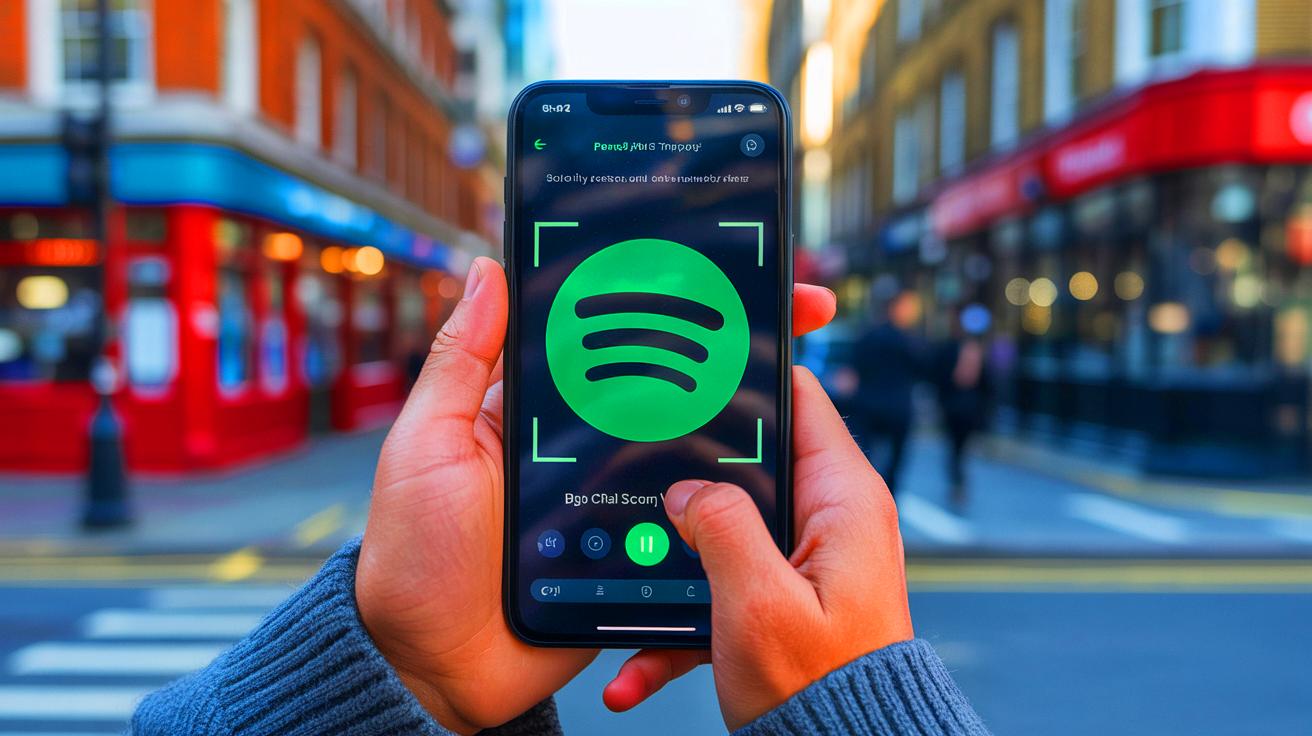
To comply, Spotify now requires users to verify their age using facial scans or photo IDs before accessing certain age-restricted content. This change has led to pop-ups asking users to prove they are over 18 before listening to explicit tracks or watching 18+ music videos. Users unable to verify their age face account deactivation, illustrating the law’s reach and impact on everyday digital interactions.
Facial Scan System Through Yoti
Spotify has partnered with tech company Yoti to facilitate the age verification process. Yoti’s facial scan technology estimates user age based on biometric analysis. If the system fails or is inaccurate, users can upload a government-issued photo ID as an alternative. This process is similar to age verification systems used by other platforms under similar laws.
For example, adult content site xHamster adopted Yoti in Utah to comply with age verification laws, requiring users to undergo a facial scan or provide photo identification. In Spotify’s case, failure to verify age can result in account loss, not just restricted content access. The minimum age for Spotify users in the UK is 13, making verification crucial for account retention.
Wider Crackdown Across Platforms
The Online Safety Act’s impact extends beyond Spotify. The law has prompted a widespread crackdown on content deemed harmful to minors, including pornography and explicit music. Companies failing to comply face severe penalties, driving a surge in online age checks across the UK. The Age Verification Providers Association (AVPA) reported an additional five million daily age checks since the law took effect.
Moreover, the new regulations have fueled a boom in VPN use, allowing users to bypass regional content restrictions. Four of the top five free apps on Apple’s UK App Store are VPNs, with Proton VPN seeing an 1,800% increase in downloads. While the law aims to protect minors, the use of biometric scans and potential account deactivations raises concerns about privacy and accessibility.
Debate Over Privacy and Accessibility
The enforcement of the Online Safety Act has sparked significant debate over privacy and accessibility. Biometric scans, while effective, raise questions about data security and user privacy. Critics argue that such measures may infringe on personal freedoms and create barriers for legitimate users. The potential for account deactivation further complicates the issue, as users risk losing access to their accounts if they cannot meet verification requirements.
Spotify, while complying with the law, has not confirmed plans to extend this verification system to other countries. As the debate continues, the challenge lies in balancing safety measures with respecting individual privacy rights. The ongoing discussions highlight the complexities of regulating digital spaces in a way that safeguards minors while protecting user privacy.
As the UK’s Online Safety Act continues to influence digital interactions, the broader implications for global online safety standards remain a subject of discussion. How will these measures evolve, and what impact will they have on users worldwide? The future of digital safety regulations and their balance with privacy rights is a critical area for ongoing exploration and debate.