



| IN A NUTSHELL |
|
The dawn of a new era in energy generation is upon us, promising revolutionary advancements for critical applications such as military operations and space exploration. The advent of next-generation betavoltaic cells, developed by a team at the Daegu Gyeongbuk Institute of Science and Technology (DGIST) in South Korea, marks a significant milestone. These cells, which integrate a perovskite absorber layer with a radioactive isotope electrode, offer the tantalizing prospect of stable, high-efficiency power for decades without the need for recharging. This breakthrough could reshape how we approach energy solutions in extreme environments, providing a reliable power source where traditional batteries fall short.
Direct Connection Enhances Performance
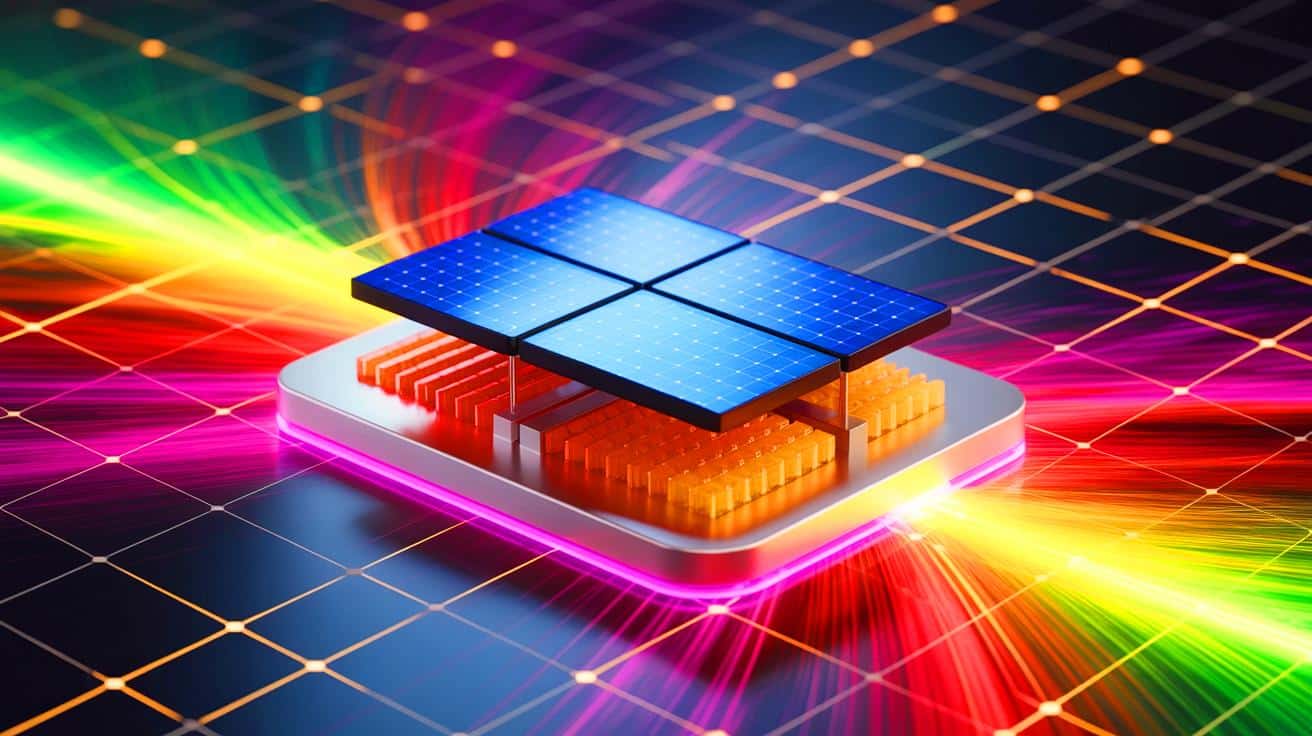
The research team achieved a remarkable feat by directly connecting a radioactive isotope electrode to a perovskite absorber layer. This innovation was facilitated by embedding carbon-14-based quantum dots within the electrode, enhancing the perovskite layer’s crystallinity. The result was a stable power output and significantly improved energy conversion efficiency. This technical leap is crucial for applications that demand consistent energy, such as in military and space sectors where uninterrupted power supply can be a matter of life and death.
The utilization of chlorine-based dual additives with perovskite film and radioactive isotopes of carbon nanoparticle/quantum dot electrodes proved pivotal. This approach not only enhanced the phase stability but also improved the power conversion efficiency of the betavoltaic device. According to Professor Su-Il In, who led the team, the research aims to accelerate the commercialization of this technology for extreme environments, with further efforts in miniaturization and technology transfer on the horizon.
Addressing Limitations of Conventional Batteries
Traditional batteries, such as lithium and nickel-based types, often struggle with short lifespans and vulnerability to extreme conditions like heat and moisture. The development of betavoltaic cells addresses these critical limitations by offering a power solution that is both long-lasting and efficient. These cells utilize radioisotopes as their energy source, providing remarkable longevity and high energy density. Such characteristics make them ideal for powering devices in remote or harsh environments, where battery replacement or maintenance is impractical.
The challenges of handling radioactive materials and ensuring long-term stability of cell components have previously hindered the practical development of this technology. However, the integration of carbon-14 isotopes with a robust perovskite layer represents a pivotal advancement. This study heralds the first successful integration of perovskite into a betavoltaic cell, paving the way for pioneering Perovskite Betavoltaic Cells (PBCs) that are set to revolutionize energy technology.
Significant Performance Gains Demonstrated
The newly developed betavoltaic cell not only showcased a 56,000-fold increase in electron mobility but also maintained a stable power output for up to nine hours of continuous operation. This dramatic increase in efficiency marks a major step forward in overcoming the traditional limitations of betavoltaic technology. The ability to maintain stable power output over extended periods is crucial for applications in environments where long-term, stable power is critical.
The study’s results represent a considerable advancement in the field, providing a promising pathway toward the practical application of perovskite betavoltaic cells for energy generation. These cells hold the potential to meet the rigorous demands of harsh environments, ensuring long-term reliability where it is most needed. The promising outcomes of this research signal a bright future for the use of betavoltaic cells in critical energy applications.
As we venture into the future of energy generation, the implications of this breakthrough are vast. The integration of perovskite and betavoltaic technology could redefine our approach to powering devices in some of the most challenging and remote environments on Earth and beyond. How will this advancement shape the landscape of energy solutions in the coming decades, and what new possibilities might it unlock for exploration and innovation?

Wow, a battery that lasts longer than a marriage? Sign me up! 😂
How safe are these radioactive batteries for everyday use?
Isn’t it a bit risky to use radioactive materials in a battery? 🤔
Kudos to the researchers! This could be a game-changer for space exploration. 🚀
So, when can I get one for my phone?
Marriages may not last long, but I hope these batteries do! 😂
Thank you for the enlightening article. I’m excited about the potential!
Can they be recycled? Environmental impact is a big concern for me.
56,000-fold increase in electron mobility sounds impressive. Can someone explain it in layman’s terms?
This feels like science fiction becoming reality! Exciting times ahead.