




| IN A NUTSHELL |
|
In recent years, the world has seen significant advancements in animal farming, but few have been as controversial as the world’s first commercial octopus farm. Proposed by Spanish seafood company Nueva Pescanova, the venture seeks to address the decline in wild octopus populations through aquaculture. However, ethical concerns and the methods used to farm these intelligent creatures have sparked intense debate among scientists, lawmakers, and the public. This article explores the complexities of octopus farming, examining the ethical issues, scientific insights, and global reactions to this contentious initiative.
The Intellectual Marvels of Octopuses
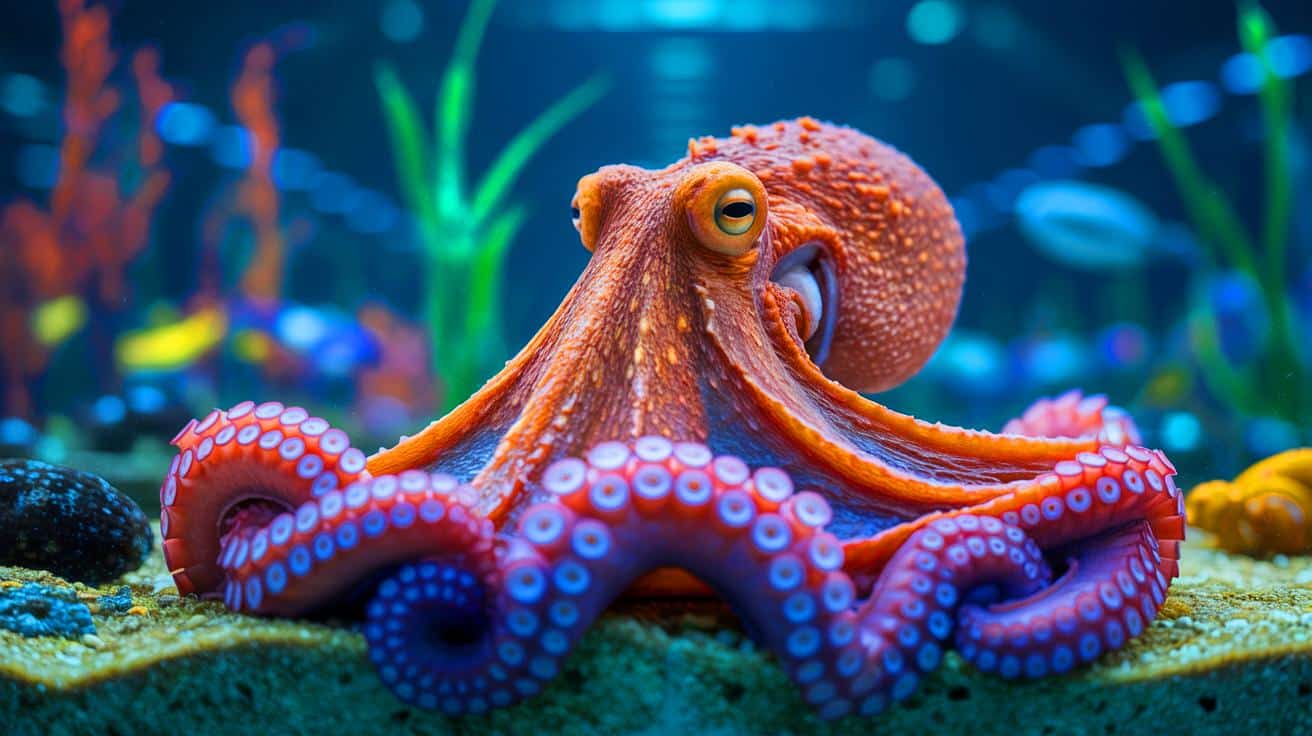
Octopuses are not ordinary marine creatures; they are often seen as the closest thing to alien intelligence on our planet. With approximately 500 million neurons, comparable to a dog, these cephalopods display behaviors indicative of high cognitive sophistication. Uniquely, only a third of their neurons reside in their brains, while the remainder are distributed throughout their eight arms, each capable of independent function. This neural setup allows octopuses to solve intricate puzzles, utilize tools, and learn through observation.
Researchers have documented remarkable feats of octopus intelligence. For example, an octopus named Otto at the Sea Star Aquarium in Germany famously shorted out the facility’s power by squirting water at a bright spotlight, showcasing problem-solving skills and a sense of annoyance. Additionally, octopuses have been seen stacking rocks to build dens and unscrewing jar lids from the inside, demonstrating their dexterity and resourcefulness. These behaviors highlight the profound intelligence that makes the idea of farming octopuses a controversial topic.
Ethical Concerns and Animal Welfare
The ethical issues surrounding octopus farming are deeply rooted in the creature’s demonstrated sentience. A comprehensive review by the London School of Economics concluded that octopuses can experience pleasure and pain, prompting the UK government to include them in its Animal Welfare (Sentience) Act. This legal recognition makes octopuses the only invertebrates with such protection, emphasizing the need for ethical treatment.
Nueva Pescanova’s proposed farming conditions have alarmed animal welfare groups. The densely packed tanks, housing 10 to 15 octopuses per cubic yard, contradict their solitary nature, likely inciting aggression and cannibalism. Furthermore, the method of killing octopuses by submerging them in ice slurry is considered inhumane, as it causes prolonged suffering before death. Such practices have been condemned by neuroscientists like Dr. Peter Tse, who argue that the slow, painful deaths inflicted by ice slurry are unacceptable for creatures of such advanced cognition.
The Global Backlash and Legislative Actions
The response to Nueva Pescanova’s plans has been swift and widespread. In Washington state, legislators have already banned octopus farming, citing both ethical and economic concerns. U.S. Senators Lisa Murkowski and Sheldon Whitehouse have introduced federal legislation, the OCTOPUS Act, to prohibit octopus farming nationwide and block imports of farmed octopus. This legislative push underscores a growing recognition of octopuses as smart, sentient creatures that do not belong in commercial farms.
Internationally, the backlash is gaining momentum. The European Union, acknowledging octopuses’ sentience, faces pressure to halt the Spanish facility. Protests have erupted in Madrid, reflecting the public’s opposition to what many view as a new frontier in animal cruelty. As awareness of octopus intelligence and suffering spreads, the call for ethical treatment and conservation is resonating globally.
Scientific and Environmental Implications
While Nueva Pescanova argues that octopus farming could alleviate pressure on wild populations, the environmental and scientific implications remain contentious. Octopuses are carnivores, requiring substantial amounts of fish to produce octopus meat, raising concerns about the sustainability of farming predatory species. Critics argue that this practice exacerbates existing pressures on already depleted fish stocks, contradicting conservation efforts.
Moreover, the scientific community grapples with the moral dilemma of farming such intelligent beings. The recent documentary “My Octopus Teacher” highlighted the emotional depth and trust-building capabilities of octopuses, challenging humanity’s perception of these beings. As we unravel the genetic markers of intelligence shared between humans and octopuses, the question arises: should we exploit this knowledge for industrial gains or foster a deeper understanding and appreciation for these remarkable creatures?
In conclusion, the controversy surrounding the world’s first octopus farm underscores a critical juncture in our relationship with intelligent marine life. As scientific insights reveal the remarkable cognitive abilities of octopuses, the ethical and environmental implications of farming them become increasingly apparent. With legislative actions and public protests gaining momentum, the future of octopus farming hangs in the balance. Will humanity choose to prioritize ethical treatment and conservation, or will the lure of commercial gains prevail? The answer to this question may define our relationship with the natural world for generations to come.