




| IN A NUTSHELL |
|
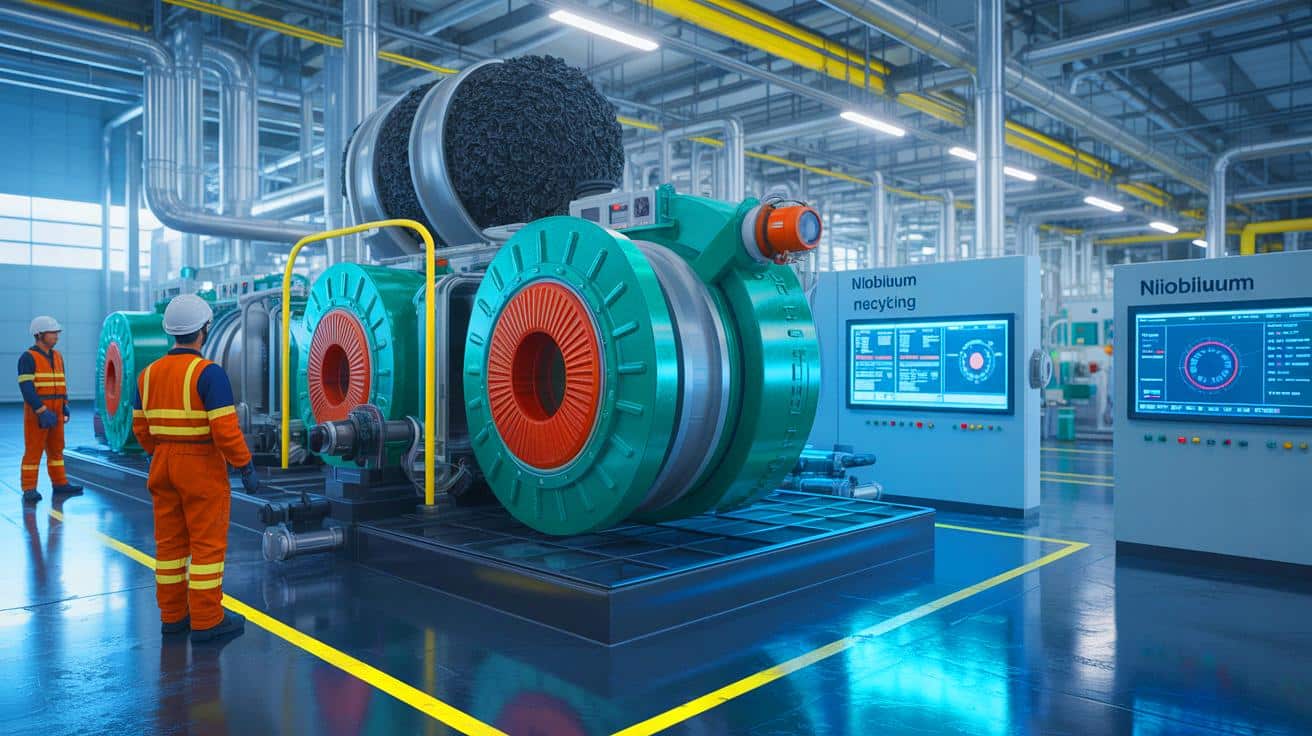
In the quest to combat climate change and reduce industrial emissions, a groundbreaking collaboration between the University of Birmingham and Brazilian company CBMM is pioneering a closed-loop carbon recycling approach. This effort focuses on the use of Niobium, a rare yet crucial metal, in carbon recycling technologies that promise to radically decrease emissions from energy-intensive industries. By enhancing the efficiency and cost-effectiveness of Niobium compounds, the project aims to create a sustainable future for foundational industries like steelmaking. This article delves into the various facets of this innovative project and its potential impact on global industry and the environment.
Ensuring the Future Supply of Niobium
The partnership between the University of Birmingham and CBMM is crucial in securing a sustainable supply of Niobium, an essential component in carbon recycling technology. While Niobium is not classified as a critical metal, its rarity and importance in industrial applications make it a focus of this project. Professor Yulong Ding, leading the research team, emphasizes the significance of this collaboration in delivering a decarbonization solution that is not only technically and economically viable but also environmentally sustainable.
Foundation industries, particularly steelmaking, are significant contributors to global CO2 emissions. These sectors are among the most challenging to decarbonize due to their energy and carbon intensity. The use of Niobium-based technology in these industries could provide a transformative solution. By improving production efficiency and lowering costs, the project aims to make Niobium compounds more accessible for closed-carbon-loop technology, crucial for reducing emissions in foundational industries.
How Carbon Looping and Recycling Shape a Sustainable Future
Carbon looping and recycling are at the forefront of sustainable industrial practices. These processes capture and reuse CO2 emissions, preventing them from entering the atmosphere and contributing to greenhouse gas accumulation. In carbon looping, captured CO2 is stored underground or used in other industrial processes, while carbon recycling converts it into valuable products like fuels and building materials, fostering a circular carbon economy.
These technologies are integral to mitigating climate change, as they reduce reliance on fossil carbon sources and promote sustainable industrial practices. By closing the carbon loop, industries can significantly lower their carbon footprint, making these technologies indispensable for a sustainable future. The integration of Niobium in these processes enhances their efficiency and effectiveness, paving the way for broader adoption and impact.
The Role of Niobium in Carbon Recycling
Niobium-based perovskites are at the heart of the carbon recycling technology being explored in this project. These materials have the unique ability to convert CO2 emissions from industrial processes into carbon monoxide (CO), which is then reused, creating a closed carbon loop. The selectivity of Niobium-based perovskites for CO production is 100%, ensuring that all CO2 passing through is effectively transformed.
This innovative approach was demonstrated by Birmingham researchers in a model adaptation for existing blast furnaces, potentially reducing steelmaking emissions by up to 90%. By leveraging the unique properties of Niobium, this technology offers a promising solution for reducing emissions in hard-to-decarbonize industries.
What Are the Advantages of Carbon Looping?
The closed-loop carbon recycling approach offers several advantages, primarily its ability to retrofit existing industrial processes. This capability minimizes the need for extensive infrastructural changes, facilitating large-scale adoption without leading to stranded assets. The lower operating temperatures of perovskite technology compared to conventional methods further reduce costs and enhance energy efficiency.
These benefits make carbon looping an attractive option for industries seeking to reduce emissions without incurring prohibitive costs or operational disruptions. The ability to integrate this technology into current systems underscores its potential for widespread impact, making it a key player in the move toward sustainable industrial practices.
Commercializing Niobium-Based Decarbonization Methods
The project’s outcomes are expected to advance the commercialization of Niobium-based decarbonization technology through PeroCycle, a spin-out supported by the University of Birmingham and Anglo American. With venture-building led by Cambridge Future Tech, this initiative aims to scale up the production of Niobium-based perovskites, ensuring their availability for broader industrial use.
CBMM’s involvement is critical in supporting the scalability and sustainability of this technology. Leonardo Silvestre, Executive Innovation Manager at CBMM, highlights the potential of this partnership in addressing the challenges of industrial decarbonization. By exploring Niobium’s use across various markets, the project reinforces its commitment to innovation and sustainability.
The exploration of Niobium’s applications beyond steelmaking into other industries further underscores its potential to drive significant environmental benefits, positioning it as a cornerstone of future industrial practices.
The collaboration between the University of Birmingham and CBMM marks a significant milestone in the pursuit of sustainable industrial solutions. By leveraging the unique properties of Niobium in carbon recycling technologies, this project promises to transform the landscape of foundational industries, offering a viable path to reduced emissions and environmental impact. As these technologies continue to develop, the question remains: How will industries across the globe embrace these innovations to shape a greener future?