




| IN A NUTSHELL |
|
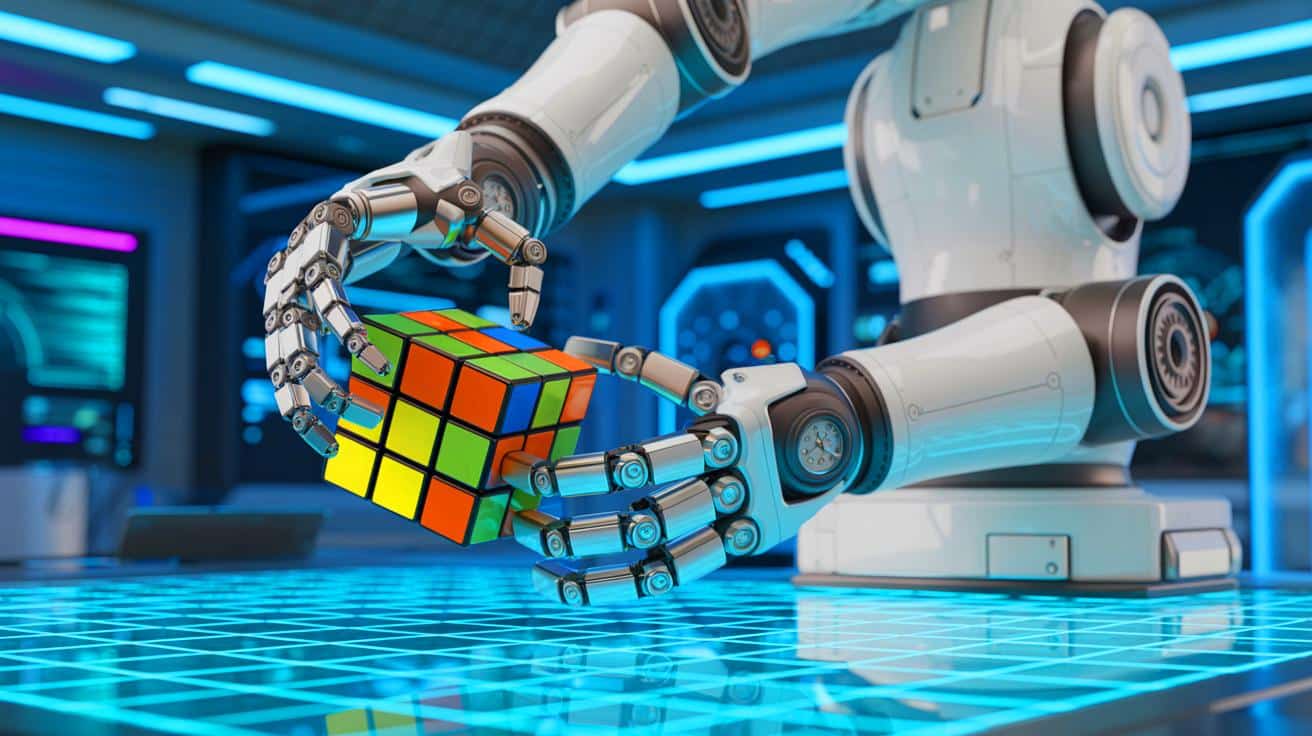
In an extraordinary leap for technology and engineering, a team of students from Purdue University has set a new world record for solving a Rubik’s Cube at unprecedented speed. Their creation, Purdubik’s Cube, accomplished this feat in just 0.103 seconds, a time so swift it outpaces the human eye’s ability to blink. This achievement not only breaks the previous record of 0.305 seconds but also showcases the potential of student-led innovation and the power of advanced robotics. As automation continues to evolve, such milestones highlight the increasing interplay between human ingenuity and machine precision.
Purdue’s Robotics Legacy: A New Chapter
Purdue University has long been a hub for technological innovation, and its latest achievement in robotics adds another chapter to this legacy. The story of Purdubik’s Cube began in the Elmore Family School of Electrical and Computer Engineering, where a team of students came together with a shared passion for robotics and problem-solving. Their mission was clear: to break the world record for the fastest time to solve a Rubik’s Cube.
The project was not just an academic exercise but a blend of passion, technical skill, and collaboration. The team was inspired by previous record-holders and driven by a desire to push the boundaries of what is possible. Through Purdue’s Cooperative Education Program, they were able to gain the necessary experience and funding to bring their vision to life. The result was a robotic system capable of solving the cube faster than the blink of an eye, setting a new standard in the field.
Engineering Marvel: The Technology Behind Purdubik’s Cube
The technological underpinnings of Purdubik’s Cube are a marvel of modern engineering. The system employs machine vision to detect cube colors, custom algorithms for rapid solving, and precision hardware for executing the solution with astonishing speed. Each component is carefully calibrated to ensure the system operates with sub-millisecond accuracy, underscoring the sophistication of the design.
At the heart of this system lies an industrial-grade motion control setup from Kollmorgen, known for its reliability and precision. The synchronization of movements is so precise that it allows the robot to solve the cube immediately after a user completes a scramble. This interactive feature, enabled by a Bluetooth Smart Cube, transforms the process into an engaging demonstration of cutting-edge technology.
A Broader Impact: Redefining Robotics and Automation
The implications of Purdubik’s Cube extend beyond breaking records. This achievement marks a significant step forward in the realm of robotics and automation, challenging preconceived notions of what machines can accomplish. According to Nak-seung Patrick Hyun, assistant professor of electrical and computer engineering at Purdue, the project pushes the boundaries of synthetic systems and offers insights into ultra-fast coordinated control systems akin to those in nature.
Moreover, the project serves as a testament to the potential of student-led initiatives in advancing technological frontiers. By combining academic knowledge with practical application, the Purdue team has not only achieved a world record but also demonstrated the vital role of interdisciplinary collaboration in driving innovation.
The Future of Robotics: What Lies Ahead?
As the field of robotics continues to evolve, the achievements of student teams like those at Purdue offer a glimpse into a future where automation plays an increasingly vital role in daily life. The success of Purdubik’s Cube sets a precedent for future projects, encouraging a culture of innovation and excellence within the academic community.
Looking forward, the challenge remains: how can we further harness the capabilities of robotics to solve complex problems across various sectors? With advancements in technology and the growing accessibility of resources, the potential for groundbreaking projects is vast. The question, then, is not just about breaking records, but about the broader impact these technologies can have on society. As we continue to develop these systems, what new possibilities will emerge for the intersection of human creativity and machine precision?
The remarkable achievement by Purdue University’s team in solving the Rubik’s Cube at record speed underscores a broader narrative in the world of automation and robotics. As students continue to push the limits of technology, we are left to ponder the future of such innovations. What challenges and opportunities will arise as we continue to explore the potential of high-speed computing and precision engineering? As we look ahead, the journey promises to be as exciting as the achievements themselves.