




| IN A NUTSHELL |
|
SpinLaunch, a pioneering startup from California, is on the verge of revolutionizing satellite launches with its groundbreaking technology. Utilizing a massive centrifugal cannon, this innovative approach offers a cost-effective and environmentally friendly alternative to traditional rocket launches. As the company prepares to challenge industry giants like SpaceX, SpinLaunch is poised to significantly reduce space debris and emissions, promoting sustainable growth in low-Earth orbit satellite activity. Could this be the dawn of a new era in space exploration, characterized by efficiency and environmental consciousness?
A New Era of Satellite Launches
SpinLaunch is introducing a transformative method for deploying satellites, which could redefine the satellite industry. Their core innovation is a giant centrifugal cannon that accelerates and launches spacecraft at incredible velocities. This technique is designed to cut costs and reduce the environmental impact associated with conventional rocket launches. The company’s ambitious Meridian Space constellation aims to be a key player, with the first batch of pancake-like satellites scheduled for deployment as early as next year.
The microsatellites, each approximately 7.5 feet in diameter and weighing about 154 pounds, are ingeniously stacked like pancakes within a “launch bus.” This design significantly reduces weight compared to traditional satellites. SpinLaunch is positioned to potentially break the record for the most spacecraft launched simultaneously, a record currently held by SpaceX. With strong financial backing and a track record of technological milestones, SpinLaunch is well-equipped to compete and possibly dominate a market traditionally led by established industry leaders.
The Revolutionary Launch System
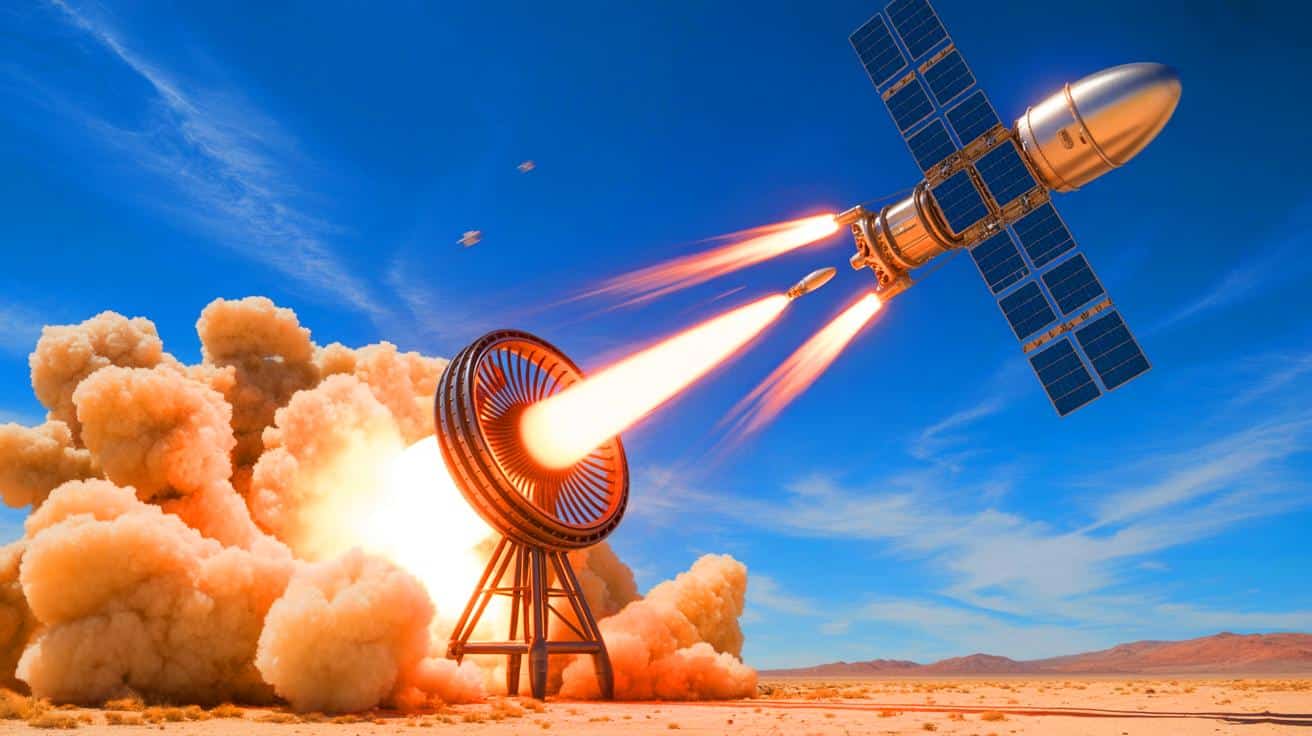
SpinLaunch’s innovative satellite deployment strategy hinges on a sophisticated launch system that uses a vacuum-sealed chamber and spinning arms to accelerate payloads. The Suborbital Accelerator has already proven its capability by successfully launching ten rockets into suborbital flight from New Mexico. This process involves spinning objects at speeds up to 5,000 mph, subjecting them to forces as high as 10,000 Gs before launching them into the upper atmosphere. The success of these test launches, including the most recent one in September 2022, sets a robust foundation for future orbital demonstrations.
A key advantage of SpinLaunch’s system is its cost-efficiency. The company projects that future commercial launches could cost between $1,250 and $2,500 per kilogram, significantly undercutting the costs associated with SpaceX’s Falcon 9 rockets. Additionally, the elimination of greenhouse gas emissions and booster rockets during launches contributes to a more sustainable approach to space travel, addressing environmental concerns and the issue of space debris.
Implications for the Satellite Industry
The adoption of SpinLaunch’s technology could potentially revolutionize the satellite industry. By offering a more affordable and environmentally sustainable launch option, SpinLaunch is set to disrupt the status quo and reshape the competitive landscape. Their Meridian Space constellation is poised to provide high-speed communication services at a fraction of the cost of its competitors, potentially democratizing access to space-based services.
SpinLaunch’s ambitions extend further, with plans to enhance their capabilities through a larger Orbital Accelerator that could launch up to five commercial payloads daily. If achieved, this ambitious goal would significantly increase the frequency and accessibility of satellite launches, creating new opportunities for industries reliant on satellite technology. However, the anticipated increase in low-Earth orbit activity also raises concerns about potential issues such as spacecraft collisions, light pollution, and interference with astronomical observations. These challenges will require careful management as the industry evolves.
Looking Ahead: Challenges and Opportunities
While SpinLaunch’s innovations present exciting prospects, they also pose challenges that must be addressed. The potential surge in satellite activity in low-Earth orbit could exacerbate existing problems like space debris and atmospheric pollution from re-entering spacecraft. As SpinLaunch progresses with its ambitious plans, it is crucial to address these issues and work toward sustainable solutions that balance growth with responsibility.
The success of SpinLaunch’s upcoming launches could establish a new standard for satellite deployment, offering a glimpse into a future where space is more accessible and sustainable. However, the question remains: how will the industry adapt to these changes, and what measures will be taken to mitigate the potential risks associated with increased activity in low-Earth orbit?