



| IN A NUTSHELL |
|
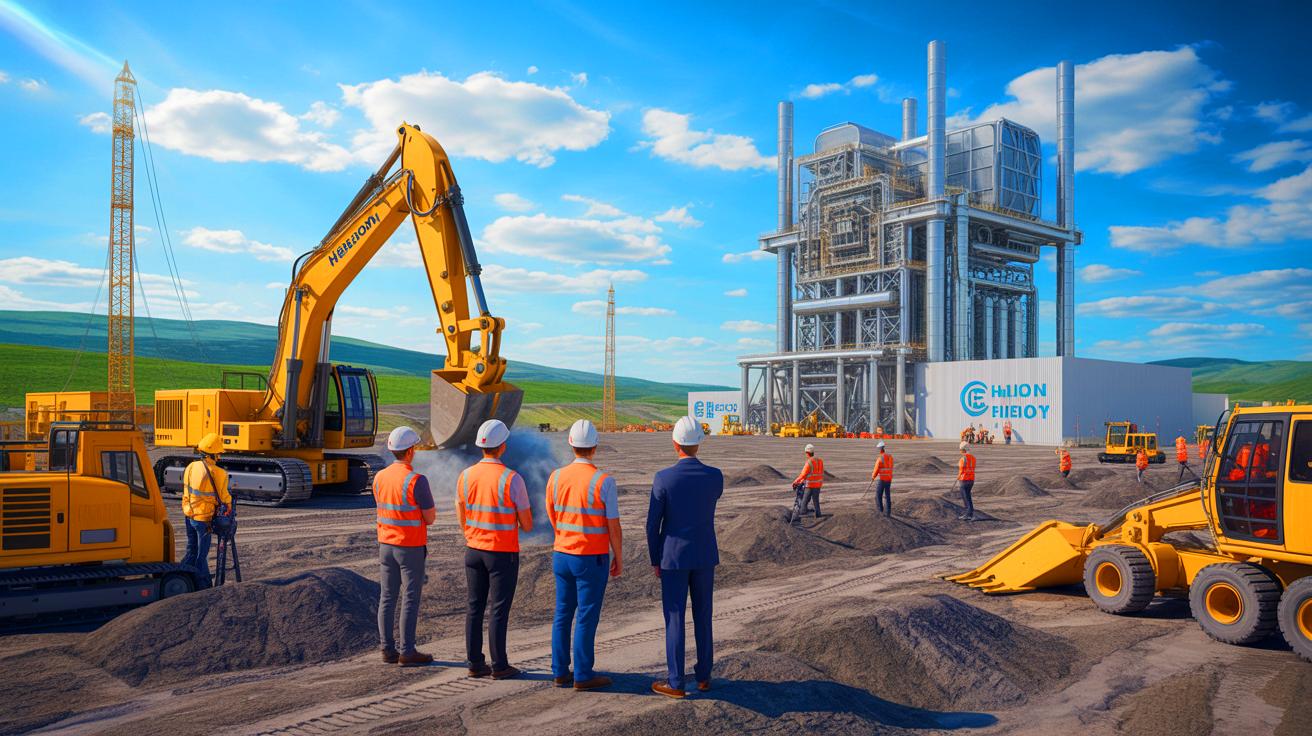
Fusion energy has long been hailed as the holy grail of clean power, offering the promise of virtually limitless energy without the carbon emissions associated with fossil fuels. This week, Helion Energy marked a significant milestone in the quest to commercialize fusion energy by breaking ground on Orion, the world’s first commercial fusion power plant. Backed by a groundbreaking energy deal with Microsoft, the project aims to deliver fusion-generated electricity to the grid by 2028. If successful, Helion could become the first company to achieve this monumental feat, positioning itself at the forefront of a global race to harness fusion as a sustainable energy source.
The Science Behind Fusion Energy
Fusion energy is generated when two light atomic nuclei merge to form a single, heavier nucleus. This process releases an extraordinary amount of energy and is the reaction that fuels the Sun and other stars. It involves the fusion of hydrogen atoms under extreme pressure and temperature, producing light and heat. Unlike nuclear fission, which splits atoms and results in long-lived radioactive waste, fusion offers a cleaner alternative. It produces minimal short-term waste and carries no risk of meltdown, making it an attractive option for sustainable energy production.
The fuel for fusion reactions typically comes from isotopes of hydrogen, such as deuterium and tritium. These are abundant in seawater and lithium, providing a virtually limitless supply. However, achieving fusion on Earth is a formidable scientific challenge. Reactors must replicate the extreme conditions found in a star’s core, with temperatures exceeding 180 million degrees Fahrenheit. This requires advanced materials and precise control systems. Despite the challenges, fusion energy holds immense promise for delivering safe, carbon-free power with minimal environmental impact, potentially transforming the global energy landscape.
Orion’s Strategic Location and Environmental Considerations
Helion’s Orion site is strategically located in Malaga, Washington, near the Columbia River. This area is known for its renewable energy history, particularly hydroelectricity. The company is leasing land from the Chelan County Public Utility District, chosen for its proximity to existing transmission infrastructure. This infrastructure previously supported the nearby Rock Island Dam, providing a suitable foundation for Orion’s operations.
Environmental considerations have been a priority for Helion. The company received a Mitigated Determination of Non-Significance (MDNS) through Washington’s environmental review process, allowing site preparation to commence while final permits are pending. Helion is also engaging with local agencies, Tribal Nations, and community stakeholders to ensure responsible and inclusive development. This collaborative approach seeks to balance technological innovation with environmental stewardship, setting a precedent for future fusion energy projects.
Building the Future of Fusion-Powered Electricity
Helion’s vision is to produce grid-scale electricity from fusion, with the Orion plant serving as a critical milestone in this journey. The construction currently underway positions the company to meet its ambitious goal of delivering electricity to Microsoft by 2028. This target is part of a 2023 power purchase agreement (PPA) involving Helion, Microsoft, and Constellation Energy. It represents the first-ever contract to purchase electricity from a fusion power plant.
If Helion succeeds, it will be the first time fusion electricity is delivered to a paying customer, marking a historic achievement in the energy sector. This milestone would cement Helion’s role as a leader in commercial fusion energy and could catalyze broader adoption of fusion technology. By demonstrating the viability of fusion as a reliable power source, Helion aims to pave the way for a future where fusion energy plays a central role in addressing climate change and energy security.
Innovative Path from Prototype to Power Plant
Helion’s approach to fusion development emphasizes rapid prototyping and iteration. The company has developed six generations of fusion machines, with the seventh, named Polaris, expected to be the first to generate usable electricity. The previous model, Trenta, achieved a crucial milestone by heating fusion fuel to 180 million degrees Fahrenheit, a temperature deemed essential for commercial fusion.
As construction begins at the Orion site, Helion is laying the groundwork for a future powered by limitless, carbon-free energy. The company’s progress could redefine global energy markets and provide scalable solutions to pressing issues like climate change, energy security, and industrial demand. Should Helion’s efforts prove successful, the fusion power plant will not only supply electricity to tech giants like Microsoft but also demonstrate that fusion’s long-promised potential can be realized.
The groundbreaking work at Helion Energy’s Orion site signals a pivotal moment in the quest for sustainable energy solutions. By pushing the boundaries of what is technologically possible, Helion is setting a new standard for innovation in the energy sector. As we move closer to 2028, the world watches with anticipation. Will fusion energy fulfill its promise and revolutionize the way we power our lives?