

| IN A NUTSHELL |
|
The nuclear landscape is witnessing a transformative shift as Finland embraces a groundbreaking yet unconventional nuclear reactor design. Unlike traditional reactors primarily aimed at electricity generation, the Finnish-approved LDR-50 reactor is set to redefine nuclear applications. This forward-thinking approach positions nuclear energy as a pivotal player in achieving sustainable urban and industrial heating solutions. With a firm emphasis on simplicity, safety, and cost-effectiveness, the LDR-50 is poised to challenge preconceived notions about nuclear technology, making it an intriguing development in the realm of energy.
The Innovative LDR-50 Reactor: A New Paradigm
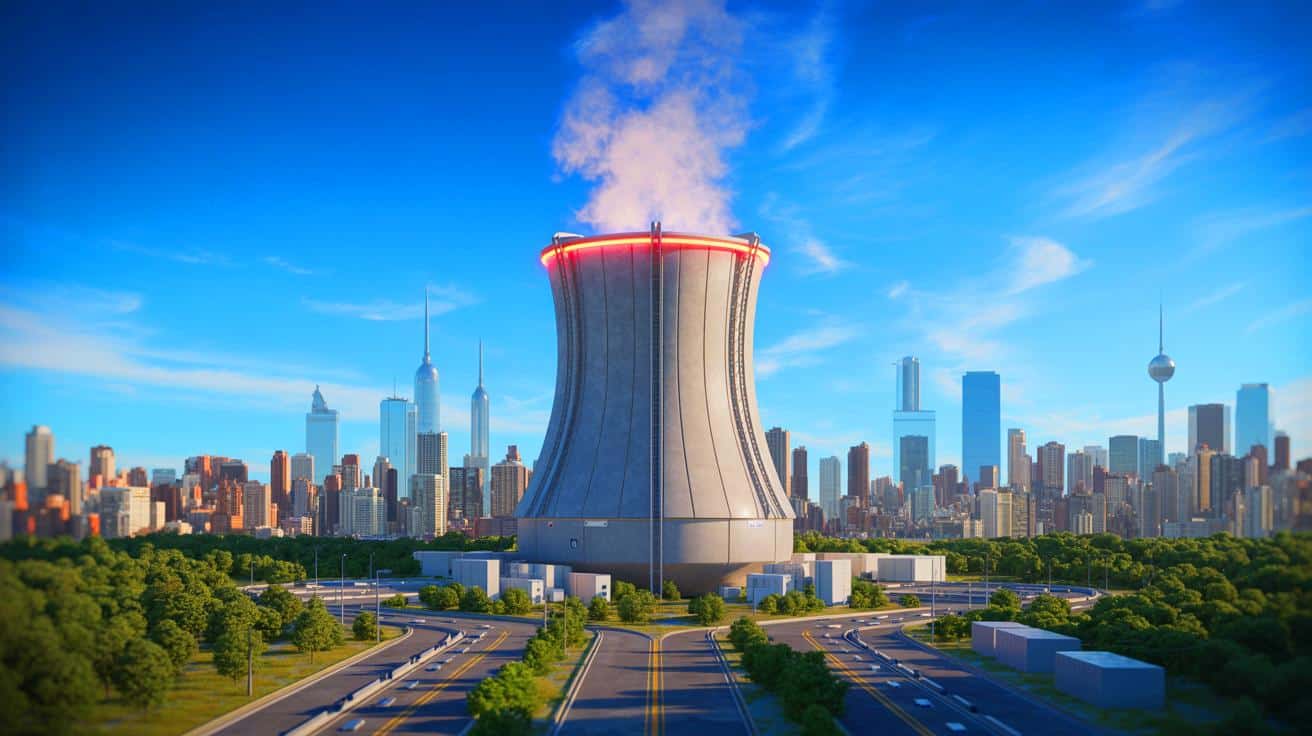
The LDR-50 reactor represents a new paradigm in nuclear technology, emphasizing its role as a source of heat rather than electricity. Designed to operate at a modest 50 megawatts, this reactor functions as a giant nuclear water heater. By operating at low pressure and heating water to 302 °F (150 °C), the LDR-50 is ideal for urban heating networks and industrial steam production, but not for electricity generation. This innovative approach is a significant departure from the complex, costly designs of traditional reactors.
The LDR-50’s simplicity is its strength. It uses a straightforward pressurized water reactor design, which has been a staple in the industry for decades. This simplicity translates to fewer components, reduced risks, and lower costs. The reactor’s closed-loop system operates without combustion or CO₂ emissions, making it a clean, sustainable option for modern energy needs. As a compact unit, it can fit in spaces as small as a hangar, further enhancing its appeal for urban deployment.
A Strategic Demonstration in Helsinki
In a bold move, the first full-scale prototype of the LDR-50 is set to be installed at the former coal power plant site in Salmisaari, Helsinki. This site serves as a strategic location to showcase the reactor’s capabilities. Although this initial installation will not involve nuclear fuel, it will function as a working model to test safety systems under real-world conditions. This proactive step by Steady Energy, the company behind the LDR-50, demonstrates a commitment to transparency and regulatory compliance, earning public trust.
Despite not being legally required, Steady Energy has sought voluntary evaluation of its concept by Finnish regulators. This foresight aims to meet future safety standards and foster public confidence in nuclear technology. By positioning the LDR-50 as a viable alternative to fossil fuel-based heating systems, the project underscores nuclear energy’s potential role in addressing climate challenges.
Addressing Climate Challenges with Nuclear Heat
The LDR-50 offers a promising solution to the environmental challenges posed by traditional heating systems. With its ability to provide carbon-free heat, the reactor can replace fossil fuel-based boilers and heating networks in medium-sized cities. The cost of heat production is projected to remain below $42 per megawatt-hour, making it economically competitive without requiring government subsidies.
This affordability and sustainability make the LDR-50 an attractive option for local governments and private operators alike. By allowing entities to invest in their own thermal reactors, the LDR-50 empowers communities to take charge of their energy future. This model not only reduces reliance on fossil fuels but also aligns with global efforts to curb carbon emissions and combat climate change.
Global Market Potential and Future Prospects
With 15 LDR-50 reactors already planned for Finland, Steady Energy is eyeing expansion into Swedish and Baltic markets. The company aims to bring the reactors to market by 2030, with production facilities ready for mass manufacturing. The final hurdle remains an international regulatory review, which, if passed, could pave the way for widespread adoption across Europe and beyond.
The global interest in Small Modular Reactors (SMRs) like the LDR-50 is growing, with market potential estimated between $68 and $118 billion by 2050. The demand for decarbonized energy, combined with the flexibility and scalability of SMRs, is driving this momentum. As a result, countries like the United States, Canada, the United Kingdom, South Korea, and Poland are emerging as key players in this burgeoning market.
As the world continues to seek sustainable energy solutions, the LDR-50 exemplifies the potential of nuclear technology to adapt and innovate. By focusing on heat production, this Finnish initiative challenges conventional wisdom and opens new avenues for nuclear energy. Could this innovative approach become a cornerstone of future energy strategies globally?