




| IN A NUTSHELL |
|
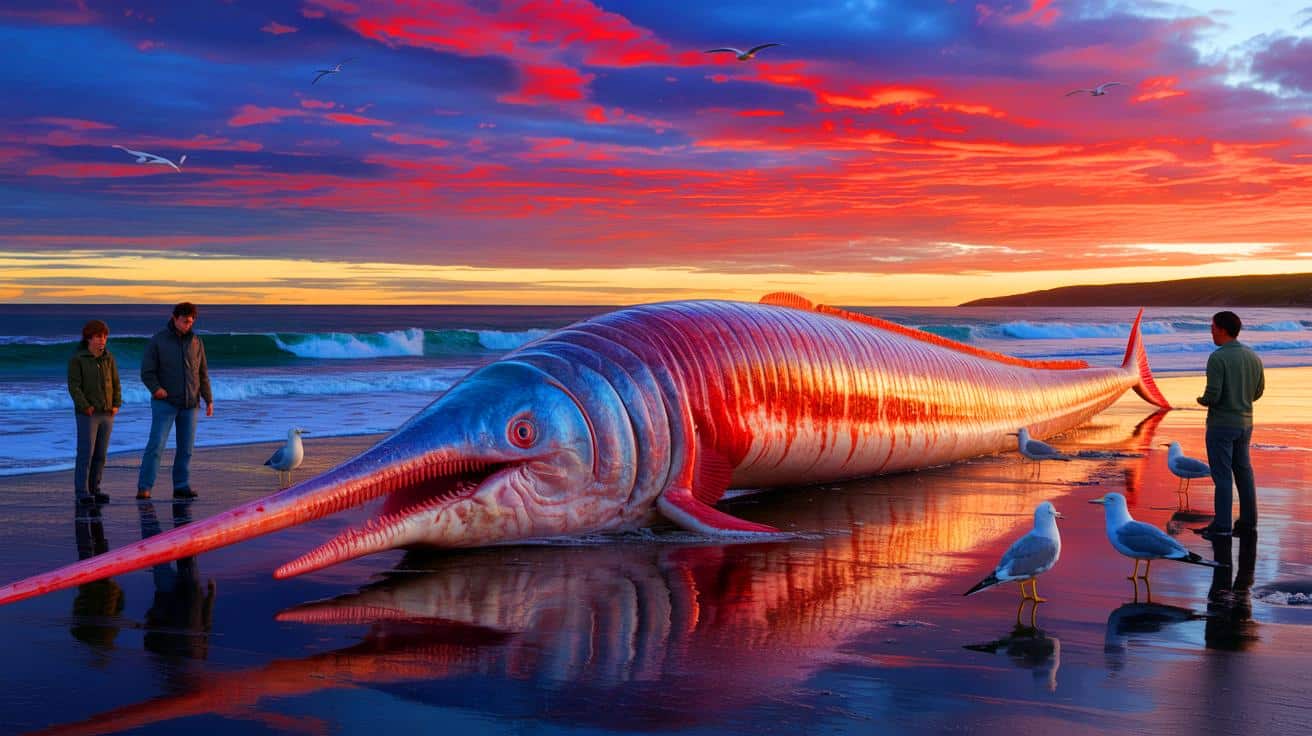
The recent discovery of giant oarfish along the coasts of Tasmania and New Zealand has sparked renewed interest in these mysterious sea creatures. Known as the “fish of the apocalypse,” oarfish are often associated with ominous events, captivating the public’s imagination. With their strikingly elongated bodies shimmering in silver and colors of blue and crimson, these rare sightings are truly a spectacle. However, as intriguing as their appearances may be, scientists urge a rational perspective, emphasizing that these deep-sea dwellers are not indicators of impending doom.
The Unusual Surge of Oarfish Sightings
This recent phenomenon began when the first oarfish, part of the Regalecidae family, was found washed ashore on Tasmania’s west coast. Shortly after, two more headless specimens were discovered in New Zealand, at Aramoana and near Birdlings Flat. These creatures, capable of reaching lengths up to 26 feet, are difficult to overlook. Andrew Stewart, a fish curator at New Zealand’s Te Papa Tongarewa Museum, described oarfish as “magnificent and otherworldly,” with a unique repetitive body structure. Despite their fascinating appearance, confirmed sightings remain rare, with only about twenty cases recorded in New Zealand.
Unfortunately, the museum’s hopes to study one of the specimens were dashed as seagulls had already consumed the heads, depriving scientists of valuable research data. While the recent discoveries have stirred public curiosity and speculation, they remain isolated incidents rather than a common occurrence.
Debunking Myths Around Oarfish and Natural Disasters
The eerie appearance of oarfish has long fueled myths linking them to natural disasters, particularly earthquakes and tsunamis. In Japan, these creatures are considered messengers from the deep, believed to forewarn of cataclysmic events. However, scientific studies, including one conducted in 2019, found no correlation between oarfish appearances and seismic activity. Andrew Stewart stresses the importance of a science-based approach, advocating against superstition.
Oarfish typically inhabit the deep ocean, residing primarily in open oceanic areas, which makes their observation a rare occurrence and contributes to the mystique surrounding them. Nick Ling, a fish ecologist at the University of Waikato, explains that their rarity fuels numerous myths. Ling also highlights their distinctive vertical swimming style, describing them as “truly beautiful fish” with an “extraordinary lifestyle.”
The Fascination with Abyssal Creatures
Beyond their mythical reputation, oarfish captivate scientists and the public due to their enigmatic existence. As deep-sea residents, much about their biology and behavior remains unknown. Their sporadic appearances on shores offer rare opportunities for study, though such opportunities are often thwarted by natural predators or environmental factors.
For researchers, the chance to examine these creatures up close can provide invaluable insights into deep-sea ecosystems. However, the challenges of securing intact specimens often limit scientific understanding. Despite these hurdles, oarfish continue to fascinate, drawing interest from marine biologists and enthusiasts worldwide. Their allure lies not only in their size and appearance but also in the secrets they hold about the Earth’s most uncharted frontiers.
Chloé’s Passionate Journey from Sports to Wildlife Reporting
Chloé’s journalism career began in a different realm, focusing initially on women’s sports media, particularly rugby and tennis. Yet, her passion for travel and wildlife has always been a driving force. Her adventures, ranging from volunteering at a wildlife clinic in South Africa to swimming with orcas in Norway, have been diverse and thrilling. This passion led her to GEO.FR, where she now writes about animals and embarks on expeditions to explore their habitats.
Her varied experiences enrich her storytelling, offering readers a glimpse into the wonders of the natural world. Chloé’s stories not only illuminate the lives of wildlife but also explore the human connection to these creatures and their environments. Her work invites readers to reflect on the delicate balance of nature and our role in preserving it.
As we continue to be intrigued by the enigmatic oarfish and the stories they inspire, we are reminded of the vast unknowns that persist in our oceans. These creatures, while shrouded in mystery, challenge us to deepen our understanding of marine life. What other secrets might the deep ocean hold, waiting to be discovered by curious minds?