




| IN A NUTSHELL |
|
Breast cancer remains one of the most pressing health challenges faced by women in the United States and around the world. Early detection and screening are pivotal in improving survival rates. However, one crucial aspect often overlooked in traditional screening is breast density. With this in mind, Sona, a National Physical Laboratory spinout, has introduced an innovative device aimed at revolutionizing breast cancer detection. By focusing on breast density, this new technology promises to offer more personalized and effective screening, potentially saving countless lives.
The Crucial Role of Breast Density in Cancer Detection
Understanding breast density is essential in the realm of cancer detection. Breast density refers to the proportion of fibroglandular tissue compared to fatty tissue within the breast. This density can significantly affect the accuracy of mammograms because both dense tissue and tumors appear white on these scans. The phenomenon known as “masking” occurs when dense tissue conceals tumors, making them hard to detect.
Studies have shown that nearly half of cancers in women with dense breasts may go unnoticed during routine mammograms. Alarmingly, approximately 40-50% of women over the age of 40 have dense breasts, with even higher prevalence in younger age groups. Moreover, breast density is not only a screening challenge but also an independent risk factor. Women with extremely dense breasts face up to a sixfold increase in cancer risk compared to those with lower density. Despite its significance, breast density remains largely unmeasured and unreported in many screening programs, leaving a significant portion of the population at an elevated risk.
Revolutionizing Screening with Sona’s Technology
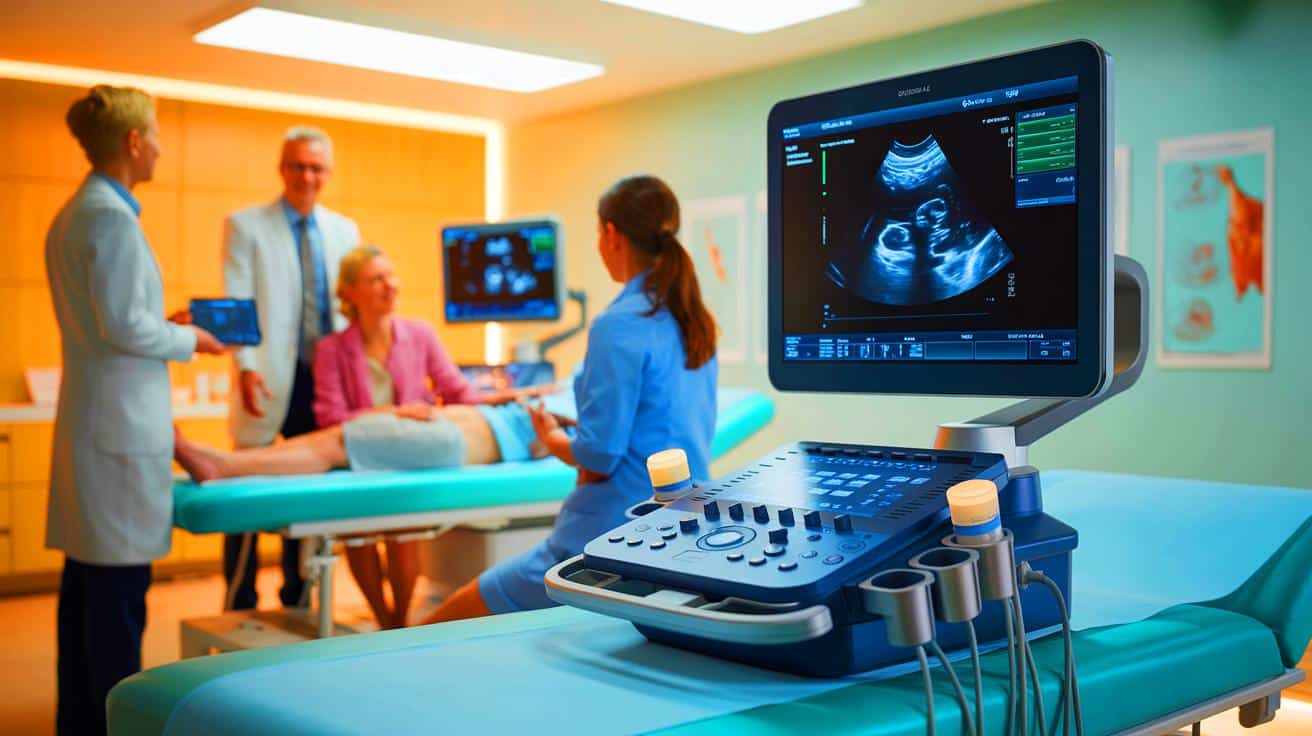
Sona aims to bridge the gaps in current screening methods by offering a novel ultrasound-based solution. Traditional mammograms rely on X-ray technology, which presents limitations, particularly for women with dense breast tissue. Sona’s device, however, utilizes advanced ultrasound sensor-platform technology, providing a safer and more sensitive assessment of breast density.
This innovative approach allows healthcare providers to deliver timely and personalized screening. The device can be easily deployed in primary care settings, offering quick and reliable readings without the need for specialized radiologists. By moving beyond traditional methods, Sona’s technology aligns with efforts to improve early cancer detection and tailor screening processes to individual risk profiles. This could lead to more targeted interventions and better outcomes for women at higher risk.
The Development and Potential Impact of Sona’s Device
Sona’s ultrasound-based device is currently in the preclinical stage, with working prototypes undergoing refinement. It is designed to be small, low-cost, and operator-independent, making it suitable for use in community settings. The technology is being developed with input from both women and clinicians to ensure a user-friendly experience.
Supported by the Government Office for Technology Transfer and the UK Innovation & Science Seed Fund, Sona is preparing for initial human testing with NHS partners. The aim is to evaluate the device’s performance and usability, paving the way for broader application. In the long term, the system is intended for use by healthcare professionals such as nurses and screening practitioners. By bringing breast density assessment closer to the community, Sona hopes to enhance early detection and provide more inclusive health assessments.
Advantages Over Traditional Screening Methods
Current breast screening protocols predominantly use a one-size-fits-all approach, primarily centered around mammography. While effective for some, this method has inherent limitations, particularly for women with dense breasts. Sona’s device presents a compelling alternative, offering a personalized, risk-adaptive screening model that informs women of their breast density from an earlier age.
By facilitating consistent and accessible measurement of breast tissue properties, Sona’s technology enables more personalized screening pathways. This approach could help identify women at increased risk earlier, thus closing gaps in detection. Furthermore, the device’s portability and ease of use allow for deployment in underserved areas, reaching younger women and those less likely to access traditional screening services.
The potential for Sona’s technology to transform breast cancer screening is significant. It offers a pathway to better-informed screening decisions, ultimately improving early detection rates and reducing mortality.
The advancement of technology in healthcare continuously reshapes the landscape of disease detection and prevention. Sona’s innovation in breast density monitoring represents a promising step forward in the fight against breast cancer. By providing a more personalized approach to screening, Sona not only enhances early detection but also empowers women with vital information about their health. As breast cancer remains a leading health concern, how might further innovations in technology continue to change the way we approach screening and prevention?