



| IN A NUTSHELL |
|
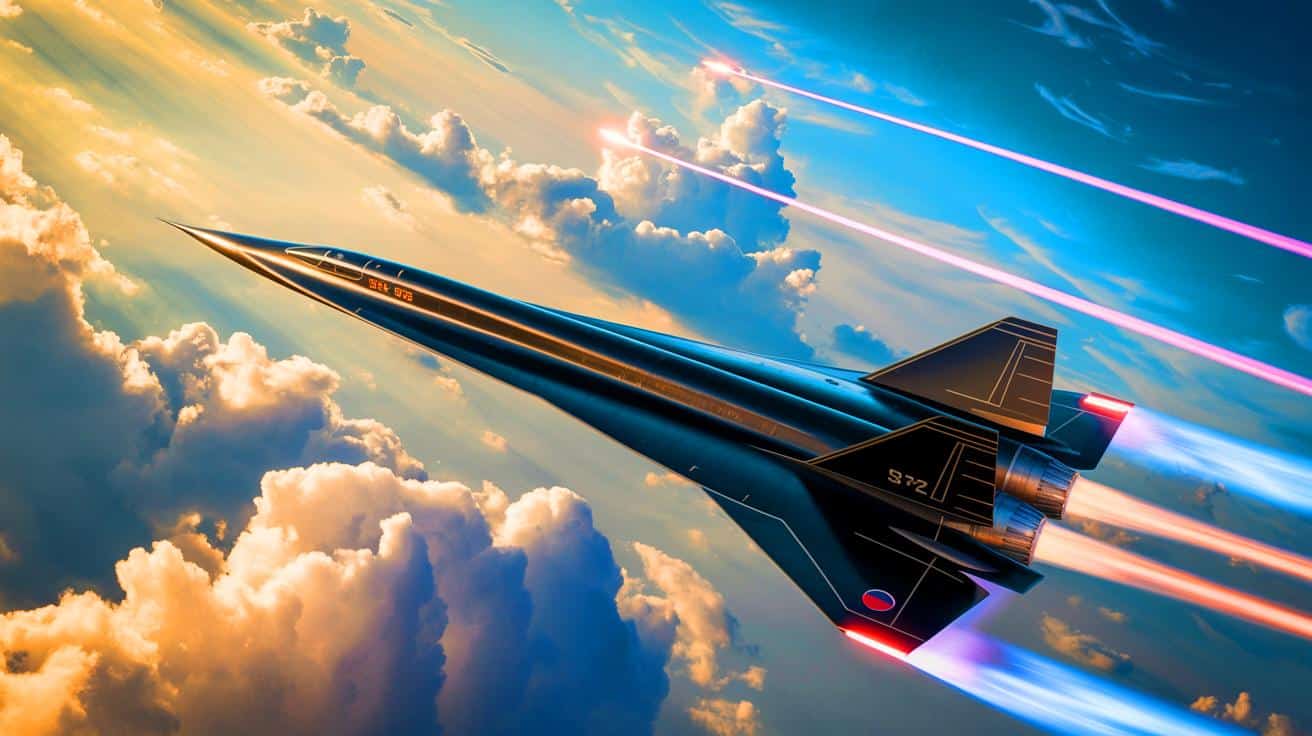
The world of military aviation is on the brink of a revolutionary leap with the anticipated debut of the US hypersonic jet, the SR-72, known as the ‘Son of Blackbird’. Slated for a potential unveiling in 2025, this aircraft is set to be the fastest operational airframe in history, promising speeds exceeding Mach 5. Developed by Lockheed Martin, the SR-72 aims to fulfill the United States Air Force’s strategic needs for hypersonic capabilities. As the successor to the iconic SR-71 Blackbird, this unmanned aircraft is expected to redefine aerial reconnaissance and strike capabilities, offering unprecedented speed and operational flexibility.
The Future of Hypersonic Flight
The SR-72 represents a significant advancement in aviation technology, building on the legacy of its predecessor, the SR-71 Blackbird. Lockheed Martin’s Skunk Works team is reportedly finalizing a prototype, with expectations to complete it by the end of 2025. This aircraft is designed to achieve speeds of over 4,000 mph, allowing it to perform strategic intelligence, surveillance, and reconnaissance missions with unparalleled efficiency.
Unlike conventional aircraft, the SR-72 will operate autonomously, eliminating the risks associated with manned missions in hostile environments. Its hypersonic velocity allows it to penetrate advanced integrated air defense systems, delivering time-critical intelligence with minimal risk of interception. Additionally, the SR-72 could serve as a launch platform for hypersonic strike weapons, integrating cutting-edge technologies to enhance its operational capabilities.
The SR-72’s dual-mode propulsion system combines a traditional turbofan engine with a scramjet, enabling efficient operation across a wide range of speeds.
Technological Challenges and Innovations
The development of the SR-72 is not without its hurdles. Achieving sustained hypersonic flight presents significant technical challenges, particularly in propulsion, thermal management, and materials engineering. The aircraft’s turbine-based combined cycle propulsion system is designed to meet these challenges, merging a conventional turbofan engine with a scramjet capable of sustaining speeds beyond Mach 5.
This innovative propulsion architecture is crucial for the SR-72’s success, as no single engine can efficiently operate from takeoff to hypersonic speeds. The program’s success heavily depends on securing full funding and overcoming the technical obstacles associated with this groundbreaking technology. While discussions with government stakeholders are ongoing, the program’s alignment with the USAF’s hypersonic roadmap suggests a potential service date by 2030.
Strategic Implications for Defense
The SR-72’s development comes at a time when modern air defense systems, such as the S-500 and HQ-19, pose significant challenges to conventional aircraft. The high-speed profile of the SR-72 is designed to counter these threats, reducing time-on-target and limiting exposure to enemy defenses. Its ability to travel at speeds over Mach 5 enables rapid response capabilities, allowing it to reach critical locations in minimal time.
This enhanced mobility offers a strategic advantage, providing commanders with timely intelligence and strike capabilities in fast-paced operations. If successfully deployed, the SR-72 could revolutionize the United States’ approach to denied-access environments, leveraging next-generation propulsion technologies and unmanned systems architecture to project power effectively.
The Path Ahead for Hypersonic Technology
The SR-72 program symbolizes a transformative milestone in aerial reconnaissance and strike capabilities. Its successful deployment would mark a new era in military aviation, setting a precedent for future hypersonic aircraft. However, the program’s success hinges on overcoming substantial technical and financial challenges, as well as securing the necessary support from government stakeholders.
As the world watches the development of the SR-72, the implications for global security and military strategy are profound. The ability to rapidly deploy intelligence and strike capabilities could redefine the balance of power in contested regions. The question remains: Will the SR-72 fulfill its ambitious promises, and how will its deployment shape the future of military aviation and global defense strategies?