



| IN A NUTSHELL |
|
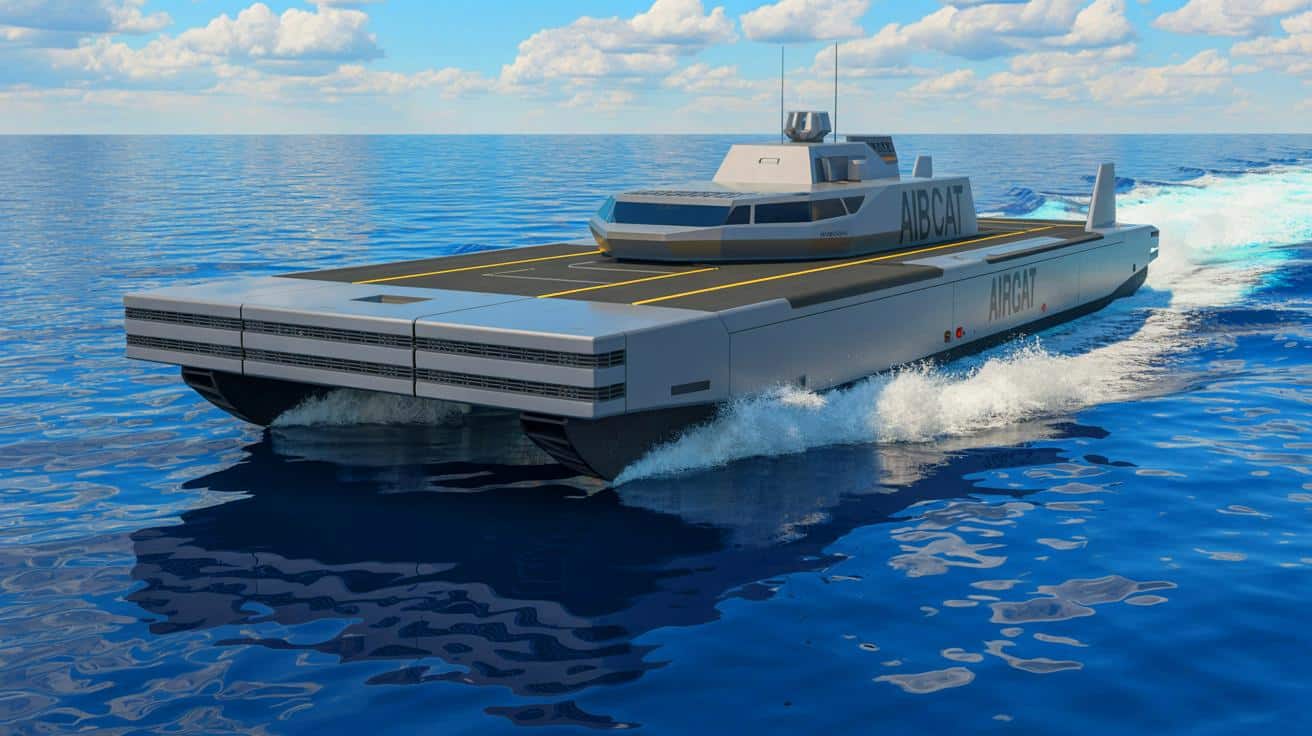
The unveiling of the AIRCAT Bengal MC, an autonomous naval attack vessel, marks a significant leap in maritime technology. Developed by Eureka Naval Craft in collaboration with Australian marine autonomy experts, this vessel is set to redefine naval warfare. With its advanced autonomous navigation system and impressive payload capabilities, the Bengal MC aims to replace traditional crewed warships, offering a cost-effective and highly efficient alternative. As the world moves towards automation, the introduction of such vessels signifies a shift in defense strategies, impacting global naval operations.
Revolutionizing Naval Warfare
The AIRCAT Bengal MC stands out as a groundbreaking achievement in naval design, being the first autonomous naval vessel capable of carrying a 44-ton payload. This impressive capability is complemented by a top speed exceeding 50 knots and a range of 1,000 nautical miles, allowing it to conduct a variety of missions with agility and precision. The vessel’s modular design, accommodating two 40-foot ISO Footprint modules, offers versatility in deployment, whether for attack, reconnaissance, or support missions.
This state-of-the-art ship is poised to serve not only the US Navy but also allied navies such as those of AUKUS, NATO countries, and several Asian nations. The Bengal MC’s ability to operate both crewed and uncrewed adds a layer of flexibility and lethality, with its capacity to launch Tomahawk cruise missiles and anti-ship Naval Strike Missiles (NSM). This dual-operational mode ensures that the vessel can adapt to a variety of combat scenarios, providing strategic advantages in naval engagements.
Equipped with Advanced Armaments
The Bengal MC’s ability to launch Tomahawk cruise missiles and NSMs is a testament to its advanced combat capabilities. This feature significantly reduces the dependency on larger, more costly warships for missile deployment. As Bo Jardine, CEO of Eureka Naval Craft, aptly puts it, the naval market requires disruption, and the Bengal MC is positioned to be that disruptor. With its formidable armament and speed, this vessel offers a faster and more lethal alternative to current naval solutions.
The ship’s advanced armaments are complemented by its autonomous capabilities, making it a formidable force in modern naval warfare. The ability to operate autonomously or with a crew allows for flexibility in mission planning and execution. The Bengal MC’s design is focused on enhancing lethality and efficiency, ensuring that it can fulfill a range of roles from direct combat to support operations. This adaptability is crucial in today’s rapidly changing naval landscape, where versatility and speed can determine the outcome of conflicts.
Efficiency and Versatility
One of the most significant advantages of the AIRCAT Bengal MC is its superior fuel efficiency and lower operational costs. In a time when defense budgets are scrutinized, the Bengal MC offers an attractive solution for navies aiming to maximize their capabilities without overspending. The vessel’s design allows it to serve multiple roles, including troop transport, electronic warfare, and mine warfare, further enhancing its value.
The integration of the Greenroom Advanced Maritime Autonomy (GAMA) Software system enhances the ship’s operational efficiency. Developed by Greenroom Robotics, this system has been validated in real-world scenarios, demonstrating its reliability and effectiveness. The Bengal MC’s advanced software and hardware integration ensure that it remains at the forefront of autonomous naval technology, providing cutting-edge solutions to modern military challenges.
Joining a Fleet of Innovators
The AIRCAT Bengal MC is part of a larger fleet of innovative vessels designed by Eureka Naval Craft. This fleet, which includes the Bengal, Lynx, Jaguar, and Panther, caters to various operational needs, from high-speed troop transport to unmanned logistics. The modular design of these vessels allows for customization based on specific mission requirements, offering tailored solutions to clients.
The introduction of the Bengal MC into this fleet signifies a commitment to advancing naval technology and meeting the demands of modern warfare. As navies around the world seek to enhance their capabilities, the Bengal MC provides a versatile and efficient option, ensuring that they remain competitive in an era of rapid technological advancement. With its advanced features and adaptability, the Bengal MC is set to become a cornerstone of future naval operations.
As the AIRCAT Bengal MC enters the naval scene, it poses a critical question: How will the integration of autonomous vessels reshape the future of naval warfare and strategy? This new era of maritime technology invites further exploration and adaptation, challenging traditional naval paradigms and offering new possibilities for defense innovation.