



| IN A NUTSHELL |
|
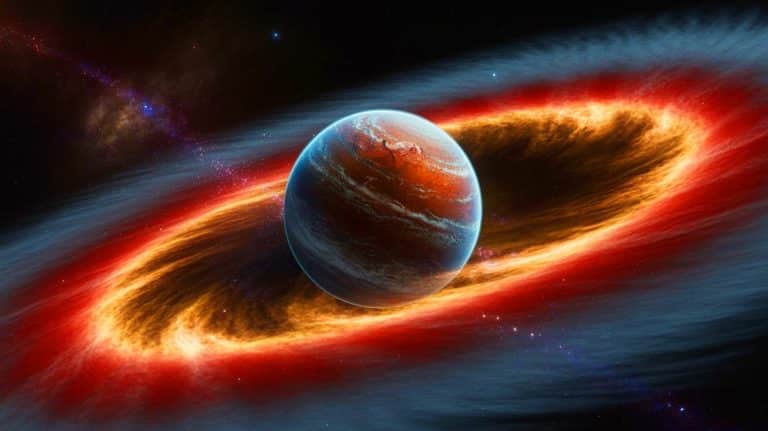
Recent discoveries by international scientists have significantly reshaped our understanding of the universe, revealing that super-Earths are more common than previously thought. Utilizing data from the Korea Microlensing Telescope Network (KMTNet), researchers have identified these massive exoplanets, which are often located at great distances from their host stars. This new information challenges earlier perceptions and suggests a universe abundant with planetary diversity. With cutting-edge techniques like microlensing, scientists are not only finding more of these distant worlds but are also redefining the patterns of planetary formation and distribution in the galaxy.
Big Planets in a Big Universe
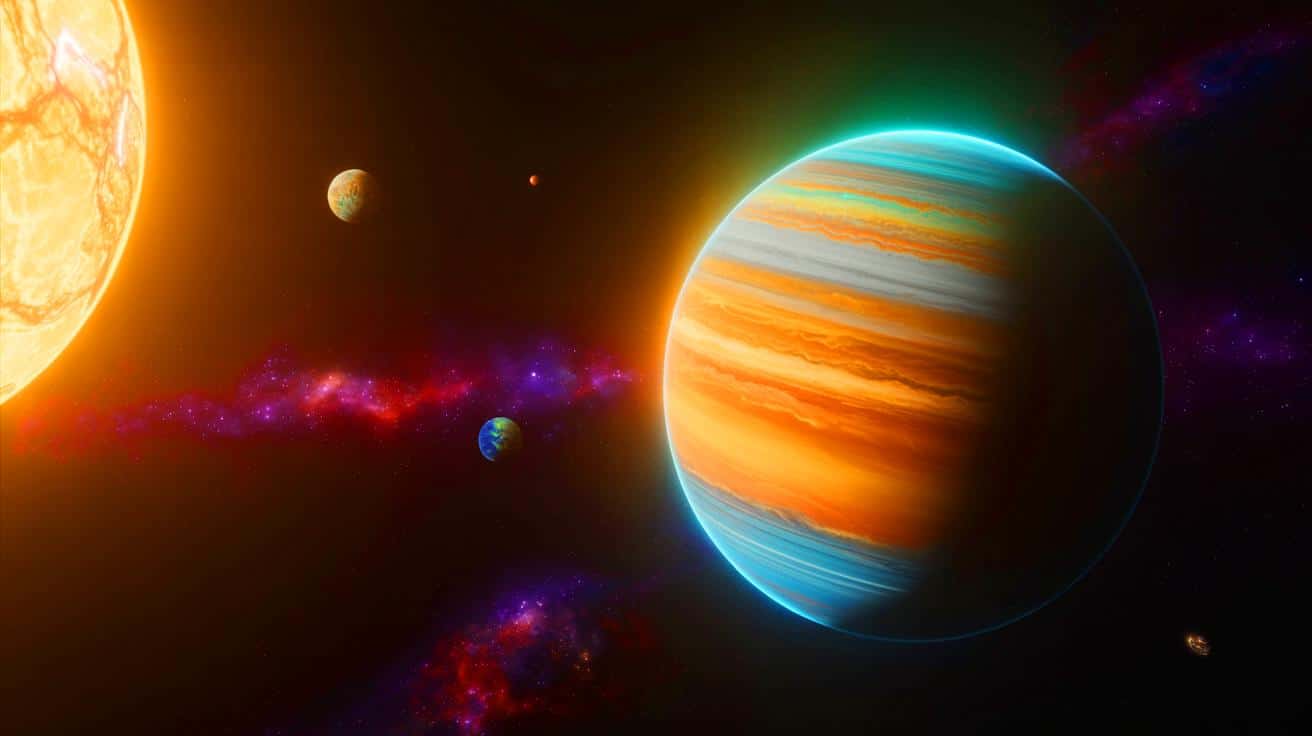
In an exciting twist to our understanding of the cosmos, it has been revealed that super-Earths populate the universe far more extensively than smaller planets. According to Andrew Gould, co-author of the study, the findings challenge the notion that the universe primarily hosts small planets. The patterns observed show an excess of super-Earths, suggesting they are a prevalent planetary type. These revelations are significant as they offer a broader insight into the kinds of planets that exist, particularly those with orbital periods akin to Jupiter’s, which are harder to detect due to their distance from their host stars.
The study indicates that about one-third of all stars may host at least one super-Earth, a statistic that suggests these planets are a common occurrence across the universe. This paradigm shift not only enriches our understanding but also raises new questions about the formation of these large planets in varied environments.
Microlensing Exoplanets
The microlensing technique, pivotal to this study, involves observing how an object’s mass can bend and amplify light from a more distant object. This method has been instrumental in detecting exoplanets that are otherwise too far or faint to observe. Gould and his team have successfully used microlensing to identify the super-Earth OGLE-2016-BLG-0007, a discovery that underscores the power of this technique. This particular exoplanet orbits its star at a distance greater than that of Saturn from the Sun, showcasing the vast range of planetary orbits that exist.
Through microlensing, Gould’s team has classified exoplanets into two main types: those similar to super-Earths and Neptune-like planets, and the larger gas giants like Saturn and Jupiter. This classification helps in mapping out the diversity of planets and provides a clearer picture of their distribution in the galaxy, offering a new lens through which to view planetary formation.
Super-Earth Formation
The formation of super-Earths is a complex process that continues to intrigue scientists. The study provides new insights into how these planets may form, suggesting that their development differs significantly from that of gas giants. The dominant theory involves runaway gas accretion, although gravitational instability might also play a role. This uncertainty highlights the complexity of planetary formation and the need for further research.
The research conducted by Gould’s team offers a fresh framework for analyzing planetary formation, bridging gaps between theoretical models and observational data. Instruments like KMTNet are crucial in this endeavor, as they help astronomers gather detailed data on these distant worlds, paving the way for future discoveries and a deeper understanding of our universe’s evolutionary processes.
International Cooperation in Astronomy
The success of this research underscores the importance of international collaboration in astronomy. KMTNet, with its global network of telescopes in South Africa, Chile, and Australia, showcases the power of collective scientific efforts. The system’s ability to provide comprehensive coverage of the sky is revolutionizing the search for exoplanets, allowing for more discoveries than ever before.
This collaboration extends beyond geographic boundaries, involving institutions like the Ohio State University Imaging Sciences Laboratory, which contributed to the design of the cameras used by KMTNet. Such partnerships highlight how the field of astronomy is becoming increasingly global, with scientists working together to unravel the mysteries of the universe. As we continue to discover more about these distant worlds, the question remains: how will these findings reshape our understanding of the cosmos and our place within it?