



| IN A NUTSHELL |
|
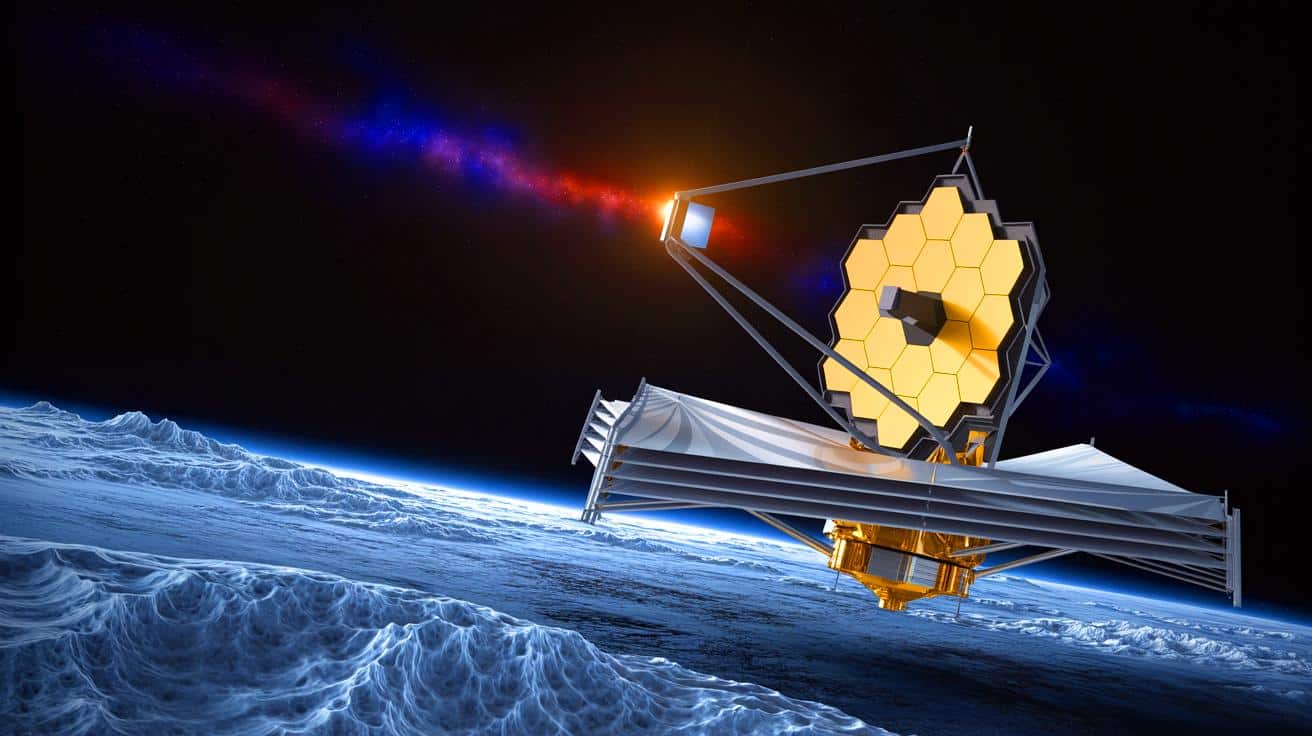
The James Webb Space Telescope is providing a remarkable glimpse into the universe, allowing scientists to explore the mysterious objects located at the edge of our solar system. Known as Trans Neptunian Objects (TNOs), these remnants from the formation of our solar system over four billion years ago hold secrets about the conditions that led to the birth of Earth and other planets. Researchers are particularly interested in understanding the chemical composition of these objects, especially the presence of organic molecules like methanol, which may offer critical insights into the origins of life on Earth and beyond.
Mysterious Objects at the Edge of the Solar System and the Origin of Life
Trans Neptunian Objects, or TNOs, present an exciting opportunity for scientists to delve into the primordial past of our solar system. As remnants of the protoplanetary disk predating the solar system’s formation, these mysterious bodies offer a window into the raw materials that composed planets, including Earth. Understanding these elements is vital for scientists investigating the origins of life.
Several hypotheses surround the emergence of life on Earth, ranging from extraterrestrial origins to chemical reactions triggered by lightning. Some theories even suggest life emerged in phosphate-rich ponds, as proposed by Charles Darwin, or that it gained a foothold through interactions with viruses. Despite various theories, the enigma remains unresolved.
Advanced imaging platforms like the James Webb Space Telescope are revolutionizing our understanding of these distant objects. The telescope recently offered the clearest signs of life beyond Earth and allowed researchers to study a Kuiper Belt Object known as Snow Man. By analyzing the chemical components of these bodies, scientists hope to uncover clues about the early solar system and the potential origins of life.
Methanol and the Different Classes of TNOs
Methanol, a simple yet significant alcohol, has been detected on both comets and distant TNOs, suggesting it could be a primitive ingredient from the solar system’s inception or even interstellar space. According to Dr. Noemí Pinilla-Alonso from the University of Central Florida, methanol is not merely a leftover but a transformative chemical that evolves under solar radiation. This transformation acts like a chemical time capsule, revealing the evolutionary history of these icy worlds.
Analysis of data from the James Webb Space Telescope revealed intriguing findings. TNOs closer to the sun exhibited a depleted surface methane level, while those further away showed a lower presence of methanol. This disparity is likely due to sunlight, which seems to play a crucial role in the chemical evolution of these objects. The study suggests that methanol on TNOs is destroyed by irradiation on the surface but remains abundant below, shielded from solar exposure.
Associate Professor Ana Carolina de Souza-Feliciano elaborated on the significance of studying the “cliff group” of TNOs, which have remained relatively unchanged since their formation. These cold-classical TNOs are unique because they likely occupy the same positions today as when the solar system first formed, offering a stable reference point for understanding the outer solar system.
Search for Methanol Can Aid Origin of Life Research and ‘Fuel’ Scientific Curiosity
While the search for alien artifacts or technology continues, the study of methanol and other chemical building blocks could unlock the mysteries of life’s origins. As Rosario Brunetto from Université Paris-Saclay points out, such discoveries reshape our understanding of TNOs and provide crucial reference points for interpreting observations from the James Webb Space Telescope. These insights could also guide future missions exploring the outer reaches of the solar system.
The scientific significance of methanol extends beyond mere data collection. It fuels curiosity and inspires new generations to explore the cosmos, understanding the chemical evolutions occurring in space. With each discovery, the quest to unravel the secrets of the universe gains momentum, encouraging researchers and enthusiasts alike to push the boundaries of our cosmic knowledge.
As scientists continue to explore these distant objects, the James Webb Space Telescope stands as a beacon of discovery, offering unprecedented insights into the solar system’s past. With each revelation, we move closer to understanding the complex web of factors that led to the emergence of life. What other secrets might these ancient celestial bodies reveal in our quest to comprehend the universe’s origins and our place within it?