




| IN A NUTSHELL |
|
As the world increasingly seeks sustainable energy solutions, photocatalytic water splitting has gained attention as a method to convert solar energy into hydrogen fuel. This process not only offers a renewable energy source but also holds potential for environmental remediation. Despite its promise, the primary focus has been on material design rather than optimizing the reaction systems. Researchers have now developed an innovative immobilized photothermal-photocatalytic system, promising improved efficiency and practical applications. This article delves into the workings of photocatalytic water splitting, the advancements in full-spectrum responsiveness, and the potential for real-world applications.
Understanding Photocatalytic Water Splitting
Photocatalytic water splitting is a process that uses light to divide water into hydrogen and oxygen. This method offers a clean way to generate hydrogen, a versatile energy carrier. Central to this process is the photocatalyst, typically a semiconductor like titanium dioxide. When sunlight strikes the photocatalyst, it excites electrons, which then participate in redox reactions. Electrons reduce protons to hydrogen gas, while holes oxidize water, releasing oxygen.
The efficiency of this reaction depends heavily on the design of the photocatalyst. It must absorb light effectively, separate charge carriers efficiently, and facilitate surface reactions. Despite its potential, current challenges include low efficiency, unstable catalysts, and limited light absorption. These issues need resolution before large-scale implementation is feasible.
UK’s $300 Million Investment in Satellite Tech Shatters Net Zero Goals: “Unprecedented Leap Forward”
Advancements in Full-Spectrum Responsiveness
Conventional photocatalytic systems largely rely on ultraviolet and visible light, neglecting near-infrared light, which makes up over half of the solar spectrum. Addressing this limitation is crucial for boosting efficiency. Researchers have developed a system that responds to the full solar spectrum, marking a significant breakthrough.
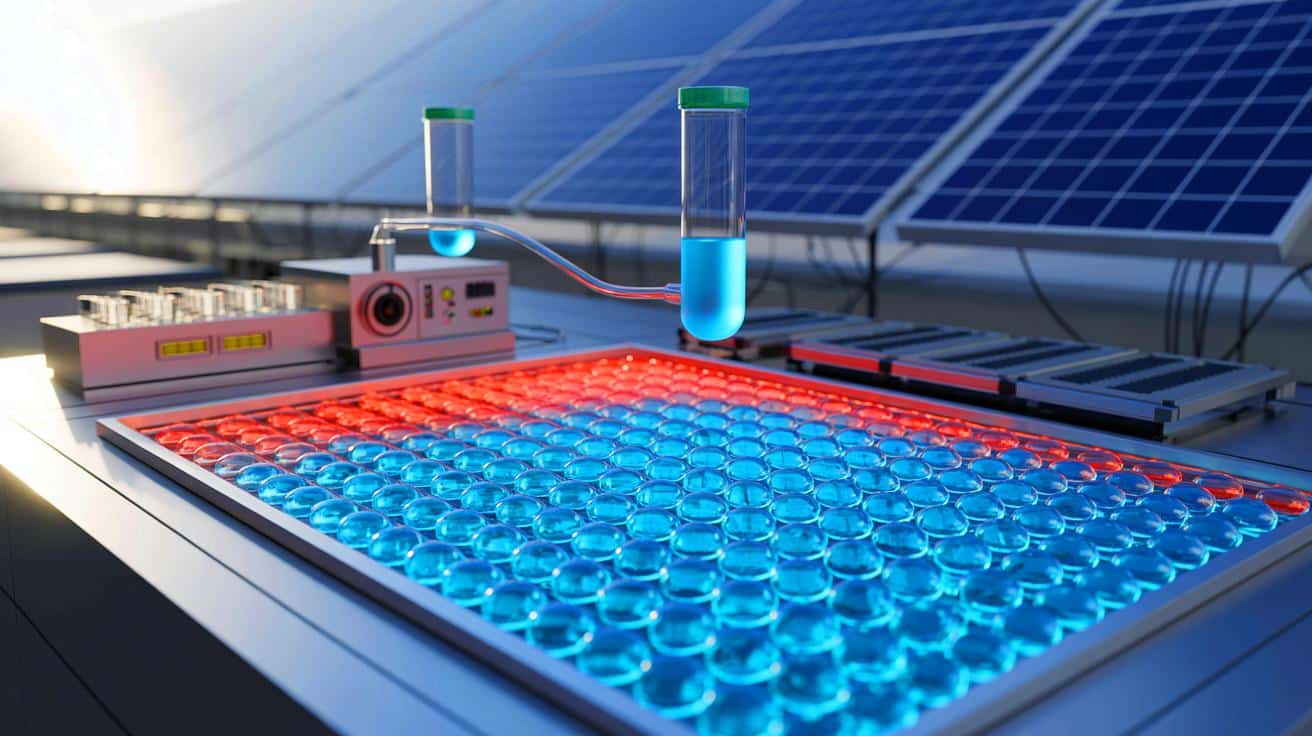
This new system integrates a photothermal substrate with high-performance photocatalysts. It enables a synergistic process where liquid water evaporates, and steam-phase water splitting occurs, all under light exposure without extra energy. This innovation not only improves energy absorption but also enhances hydrogen production rates.
Remarkable Hydrogen Production Rates
To enhance efficiency, a CdS/CoFe2O4 (CCF) p-n heterojunction photocatalyst was developed using calcination. This method ensures effective transmission and separation of charge carriers. The system uses annealed melamine sponge (AMS) as a photothermal substrate, transforming the conventional triphase system into a more efficient gas-solid biphase configuration.
The optimized CCF/AMS system achieves a hydrogen evolution rate of 254.1 µmol per hour, significantly outperforming traditional systems. This advancement exemplifies the potential of combining innovative material design with strategic reaction system construction to achieve superior results.
UK Scientists Unveil 27 Shocking Actions: Transforming Your Food System Into a Total Revolution
Potential Applications of the New System
This new system not only enhances the efficiency of photocatalytic water splitting but also provides valuable insights for future developments. By improving solar energy utilization and reducing resistance at the catalytic interface, it presents a practical pathway for large-scale applications.
According to Professor Maochang Liu, this gas-solid biphase system elevates overall reaction temperatures and minimizes gas transport resistance, leading to a marked improvement in photocatalytic efficiency. This could revolutionize how solar energy is harnessed for hydrogen production, with potential impacts on energy policy and industrial practices.
The journey to convert solar energy into storable hydrogen fuel through photocatalytic water splitting is filled with both challenges and breakthroughs. As researchers continue to optimize reaction systems and explore full-spectrum responsiveness, the potential for practical applications grows. Could this innovative approach pave the way for a new era of renewable energy solutions?

Wow, this is mind-blowing! Could this really change the face of renewable energy? 🤯
Wow, this sounds revolutionary! But how scalable is this new technology? 🤔
Can you explain the role of the CdS/CoFe2O4 photocatalyst in simpler terms?
Is the cost of implementing this system feasible for large-scale operations?
Why should we trust this new method when so many others have failed before?
Great article, but I’d like to know more about the environmental impact of this new technology.
How does this system compare with other hydrogen production methods in terms of efficiency?
Thanks for the article! What are the environmental impacts of using this new system?
This sounds too good to be true. Are there any hidden downsides?
Thank you for the insightful article! This is promising for the future of hydrogen fuel. 🌟
Finally, a step in the right direction for hydrogen production! 🚀
Isn’t CdS/CoFe2O4 potentially harmful to the environment? 🤔