



| IN A NUTSHELL |
|
The quest for sustainable and low-carbon solutions in industrial processes has become a central focus for researchers and engineers worldwide. A promising development in this arena is the use of plasma technology for nitrogen fixation, a critical step in producing fertilizers. This innovation could potentially revolutionize the chemical industry by providing a cleaner and more efficient alternative to traditional methods. The electrification of chemical processes, particularly through the use of low-temperature plasmas, offers a pathway to significantly reduce carbon emissions and improve energy efficiency in fertilizer production.
The Shift Toward Electrification in Chemistry
Electrification is increasingly seen as a crucial strategy for achieving sustainability across various sectors. The transportation industry is moving away from internal combustion engines toward electric vehicles, while industrial heating is transitioning to electric-based technologies like heat pumps and induction. The chemical industry is also undergoing a transformation known as the electrification of chemistry. This entails using electricity as the primary energy source for chemical processes, replacing fossil fuel combustion.
Electrification brings numerous advantages, particularly when powered by renewable energy sources such as solar or wind. The processes can become nearly carbon-free, offering a substantial reduction in greenhouse gas emissions. Additionally, electrification enables decentralized production, allowing for smaller, modular facilities that can be located closer to end-users. This reduces transportation costs and supply chain vulnerabilities, making the entire process more efficient and resilient.
The chemical industry currently contributes about 7% of global greenhouse gas emissions, highlighting the urgent need for change. Electrified chemical processes, especially those that can operate flexibly with variable renewable electricity, are a significant area of research. Companies like BASF and Siemens Energy are investing in developing electrochemical or plasma-based synthesis routes for essential chemicals like ammonia.
UK Scientists Unveil 27 Shocking Actions: Transforming Your Food System Into a Total Revolution
Innovations in Plasma Technologies
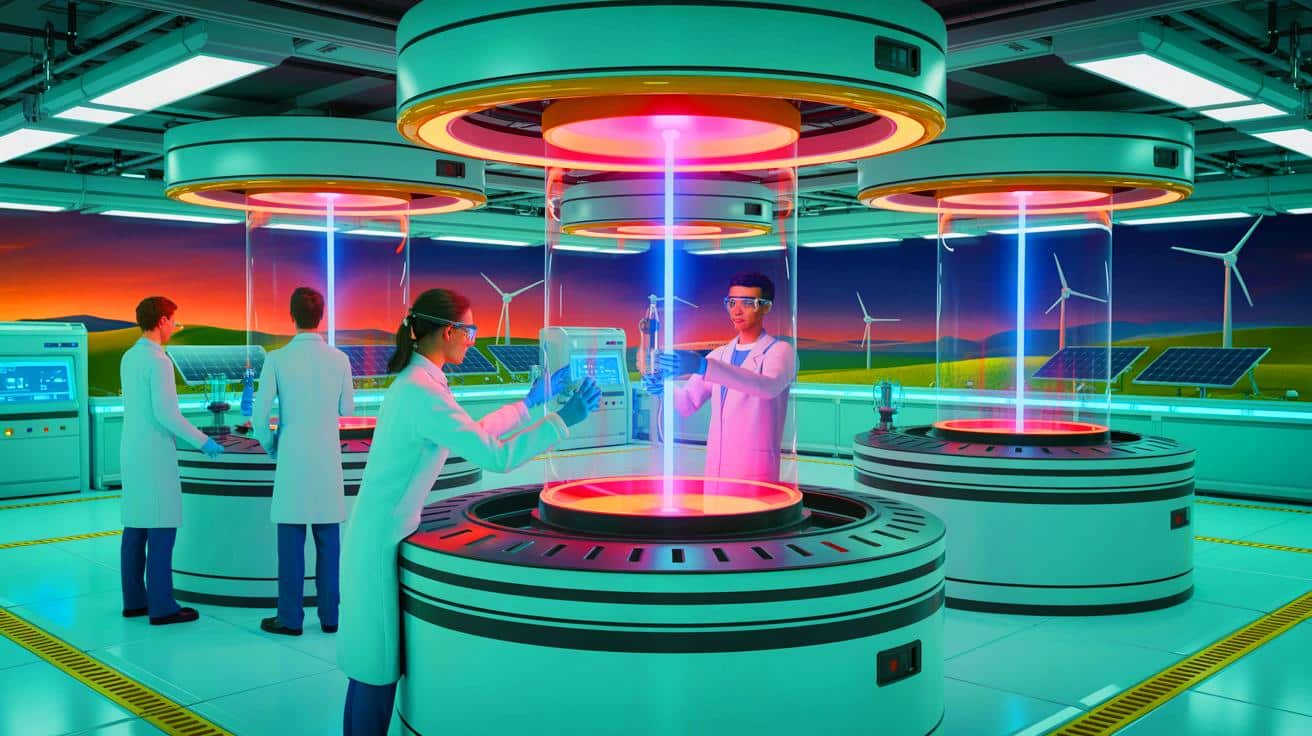
Low-temperature plasmas are emerging as one of the most promising tools for electrifying chemical processes. These weakly ionized gases feature electrons that are much hotter than the bulk gas, allowing for chemical reactions without the need for high temperatures. This property makes plasmas particularly suitable for driving reactions that would otherwise require significant thermal input.
In a low-temperature plasma, energetic electrons collide with neutral molecules, creating reactive species such as radicals and ions. These species can initiate and sustain reactions, enhancing surface chemistry and enabling processes like plasma etching in semiconductor fabrication. However, the critical challenge remains energy efficiency. For plasma processes to be competitive, they must consume no more energy per product unit than existing thermal technologies.
To address this, researchers are exploring various methods to improve plasma efficiency. Approaches include nanosecond pulsed discharges, gliding arcs, and integrating catalytic surfaces with plasmas to enhance reaction pathways. Despite decades of research, achieving energy costs comparable to mature thermal processes remains a challenge. The specific energy cost, measured in megajoules per mole of nitrogen fixed, is a key metric for assessing the viability of plasma-based methods.
Challenges in Nitrogen Fixation
Nitrogen is a crucial element for agriculture, pharmaceuticals, and other industries. However, atmospheric nitrogen exists as N₂, a molecule with a strong triple bond, making nitrogen fixation an energy-intensive process. Industrially, the Haber-Bosch process is used for nitrogen fixation, involving high temperatures and pressures to convert nitrogen into ammonia. This process is resource-intensive and contributes significantly to global CO₂ emissions.
The Haber-Bosch process consumes about 1-2% of global energy and generates 1-3% of global CO₂ emissions. It is also capital-intensive, requiring large-scale plants to be economically viable. As efforts to decarbonize intensify, researchers are exploring sustainable alternatives with lower capital costs.
Plasma-based approaches to nitrogen fixation have been considered for decades. Early 20th-century efforts like the Birkeland-Eyde process used electric arcs for NO synthesis, but were abandoned due to inefficiency. Modern research has revived these ideas, focusing on advanced reactors and the potential of abundant renewable electricity.
Breakthrough in Plasma-Based Nitrogen Fixation
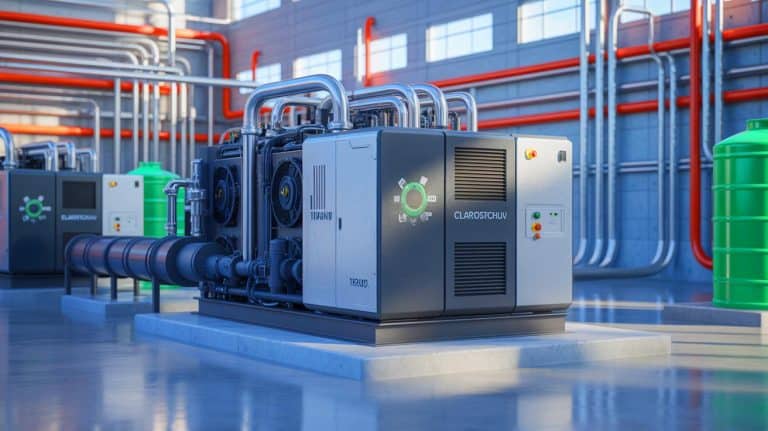
US Plasma Engineering LLC has developed a novel plasma chemical reactor that achieves significant improvements in energy efficiency for nitrogen fixation. Using only air and water, their laboratory-scale prototype has achieved an energy cost of 0.54 MJ/mol N, representing the lowest energy cost achieved with atmospheric-pressure plasma technology. This breakthrough opens new possibilities for sustainable fertilizer production.
The plasma-based process avoids the use of hydrocarbon feedstock and CO₂ emissions, offering a cleaner alternative to traditional methods. It is also less capital-intensive, with estimates indicating that the capital cost per unit of nitrogen fixed is significantly lower than the Haber-Bosch process. The modular nature of plasma technology allows for flexible scaling, making small production plants economically viable.
This innovation could transform fertilizer production by enabling sustainable, flexible, and localized manufacturing. It promises to reduce the reliance on fossil fuels and enhance food security through decentralized production. As the technology continues to develop, it poses a critical question: How will the chemical industry adapt to integrate these groundbreaking advancements in plasma-based nitrogen fixation?