




| IN A NUTSHELL |
|
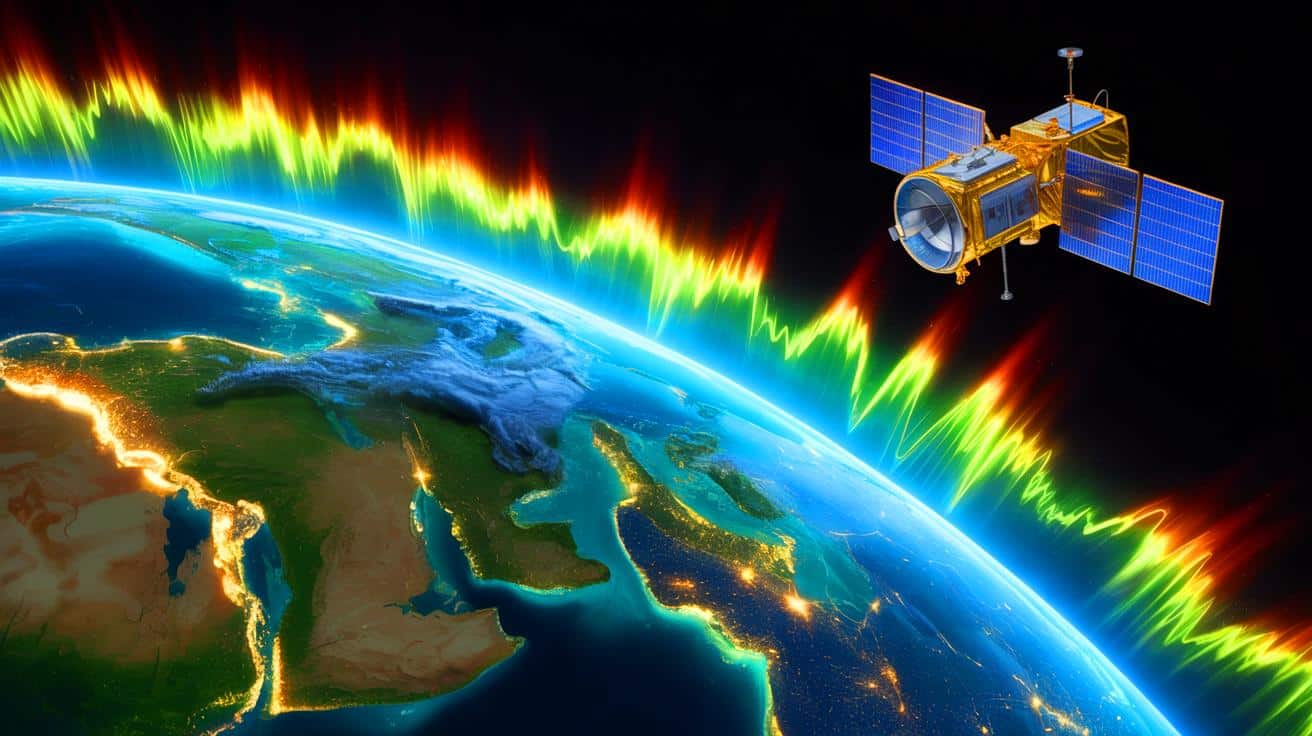
The South Atlantic Anomaly (SAA) presents a fascinating intersection of natural phenomena and technological challenges. This weakened magnetic field region spans parts of South America and the South Atlantic Ocean, posing significant risks to satellites and space missions. As this anomaly dynamically evolves, scientists and space agencies like NASA are diligently studying its origins and impacts. Understanding the SAA is crucial not only for safeguarding our space infrastructure but also for gaining deeper insights into Earth’s magnetic field and core dynamics.
Origins of the South Atlantic Anomaly
The South Atlantic Anomaly, or SAA, is a remarkable geomagnetic phenomenon that highlights the complexity of Earth’s magnetic field. Characterized by a significant reduction in magnetic intensity, the SAA results from intricate processes deep within the Earth. The anomaly’s origins are closely tied to the geodynamo, a process involving the movement of molten iron and nickel in the Earth’s outer core, which generates the magnetic field.
This field generation is influenced by several factors, including the tilt of Earth’s magnetic axis and the presence of the African Large Low Shear Velocity Province, a massive dense structure located about 1,800 miles beneath the African continent. These elements contribute to a local polarity reversal, weakening the dipole field intensity in the region and creating the unique conditions observed in the SAA. Understanding these mechanisms is essential for predicting the anomaly’s future behavior and mitigating its impact on technology.
Technological Implications and Risks
The SAA poses considerable risks to space technology, particularly satellites that pass through this vulnerable region. These satellites are exposed to high levels of energetic protons, leading to single event upsets (SEUs) that can cause temporary malfunctions or data corruption. In severe cases, critical systems might suffer permanent damage.
To address these challenges, satellite operators implement strategies such as shutting down non-essential systems while traversing the anomaly. The International Space Station (ISS), which crosses the SAA with each orbit, employs protective shielding for astronauts, though external instruments remain susceptible to glitches. Missions like the Ionospheric Connection Explorer (ICON) closely monitor the anomaly, adjusting operations to minimize data loss and maintain mission integrity.
Dynamic Changes and Challenges
The South Atlantic Anomaly is not a static phenomenon. Recent observations, including data from the European Space Agency’s Swarm constellation and NASA’s SAMPEX mission, reveal dynamic changes in the anomaly’s behavior. The SAA is slowly drifting northwest, expanding in area, and has begun splitting into two lobes, each with its center of minimum magnetic intensity.
This bifurcation increases the complexity of managing satellite operations, as more regions become hazardous for spacecraft. Scientists are tasked with developing predictive models of geomagnetic conditions to ensure the safety of current and future missions. Continuous monitoring and adaptation are key, as the evolving SAA presents new challenges for space agencies and researchers alike.
Future Prospects and Scientific Endeavors
NASA and other research organizations are committed to understanding the SAA’s evolution through a combination of satellite data and core simulations. By feeding these inputs into global models like the International Geomagnetic Reference Field (IGRF), scientists can track the magnetic field’s evolution and refine predictions. This approach is vital for planning space missions and understanding Earth’s internal dynamics.
While the SAA’s current evolution is unprecedented in the space era, historical records indicate that such anomalies are not uncommon over geological timescales. Importantly, experts assert that the SAA is not an indicator of an imminent magnetic pole reversal, a rare event occurring over hundreds of thousands of years. Continued study of the SAA is crucial for protecting our space assets and enhancing our understanding of Earth’s magnetic field and core processes.
As the South Atlantic Anomaly continues to evolve, the scientific community remains vigilant in its efforts to understand and mitigate its impact. With its potential to disrupt satellite operations and influence our understanding of Earth’s magnetic field, the SAA poses intriguing questions about the future of our planet’s magnetic dynamics. How will these changes shape our technological and scientific pursuits in the years to come?