



| IN A NUTSHELL |
|
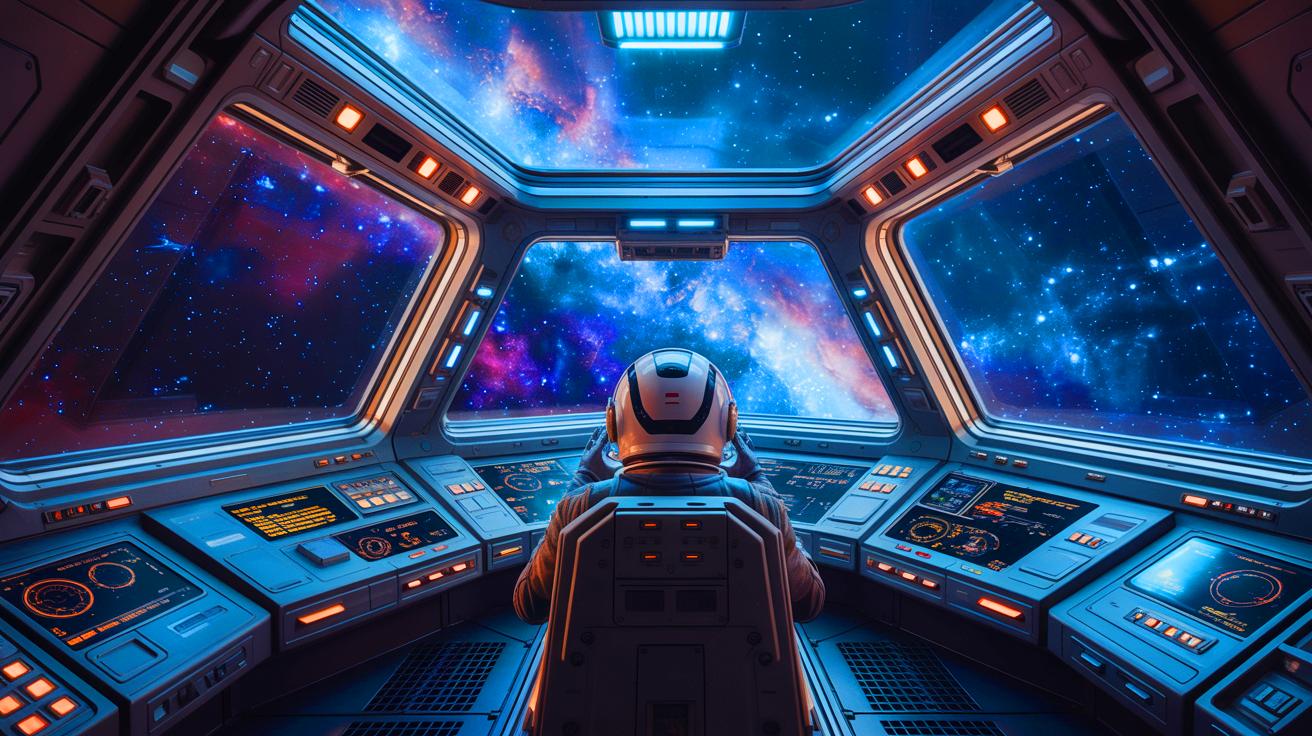
In recent years, the realm of artificial intelligence (AI) has expanded beyond conventional tasks, venturing into areas traditionally dominated by human expertise. One such groundbreaking experiment involves using AI as a pilot in a simulated space mission, challenging its capabilities in a high-stakes environment. With AI technologies like ChatGPT demonstrating remarkable proficiency, the prospects of AI in space exploration are becoming increasingly viable. Researchers have initiated tests where AI systems pilot spacecraft, achieving results comparable to specialized systems. As humanity strives to explore deeper into our solar system, the role of AI in these missions is becoming essential.
The Rise of AI in Space Exploration
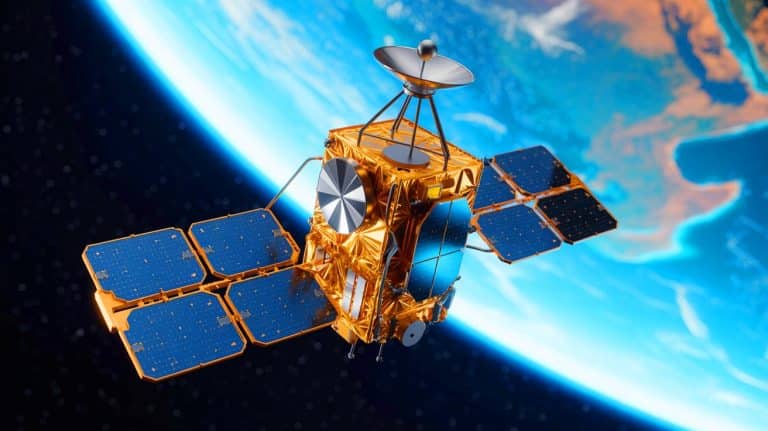
Space exploration has always been a frontier where cutting-edge technology meets human ingenuity. However, the complexity and volume of missions are outpacing human capacity, necessitating the integration of autonomous systems. The idea of using AI to navigate satellites and probes is gaining traction. The delay in communication from Earth to distant spacecraft poses significant challenges, making real-time decision-making crucial. Autonomous systems can bridge this gap, ensuring timely responses in critical scenarios.
The introduction of AI into this domain is not merely theoretical. Recent experiments have shown that AI can pilot spacecraft in simulations with proficiency nearing that of bespoke systems. This development is a testament to the potential of AI in handling complex navigational tasks, where human intervention may not be feasible. The strategic deployment of AI in space missions could lead to more efficient and successful explorations.
Simulated Space Missions: A Testing Ground for AI
The “Kerbal Space Program Differential Game Challenge” serves as an experimental sandbox for AI algorithms. Inspired by the popular video game, this simulation allows researchers to test AI in realistic space scenarios. Participants can evaluate their algorithms in tasks like satellite pursuit and interception, pushing the boundaries of AI capabilities. The objective is to refine AI to a point where it can operate without human supervision.
In one notable test, ChatGPT was tasked with piloting a spacecraft. The results were impressive, with the AI securing second place in the challenge. This performance highlights the potential of large language models, like ChatGPT, in executing complex tasks. By leveraging pre-existing knowledge, these models can bypass the extensive training typically required for specialized algorithms, streamlining the development process.
Challenges and Limitations of AI Pilots
Despite the promising results, there are significant challenges to overcome before AI can be entrusted with piloting real spacecraft. One major concern is the issue of AI “hallucinations,” where the system generates incorrect or nonsensical outputs. While such errors are benign in everyday applications, they could have catastrophic consequences in space missions. Addressing these shortcomings is critical to ensuring the reliability of AI systems.
Moreover, the transition from simulation to real-world application poses its own set of challenges. The unpredictability of space environments requires AI to adapt and make decisions in real-time. Ensuring the AI can handle unexpected scenarios is crucial to its success as a co-pilot. Researchers are actively working on refining these systems, with the hope that AI will soon become a reliable partner in space exploration.
The Future of AI in Space Missions
As AI technology continues to evolve, its role in space exploration is poised to expand. The vast amount of human knowledge embedded within AI models positions them as ideal candidates for assisting in complex decision-making. These systems have the potential to become adept co-pilots, capable of adapting to unforeseen circumstances and making critical decisions autonomously.
Looking ahead, the integration of AI in space missions could revolutionize how we explore the cosmos. By augmenting human capabilities, AI can help overcome the limitations posed by distance and communication delays. As researchers continue to refine these technologies, the possibility of AI-led missions becomes increasingly tangible. However, this technological leap raises a fundamental question: as we push the boundaries of AI in space exploration, how will we manage the balance between human oversight and machine autonomy?