




| IN A NUTSHELL |
|
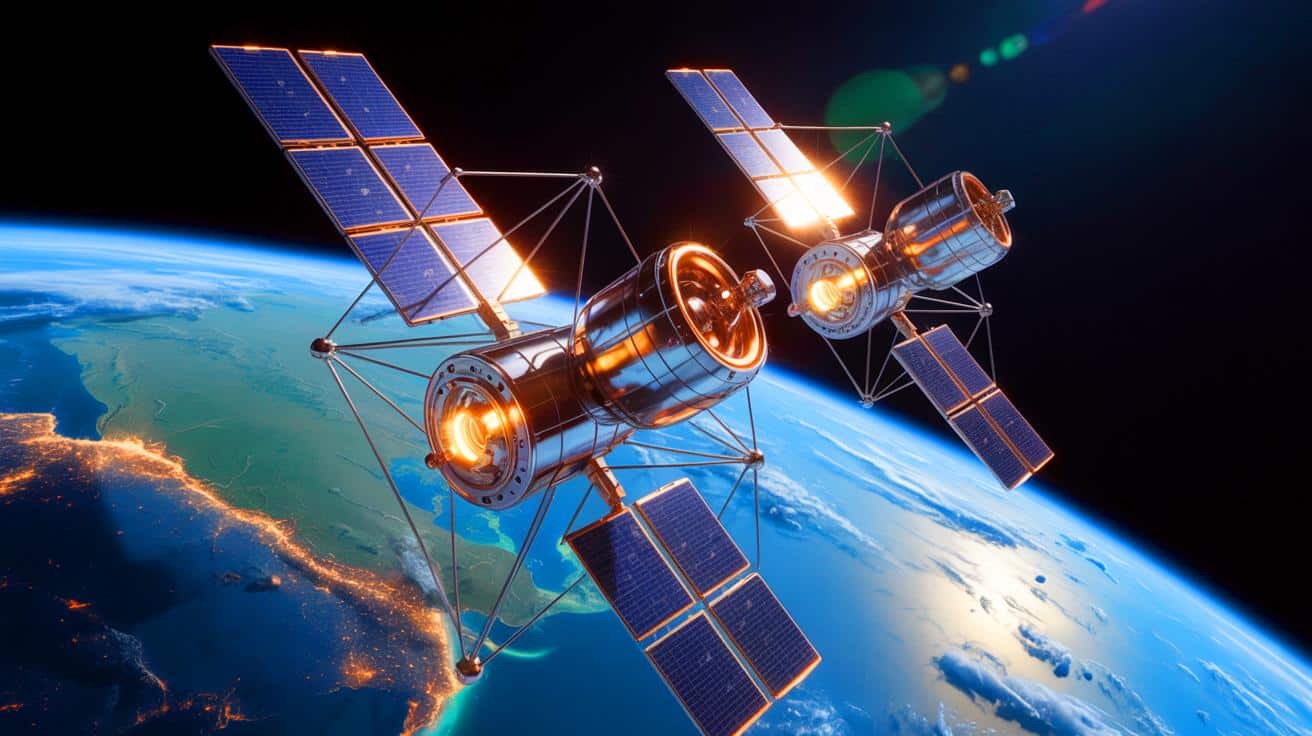
China’s recent launch of a constellation of satellites marks a significant advancement in the arena of space applications. On May 14, the Asian powerhouse set in motion its ambitious plan to construct the world’s first supercomputer in orbit. Utilizing a Long March 2D rocket, the Chinese team sent 12 satellites equipped with intelligent computing systems into space. This move is part of the larger Three-Body Computing Constellation, which aims to achieve a combined computing power of 1,000 peta operations per second (POPS). As the project unfolds, the global community watches with keen interest, contemplating the potential impacts on science, economics, and strategic military operations.
Real-Time Data Processing in Orbit
China’s pioneering endeavor in space technology is expected to revolutionize real-time data processing capabilities. According to the Chinese Academy of Engineering, the constellation will enable data to be processed in orbit, enhancing efficiency in satellite operations. Zhejiang Lab, based in Hangzhou, is leading this groundbreaking project in collaboration with international partners. Wang Jian, a key figure in the project, articulated the vast potential of this constellation to address inefficiencies in traditional satellite systems and facilitate the integration of artificial intelligence into space-based applications.
Wang emphasized that the initiative aims to elevate a single satellite’s computing power from the teraflop to the petaflop level. This jump in capability mirrors the evolution of the internet, where seamless interconnectivity between satellites mirrors the interlinking of individual computers. The potential for a single satellite to generate substantial value has profound implications for the space industry. As China Aerospace Science and Technology Corporation (CASC) announced the launch, the international space community took note of the potential to expand the boundaries of space applications significantly.
Combined Computing Power
The initial deployment of satellites offers combined computing power comparable to 5 POPS, along with a storage capacity of 30 terabytes. This signifies a remarkable leap in in-orbit computing capability. One of these satellites also includes an X-ray polarization detector, developed by Guangxi University and the National Astronomical Observatories of the Chinese Academy of Sciences, aimed at studying gamma-ray bursts. This multifaceted approach underlines China’s commitment to enhancing its space technology prowess.
In a strategic move, Zhejiang Lab plans to collaborate with partners to deploy over 50 computing satellites by the end of the year. This comprehensive deployment underscores China’s dedication to establishing a robust space-based computing infrastructure. As the constellation grows, the potential to revolutionize various sectors becomes more apparent, promising significant advancements in scientific research, data processing, and potentially military applications.
Beginning of Space-Based Cloud Computing as a New Capability
The launch marks the onset of a new era in cloud computing, extending capabilities beyond terrestrial limits. By developing a space-based cloud computing infrastructure, China is poised to redefine strategic competition on the global stage, particularly with the United States. The ability to effectively manage data bottlenecks from space could yield substantial economic, scientific, and military benefits. Although edge computing in space has been explored by the U.S. and Europe, China’s comprehensive and purpose-built AI constellation represents a groundbreaking first in the field.
This strategic leap could pave the way for new competitive dynamics in space technology. By deploying a large-scale AI constellation, China not only advances its technological capabilities but also sets a new benchmark in the global space race. This development could potentially reshape how countries approach space technology, data management, and related fields.
Implications for Global Strategic Competition
China’s venture into space-based supercomputing could have far-reaching implications for international strategic balance. The creation of a powerful computing network in space might set the stage for new economic and military dynamics. The ability to process and manage data in real-time from space could provide China with strategic advantages, influencing its global standing in various sectors.
As China progresses with its ambitious space plans, other nations will likely reassess their own strategies to keep pace. The potential for this technology to influence military strategy, economic growth, and scientific research is substantial. As the global community grapples with these developments, questions arise about the future of international cooperation and competition in space technology.
As China forges ahead with its space-based supercomputing project, the world watches with a mix of anticipation and concern. The potential impacts on global strategic balance, economic growth, and technological innovation are vast. How will other nations respond to this new era of space-based computing, and what cooperative or competitive strategies will emerge in the coming years?