



| IN A NUTSHELL |
|
In recent years, China has made significant advancements in the realm of high-speed transportation, particularly with its magnetic levitation (Maglev) trains. These trains, which utilize electromagnetic force to lift and propel the train above the tracks, have the potential to revolutionize rail travel by reaching unprecedented speeds. As China pushes the boundaries of this technology, it aims to set a new world record by developing a Maglev train capable of reaching 500 mph. This ambitious project, however, is not without its challenges. The implications of such advancements extend beyond mere speed, touching on economic, environmental, and geopolitical aspects.
The Technological Leap: Maglev Trains
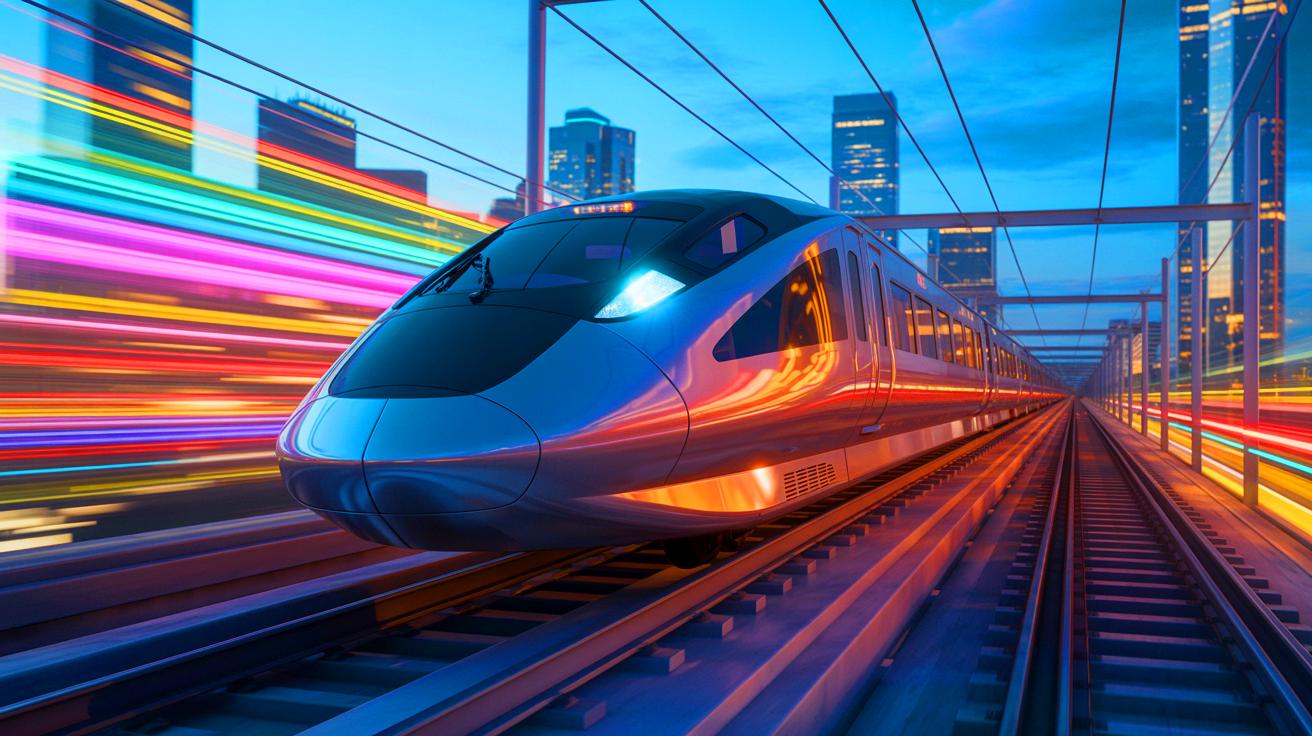
Maglev trains are a marvel of modern engineering. Utilizing powerful magnets, these trains levitate slightly above the tracks, eliminating friction and allowing them to reach higher speeds than conventional trains. The technology has been implemented in countries like Japan and South Korea, where lower-speed Maglev lines are already operational. However, China is ambitiously striving to achieve speeds of up to 500 mph. This speed would drastically reduce travel times, making it possible to cover vast distances in mere hours.
In 2019, China announced its prototype for a Maglev train and subsequently opened a research and development center in Qingdao. By June 2025, the team had achieved a speed of 404 mph, showcasing their progress at the World Congress on High-Speed Rail. While the technology holds great promise, the infrastructure required for such trains is costly and complex. The challenge lies in balancing these costs with the potential benefits of faster travel and reduced congestion on traditional rail lines.
Global Race for High-Speed Dominance
The race to develop the world’s fastest train is not confined to China. Japan, a pioneer in high-speed rail with its Shinkansen, is also investing in Maglev technology. However, their project has faced delays due to political disputes over environmental concerns, particularly the construction of a tunnel through the Japanese Alps. This has pushed back the completion of their Maglev line by nearly a decade.
The United States has also shown interest in Maglev technology, with a proposed line between Washington and Baltimore. However, political disagreements and environmental impact concerns have stalled progress. Despite these challenges, China currently operates the fastest commercial Maglev line, which connects Shanghai and Hangzhou at speeds of 268 mph. As China continues to push the boundaries of rail travel, the global competition for technological supremacy intensifies.
Economic and Environmental Considerations
While the technological capabilities of Maglev trains are impressive, the economic and environmental implications cannot be overlooked. Building and maintaining Maglev infrastructure requires substantial investment. The cost of constructing specialized tracks and stations is significantly higher than that of conventional rail systems. This raises questions about the feasibility and sustainability of widespread Maglev deployment.
Environmental concerns are also at the forefront of the debate. The construction of new lines can disrupt ecosystems and displace communities. Additionally, the energy consumption of Maglev trains, while potentially more efficient than traditional trains, still poses environmental challenges. Balancing technological advancement with sustainability is a critical issue that stakeholders must address as they consider the future of high-speed rail transportation.
China’s Vision for the Future
Despite the challenges, China remains steadfast in its pursuit of high-speed rail dominance. The country sees Maglev technology as a means to bolster its economic growth and global influence. By reducing travel times between major cities, China aims to enhance connectivity and stimulate economic activity. The successful implementation of a 500 mph Maglev train would be a significant achievement, further solidifying China’s position as a leader in transportation innovation.
The implications of such advancements extend beyond national borders. As other countries observe China’s progress, they may feel compelled to accelerate their own high-speed rail initiatives, leading to increased competition and collaboration in the field. This dynamic could shape the future of global transportation, with high-speed rail playing a central role in connecting people and economies.
As China continues to advance its Maglev technology, the world watches with anticipation. The potential benefits of faster, more efficient travel are immense, yet the challenges are equally significant. How China navigates these complexities will have a profound impact on the future of transportation. Will other nations follow suit and invest in similar technologies, or will they opt for alternative solutions to meet their transportation needs?