


| IN A NUTSHELL |
|
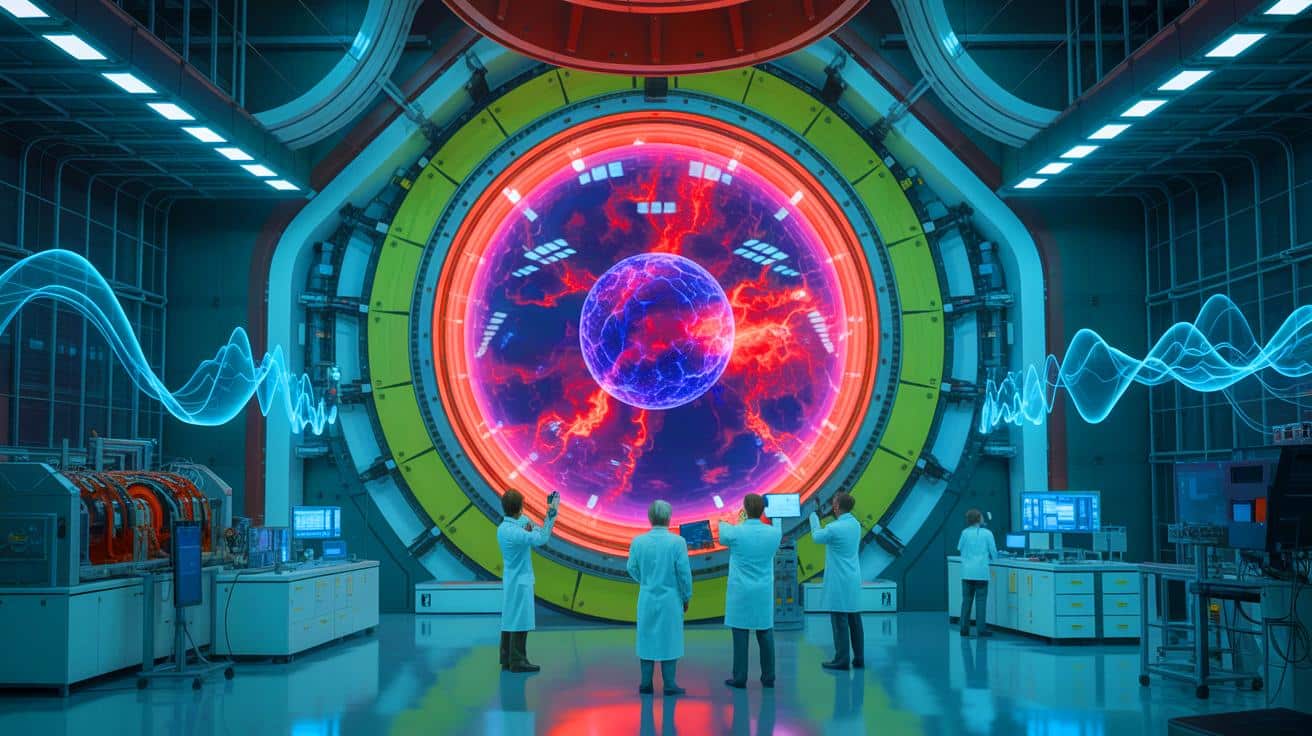
At the forefront of fusion research, scientists at the Wendelstein 7-X (W7-X) facility have made a breakthrough by generating high-energy helium-3 ions using ion cyclotron resonance heating. This milestone in fusion research could pave the way for future advancements in energy production. The W7-X, operated by the Max Planck Institute for Plasma Physics, is a stellarator, an advanced type of fusion reactor. Scientists aim to harness nuclear fusion by containing super-hot plasma, which generates alpha particles necessary for sustaining fusion reactions. If successful, this technology could revolutionize how we produce energy, offering a cleaner, more sustainable alternative to fossil fuels.
Simulating Conditions with Helium-3 Ions
The W7-X facility, although not a full-scale fusion power plant, plays a critical role in simulating conditions necessary for sustained nuclear fusion. Scientists have been utilizing helium-3 ions to mimic the behavior of alpha particles in a controlled environment. This is achieved through a sophisticated technique known as ion cyclotron resonance heating (ICRH).
ICRH involves using high-frequency electromagnetic waves, which are tuned to resonate with the natural frequency of helium-3 ions. This resonance allows the ions to efficiently absorb energy, akin to pushing a child on a swing in perfect rhythm. The result is the acceleration of lighter helium-3 ions to energies that simulate the behavior of alpha particles in a full-scale fusion reaction.
W7-X’s successful use of ICRH to produce high-energy helium-3 ions marks a world first in fusion research. This achievement demonstrates the facility’s capability to replicate and study the conditions necessary for future fusion power plants. The collaboration between several European research institutes, including the Plasma Physics Laboratory of the Royal Military Academy in Brussels, underscores the international effort to advance this groundbreaking technology.
From Nuclear Fusion to Unveiling the Universe’s Mysteries
While the primary goal of this research is to develop a sustainable energy source, the implications extend far beyond Earth. The processes driving helium-3 particles in W7-X may offer insights into some of the sun’s mysteries. Researchers have noted that similar resonant processes could be responsible for the formation of helium-3-rich clouds in the sun’s atmosphere.
These clouds, which contain up to 10,000 times more helium-3 than usual, present a perplexing phenomenon in solar physics. The findings suggest that naturally occurring electromagnetic waves on the sun could selectively accelerate helium-3 particles, forming these massive clouds. This revelation highlights the dual benefits of fusion research, not only shaping future energy sources but also enhancing our understanding of the cosmos.
By linking fusion science on Earth with solar phenomena, researchers are opening new avenues for exploration and understanding. This cross-disciplinary approach exemplifies how advancements in one field can illuminate mysteries in another, providing a richer picture of both our universe and our potential energy future.
The Global Implications of Fusion Research
The success of the W7-X experiment underscores the potential of nuclear fusion as a globally transformative energy source. Unlike traditional nuclear reactors, which rely on fission, fusion promises a cleaner and virtually limitless supply of energy. The use of light elements, such as hydrogen and helium, in fusion reactions eliminates the risk of long-lived radioactive waste.
Fusion energy has the potential to meet the world’s growing energy demands while reducing the environmental impact associated with fossil fuels. As nations grapple with climate change and energy security, the promise of fusion becomes increasingly significant. The international collaboration exemplified by the W7-X project highlights the shared global interest in achieving practical fusion energy.
However, challenges remain in scaling these experimental results to operational fusion power plants. The complexity of maintaining the extreme conditions necessary for fusion and the technical hurdles of building and operating such reactors are significant. Despite these challenges, the progress made by the W7-X team provides a glimpse into a future where fusion could play a central role in the global energy landscape.
Challenges and the Road Ahead
While the achievements at the W7-X facility are promising, the road to practical fusion energy is fraught with challenges. Maintaining the super-hot conditions required for fusion reactions and ensuring the stability of the plasma are significant technical obstacles. The development of materials that can withstand the intense environment inside a fusion reactor is also crucial.
Furthermore, the economic feasibility of constructing and operating fusion power plants remains an open question. The high initial costs and long development timelines pose barriers to widespread adoption. Nonetheless, the potential rewards of clean, abundant energy drive ongoing efforts to overcome these challenges.
As the W7-X team continues their research, the lessons learned will inform future designs and strategies for achieving sustainable fusion energy. The insights gained from this work will not only advance fusion technology but also inspire new approaches to solving the world’s energy challenges.
As scientists push the boundaries of fusion research, the potential for transformative changes in energy production looms large. The path to practical fusion energy is complex, yet filled with promise. What innovations and collaborations will emerge to bring this ambitious endeavor to fruition?