



| IN A NUTSHELL |
|
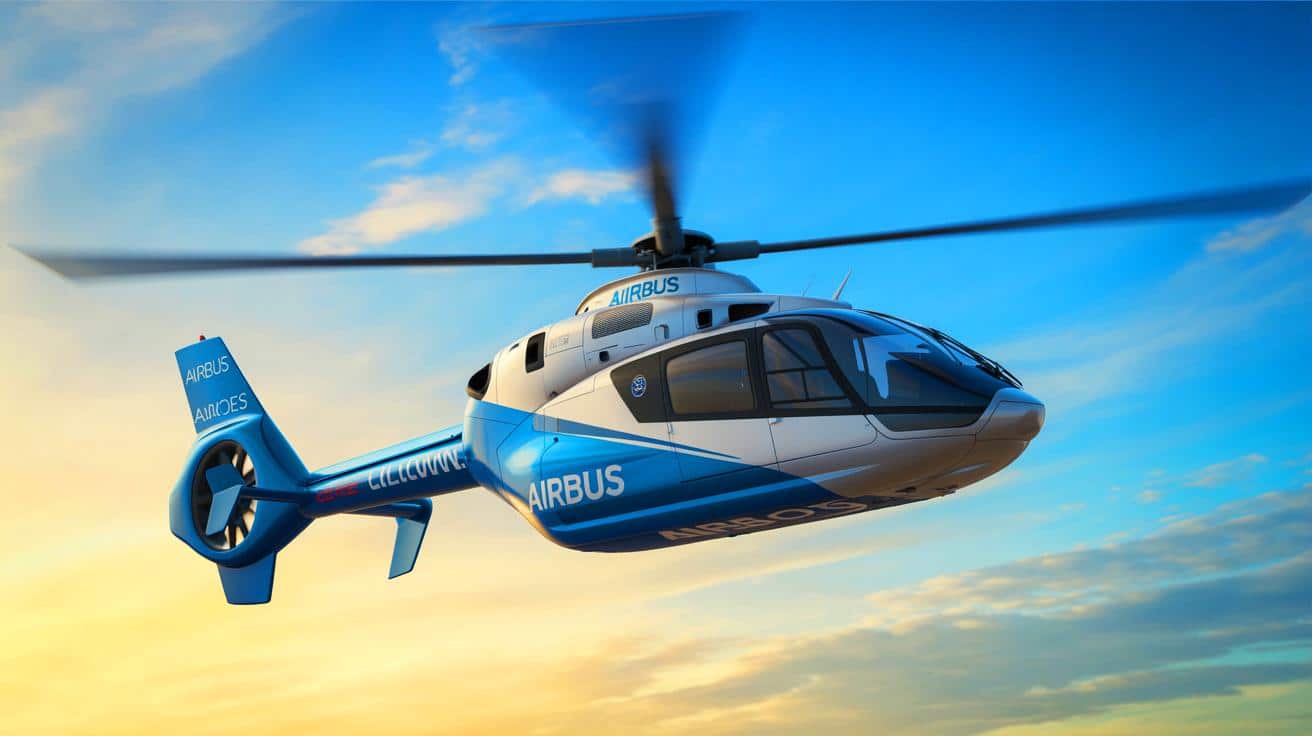
In the ever-evolving landscape of aviation, the Airbus RACER stands as a testament to Europe’s commitment to sustainable flight. The sleek helicopter, unveiled at the Paris Airshow, embodies innovation in design and environmental responsibility. Developed under the auspices of the EU’s Clean Sky 2 program, the RACER aims to reduce CO₂ emissions by 25% compared to traditional helicopters. This prototype not only promises a cleaner future for aviation but also represents a collaborative European effort, drawing expertise from engineers across the continent. As the aerospace industry strives for greener skies, the RACER is a significant step forward.
European Collaboration and Innovation
The Airbus RACER (Rapid and Cost-Effective Rotorcraft) is the product of a decade-long effort under the EU’s Clean Sky 2 program, which ran from 2014 to 2024. This initiative was a public-private partnership between the European Commission and the aeronautics industry, focused on reducing the environmental impact of aviation. The RACER is a culmination of collaborative efforts involving over 40 companies and research organizations from 13 countries.
Engineers Brice Makinadjian and Stephane Deport from Airbus Helicopters played pivotal roles in the development of the prototype. They emphasize the importance of European collaboration in achieving this milestone. The project brought together diverse expertise, allowing for the refinement of aerodynamics, engine integration, and rotor systems. Makinadjian noted, “This partnership has been fundamental. We could not have done this without European collaboration and support.”
The RACER is a symbol of Europe’s commitment to clean aviation and a testament to the power of collaboration.
Commitment to a Cleaner Future
The RACER is part of a larger European mission to achieve climate-neutral aviation. Under the European Green Deal, the EU aims to reach climate neutrality by 2050. The aviation sector is a critical component of this plan, with ambitious goals set by the EU’s Sustainable and Smart Mobility Strategy. By 2035, the strategy aims to have zero-emission aircraft on the market.
Aviation significantly contributes to Europe’s economy, supporting 13.5 million jobs and adding over $1 trillion to the economy, which is 3.6% of all jobs and 4.4% of Europe’s GDP. Axel Krein, executive director at the Clean Aviation Joint Undertaking, acknowledges the importance of maintaining Europe’s aerospace leadership. “Currently, Europe holds a 58% market share of new civil aircraft worldwide,” Krein stated. “But this leadership is not guaranteed in the face of global competition and geopolitical shifts.”
| Aspect | Europe’s Contribution |
|---|---|
| Jobs Supported | 13.5 million |
| Economic Contribution | Over $1 trillion |
| Market Share | 58% of new civil aircraft |
Pioneering Technological Advances
After more than a decade of development, the RACER showcases groundbreaking technologies that could redefine helicopter design. The aircraft’s aerodynamic design and side-mounted lateral rotors enable it to cruise at over 273 miles per hour, significantly faster than conventional helicopters. This enhanced speed is achieved through reduced air resistance, or drag, which is 2.5 times lower than that of other helicopters in its weight class.
One of the key innovations is the main rotor’s redesign, which reduces its speed for increased stability. Additionally, wings with lateral rotors provide forward thrust, allowing the RACER to glide like an airplane during certain flight phases. This unique combination makes the RACER a hybrid between a helicopter and a fixed-wing aircraft.
“We have a lower drag than the smallest helicopters on the market today,” Makinadjian explained, highlighting the RACER’s efficiency.
Eco Mode: A Step Towards Greater Efficiency
The RACER is equipped with an innovative Eco Mode system developed by Safran. Similar to the start-stop function in modern cars, this system allows one of the two engines to be put on standby during cruise flight. This reduces CO₂ emissions and fuel consumption by about 15%, while also increasing the helicopter’s range.
UK’s $300 Million Investment in Satellite Tech Shatters Net Zero Goals: “Unprecedented Leap Forward”
Engineer Stephane Deport noted, “We can fly at 217 miles per hour on only one engine. But we also need to be able to restart the other engine instantly to keep it safe.” This feature, along with improved aerodynamics, allows the RACER to use 25% less fuel than conventional helicopters.
The RACER’s speed and efficiency make it suitable for various applications, including emergency medical services and search and rescue operations. Makinadjian pointed out, “Emergency response helicopters need to be fast, and noise reduction is key to performing operations close to inhabited areas.”
As the RACER continues its journey from prototype to potential market player, it raises an intriguing question: How will this innovative approach to rotorcraft design influence the future of aviation, and what new possibilities will it unlock for both commercial and emergency applications?