




| IN A NUTSHELL |
|
NASA’s journey with artificial intelligence (AI) has been a transformative one, with the agency leveraging AI technologies to enhance its operations both on Earth and in space. From mission planning to anomaly detection, AI has become an integral component of NASA’s toolkit. These advancements not only streamline decision-making processes but also foster a more efficient workforce. In a conversation with David Salvagnini, NASA’s Chief Artificial Intelligence Officer, we delve into how AI is reshaping NASA’s trajectory and what the future might hold for these groundbreaking technologies.
The Role of AI in NASA’s Endeavors
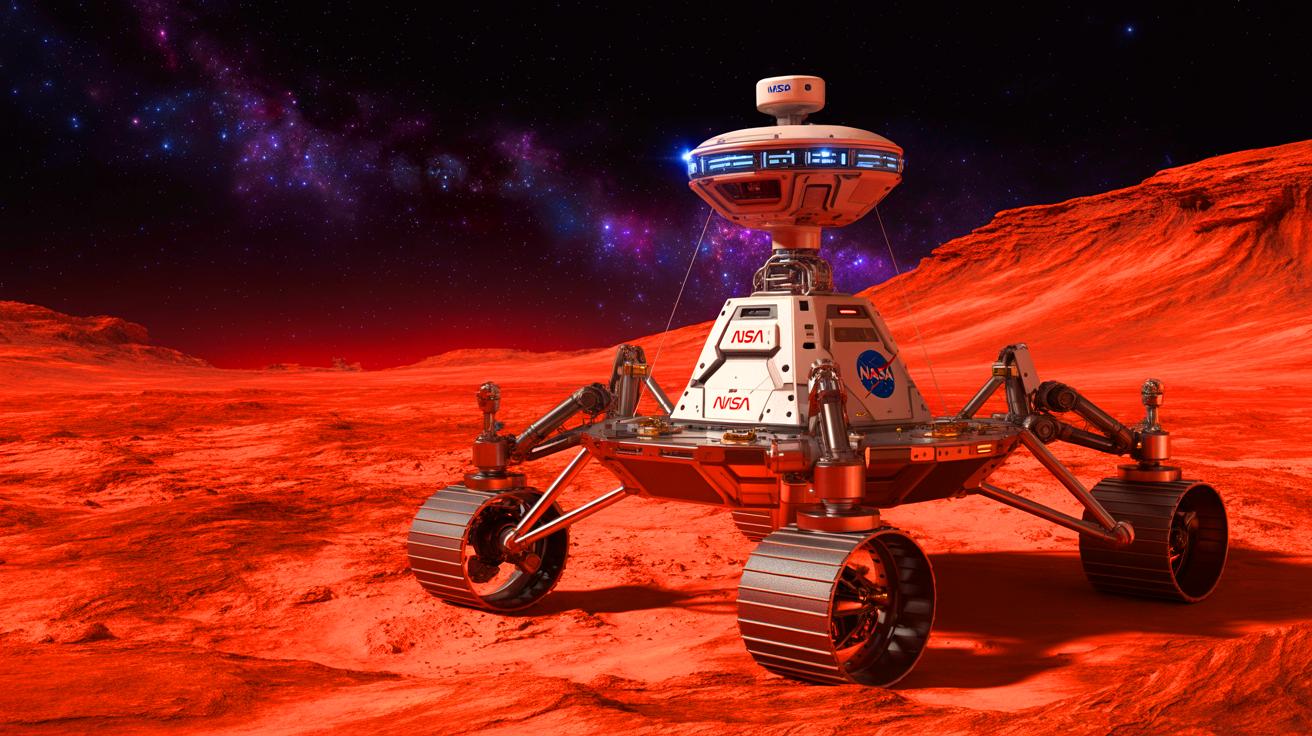
NASA’s incorporation of AI technologies spans across various domains, offering significant contributions to scientific discovery and mission autonomy. A prime example of AI’s impact is ExoMiner, a tool that employs machine learning to identify exoplanets from historical data. This demonstrates AI’s potential to uncover celestial objects that were previously undetectable. Furthermore, NASA’s Mars Perseverance Rover exemplifies the use of onboard AI for navigating the Martian terrain autonomously, circumventing the latency issues that would arise from Earth-based control.
AI’s application in space extends to climate and weather modeling, with collaborations such as the AI Prithvi-weather-climate foundational model with IBM. This initiative provides scalable solutions for weather prediction and climate analysis, emphasizing the collaborative efforts in AI innovation. Despite the absence of cloud computing resources in space, NASA continues to innovate with AI under challenging conditions, accounting for factors like radiation exposure and power constraints.
AI’s Future Impact on NASA’s Missions
Looking ahead, AI is poised to revolutionize various aspects of NASA’s operations. One promising area is the enhancement of adaptive and autonomous systems. For instance, AI can provide spacecraft with improved situational awareness, enabling them to react dynamically to changing environmental conditions. This autonomous capability is crucial for operations both in orbit and on planetary surfaces, ultimately leading to more reliable and efficient missions.
AI’s role in addressing orbital debris is also gaining prominence. As space activities increase, the potential for debris-related incidents grows. AI can aid in the detection and mitigation of such debris, contributing to NASA’s Space Sustainability Strategy. Moreover, AI-driven communication systems are expected to optimize data transmission, selecting the best communication pathways based on real-time conditions.
Recent AI-Focused Projects
Recent projects underscore AI’s versatility in advancing NASA’s objectives. The Prithvi climate model is a notable example, offering new insights into weather and climate phenomena. Additionally, AI is being utilized in structural design, producing non-linear components that outperform human-designed counterparts in testing scenarios.
NASA’s Mars Perseverance Rover and Ingenuity Mars Helicopter exemplify AI’s role in Mars exploration, showcasing the potential of adaptive AI systems in extraterrestrial environments. Furthermore, AI is being developed to support medical emergencies during long-duration human spaceflights, providing astronauts with diagnostic tools to manage health issues autonomously.
Challenges in Implementing AI Technologies
Despite the promising developments, implementing AI in space presents unique challenges. Space-based systems face extreme environmental conditions, including radiation and power limitations. Unlike Earth-based operations, these systems cannot rely on cloud computing for data processing, necessitating onboard solutions.
Ethical considerations also play a crucial role in AI’s adoption. Concerns about privacy, transparency, and responsible use must be addressed. NASA is committed to ensuring that AI technologies are implemented ethically, fostering a culture of innovation while managing risks effectively. The agency’s trailblazing spirit encourages embracing new technologies, recognizing the balance between innovation and risk management.
As NASA continues to explore the potential of AI, the agency faces both opportunities and challenges. The future of AI in space promises remarkable advancements, but also requires careful consideration of ethical and technical aspects. What other breakthroughs might AI enable for NASA and the broader space exploration community in the coming years?



Wow, AI in space! 🚀 What’s next, a robot takeover on Mars? 😂
Impressive use of AI by NASA. But how do they ensure data security in space?
Finally, AI is doing something useful instead of just suggesting cat videos. 🐱
The collaboration with IBM sounds interesting. Can other companies join?
Great article! Thanks for the detailed insights. 🌟
Isn’t there a risk of AI making wrong decisions in critical missions?