

| IN A NUTSHELL |
|
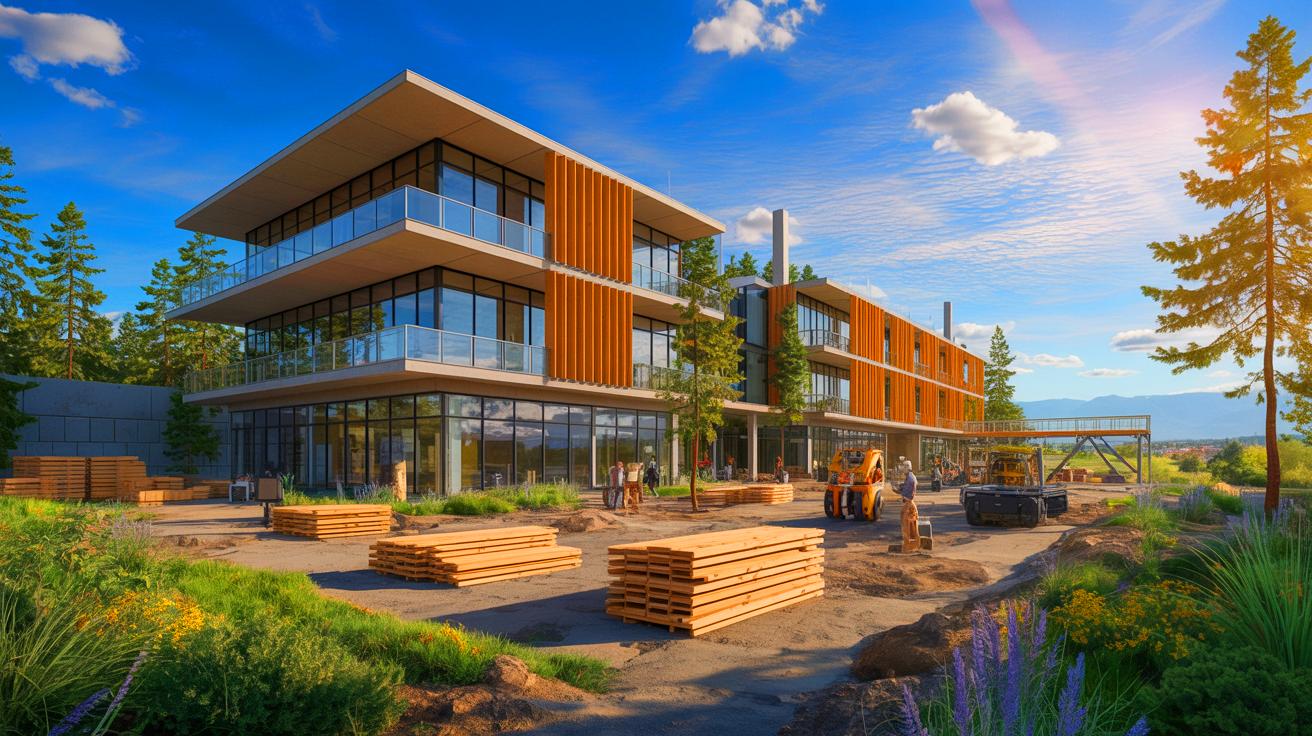
The University of British Columbia’s Okanagan campus (UBCO) is pioneering efforts toward a more sustainable future through its Green Construction Research and Training Centre (GCRTC) and Materials and Manufacturing Research Institute (MMRI). These institutions are at the forefront of transforming the construction industry by integrating sustainable practices and fostering a circular economy. With innovative research, strategic collaborations, and a commitment to environmental stewardship, UBCO is addressing the pressing need for reducing the ecological impact of construction. As climate change demands urgent action, the initiatives at UBCO offer a promising blueprint for sustainability.
Transforming Construction Through Innovation
The GCRTC plays a critical role in the construction industry by addressing its significant contribution to global greenhouse gas emissions and natural resource depletion. By focusing on environmentally friendly practices, the GCRTC aims to reduce the sector’s ecological footprint. Through collaboration between academia and industry, the center fosters innovation in green construction. Its primary goal is to expand knowledge and implement sustainable practices in materials and construction management. This approach ensures the development of infrastructure that is not only durable but also energy-efficient and affordable.
The GCRTC’s work is not limited to theoretical research. It actively engages in real-world applications that demonstrate the viability of sustainable construction practices. By integrating new technologies and materials, the center is setting new standards for the industry. This includes innovative material substitutions and design strategies aimed at reducing embodied and operational carbon. The center’s efforts extend to training future professionals, ensuring that sustainability becomes a core consideration in construction practices.
Nuclear Energy in America: ‘This Is the Only Way Forward’ for Our Economy and Society’s Future
Advancing a Circular Economy
Central to the GCRTC’s mission is the promotion of a circular economy within the construction sector. This approach seeks to minimize waste and maximize resource efficiency, redefining the lifecycle of buildings and infrastructure. By treating construction materials as valuable resources rather than disposable waste, the GCRTC is changing the narrative around construction and demolition materials. This has led to innovative projects focused on material recovery and reuse, significantly reducing the sector’s waste output.
The GCRTC’s initiatives include the use of recycled concrete aggregates, wood fly ash as a cement replacement, and crumb rubber in concrete. Each project exemplifies how waste products can be transformed into valuable resources, thus reducing landfill contributions. These innovations align with global sustainability goals and demonstrate the potential for construction practices to evolve toward a more sustainable model.
Collaborative Efforts and Strategic Partnerships
The GCRTC’s success is amplified by its collaborations with diverse stakeholders, including public agencies, private firms, and non-profit organizations. By fostering a vibrant ecosystem of collaboration, the center extends its impact beyond academia. Partnerships with funding bodies and governmental organizations underscore the national importance of the center’s work. Such collaborations are essential for integrating sustainable practices into urban planning and infrastructure development.
The GCRTC’s collaborative activities ensure that its research findings are not only theoretical but also practical and applicable. By working closely with municipalities and provincial bodies, the center helps to integrate sustainability into broader development goals. This approach not only benefits the construction industry but also contributes to Canada’s sustainable development objectives.
Educational Initiatives and Knowledge Dissemination
The GCRTC’s influence extends deeply into academia, promoting sustainable practices and the circular economy within the construction sector. Through multi-disciplinary research, the center brings together experts from various fields to tackle complex challenges. This comprehensive approach ensures that innovative solutions are developed for green construction.
The center is committed to training the next generation of engineers and professionals. Through hands-on research opportunities and specialized courses, students gain the expertise needed to implement sustainable principles in their careers. The GCRTC also actively disseminates its research findings through publications, workshops, and seminars, fostering a vibrant intellectual environment that accelerates the adoption of sustainable solutions.
As the world faces increasing environmental challenges, the initiatives at UBCO provide a hopeful path forward. By prioritizing sustainability and circular economy principles, the GCRTC and MMRI are making significant strides in transforming the construction industry. Their innovative approaches not only reduce carbon footprints but also offer economic opportunities and environmental benefits. What further steps can be taken to ensure these practices are adopted more widely across the industry?