



| IN A NUTSHELL |
|
In recent years, the field of gravitational wave detection has witnessed a transformative leap forward, thanks to the integration of artificial intelligence. A groundbreaking project involving the AI known as Urania has led to the development of innovative gravitational wave detectors, sparking curiosity and excitement among physicists. These designs not only push the boundaries of existing technology but also challenge our understanding of the cosmos, showcasing AI’s potential to revolutionize scientific discovery. As we delve into the capabilities of these new detectors, it becomes clear that the future of exploring gravitational waves is bright and full of potential.
From Einstein’s Vision to AI’s Imagination
Physicist Albert Einstein laid the foundation for our understanding of gravitational waves back in 1916. His theory suggested that massive objects in space could create ripples in the fabric of spacetime. Fast forward a century, and the Laser Interferometer Gravitational-Wave Observatory (LIGO) successfully detected these waves, confirming Einstein’s predictions. The collaboration between LIGO researchers and Dr. Mario Krenn’s team aimed to enhance current detector designs using artificial intelligence.
Urania, the AI developed by the team, was tasked with creating advanced gravitational wave detector designs using interferometry, a technique that measures subtle changes in wave patterns. This approach involved fine-tuning the detector parameters and optimizing their layout. With the help of machine learning, Urania was able to propose innovative designs that could potentially lead to breakthroughs in gravitational wave detection, thereby expanding our understanding of the universe.
New “Alien” Detector Designs
The AI-driven designs developed by Urania have demonstrated extraordinary potential, with some outperforming existing concepts for future detectors. These new designs offer increased sensitivity and a broader detection range for gravitational wave signals, marking a significant advancement in the field. While some of Urania’s designs align with known processes, others present unconventional ideas that scientists are still striving to comprehend fully.
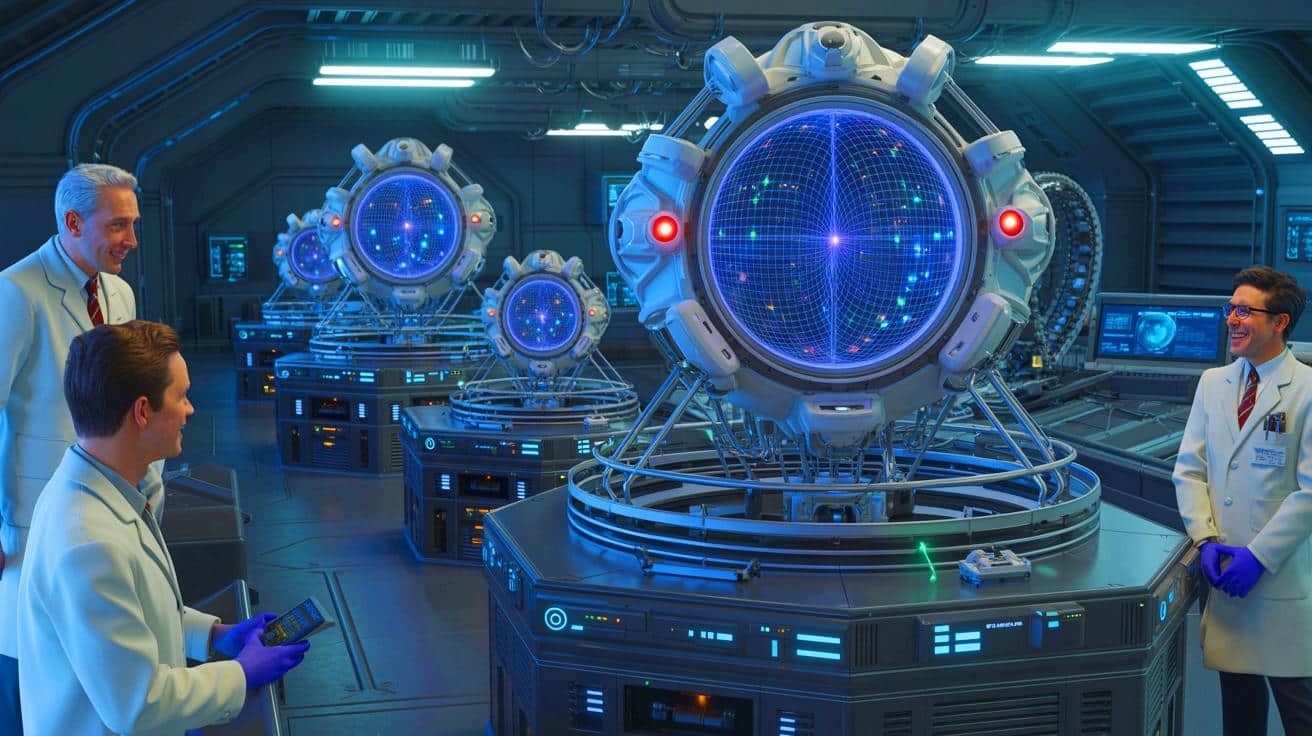
Dr. Krenn noted that after two years of development, Urania produced dozens of new solutions that surpass the experimental blueprints devised by human scientists. To facilitate further research, the team has made 50 of these top-performing designs available in a publicly accessible “Detector Zoo”. This initiative encourages collaboration and exploration, as researchers work to unravel the mysteries behind Urania’s novel concepts. As Krenn aptly put it, we are entering an era where machines can discover super-human solutions, leaving humans to decipher and understand these advancements.
The Role of AI in Scientific Discovery
The advent of AI in scientific research represents a paradigm shift, where machines like Urania play a crucial role in accelerating discovery and innovation. In the context of gravitational wave detection, AI offers a powerful tool for exploring complex problems and generating solutions that may elude human scientists. By automating the design and optimization processes, AI frees researchers to focus on interpreting results and uncovering the underlying principles driving these discoveries.
The impact of AI extends beyond gravitational wave detection, with potential applications in various scientific disciplines. As AI technology continues to evolve, its integration into research practices is poised to revolutionize the way we approach scientific problems, leading to new insights and breakthroughs. The work by Dr. Krenn and his team exemplifies the potential of AI to augment human capabilities, opening new avenues for exploration and understanding in the scientific community.
Future Prospects in Gravitational Wave Research
The discoveries made possible by Urania’s designs signal a promising future for gravitational wave research. As scientists continue to explore these new detector concepts, the potential for uncovering previously undetectable cosmic phenomena grows. The insights gained from these advancements could provide a deeper understanding of the universe’s most enigmatic features, including black holes and neutron stars.
Looking ahead, the collaboration between AI and human researchers will likely become a staple in scientific inquiry, fostering an environment where creativity and innovation flourish. As we embrace the capabilities of AI, we must also consider the ethical and philosophical implications of machine-generated discoveries. The challenge lies in balancing technological progress with a deep understanding of the natural world. What new horizons will AI-driven science unlock in the coming years?