



| IN A NUTSHELL |
|
In a groundbreaking astronomical discovery, the James Webb Space Telescope may have identified a new planetary neighbor orbiting Alpha Centauri A, the closest Sun-like star to Earth. This potential gas giant, located just four light-years away, represents a significant find in the search for exoplanets. If confirmed, it would be the closest planet ever found in the habitable zone of a Sun-like star, offering valuable insights into a nearby solar system. This discovery could mark a pivotal moment in exoplanetary science, challenging our understanding of planetary formation and dynamics in binary star systems.
Alpha Centauri: Our Closest Cosmic Neighbor
The Alpha Centauri star system, visible from Earth’s Southern Hemisphere, consists of three stars: Alpha Centauri A, Alpha Centauri B, and the faint red dwarf Proxima Centauri. While Proxima Centauri has already been confirmed to host three planets, finding planets around the brighter Alpha Centauri A and B has proven more challenging. Alpha Centauri A is the third-brightest star in our night sky, and its proximity to Alpha Centauri B complicates observations. Any planetary discovery here would provide a unique opportunity to study a solar system remarkably similar to our own.
Given its proximity, Alpha Centauri has long been a target for astronomers seeking to understand nearby star systems. The presence of a gas giant within this system would not only be a scientific milestone but also a testament to the capabilities of modern astronomical technology. Such a discovery would pave the way for more detailed studies, potentially unveiling new aspects of planetary formation and evolution.
Cutting-Edge Observations With Webb
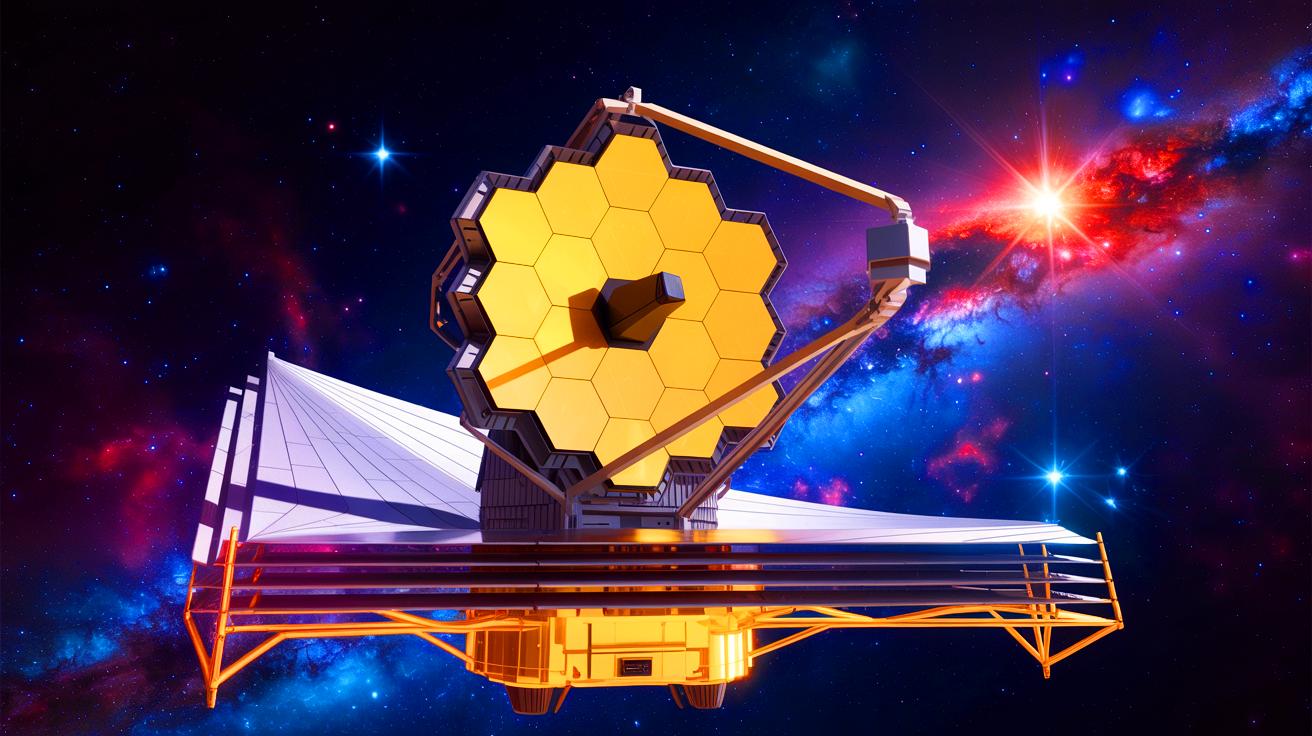
The detection of the potential gas giant was made possible by the James Webb Space Telescope’s Mid-Infrared Instrument (MIRI). This instrument utilized a coronagraphic mask to block out the intense glare of Alpha Centauri A, allowing astronomers to detect a faint object over 10,000 times dimmer than the star. The detection occurred in August 2024, with the object being located at approximately twice the Earth-Sun distance from Alpha Centauri A.
The presence of Alpha Centauri B further complicated the analysis due to its additional light. However, careful subtraction of the glow from both stars revealed the mysterious candidate, sparking excitement among the scientific team. This breakthrough underscores the advanced capabilities of the James Webb Space Telescope in imaging exoplanets, a task that was once deemed nearly impossible, especially around bright, nearby stars.
The Mystery of the Disappearing Planet
Following the initial detection, astronomers attempted follow-up observations in February and April 2025 using Webb’s Director’s Discretionary Time. Unfortunately, these observations failed to spot the object again. Instead of dismissing the find, scientists conducted millions of computer simulations to model potential orbits. The results indicated that in nearly half of the scenarios, the planet would have moved too close to Alpha Centauri A, making it invisible to Webb at the time of the later observations.
The simulations suggest the object is a gas giant, roughly the mass of Saturn, with an elliptical orbit ranging from one to two times Earth’s orbital distance from the Sun. This finding is consistent with previous hints of a potential exoplanet in the Alpha Centauri system, strengthening the case for a genuine planetary companion. Such a discovery would be significant, offering new insights into the formation and stability of planets in binary star systems.
Why This Potential Gas Giant Matters
If the detection of this potential gas giant holds true, it would represent the closest directly imaged planet to a Sun-like star, sharing similar temperature and age characteristics with our gas giants. Its proximity to Earth makes it an ideal candidate for future study, providing an opportunity to observe a planetary system beyond our own with unprecedented detail. Furthermore, its presence in a binary system challenges existing models of planet formation and survival in dynamic environments.
The find highlights the expanding capabilities of the James Webb Space Telescope in directly imaging exoplanets. Further observations are necessary to confirm the existence of the gas giant and refine its orbital details. If verified, this discovery could significantly influence the next decade of exoplanetary research, offering the closest and clearest view yet of a planetary system outside our own.
The potential discovery of a gas giant orbiting Alpha Centauri A represents a thrilling advancement in the field of astronomy. As we await further confirmation and study, this finding invites us to reconsider our understanding of planet formation and dynamics in binary systems. How will this discovery shape our future exploration of nearby star systems, and what other mysteries might the universe hold just beyond our reach?