




| IN A NUTSHELL |
|
In a groundbreaking achievement, researchers have successfully crafted the simplest artificial cell capable of chemical navigation, a development that mirrors the innate ability of living cells to move toward or away from chemical stimuli. This study, published in Science Advances, details the creation of a “minimal cell,” essentially a tiny lipid vesicle or microscopic bubble that can propel itself using chemotaxis. Conducted by scientists at the Institute for Bioengineering of Catalonia (IBEC), this research holds significant implications for understanding cellular behavior and engineering future synthetic systems. The study’s innovative approach offers a window into the core principles of cellular motion and communication.
Unveiling the Mechanics of Artificial Cell Movement
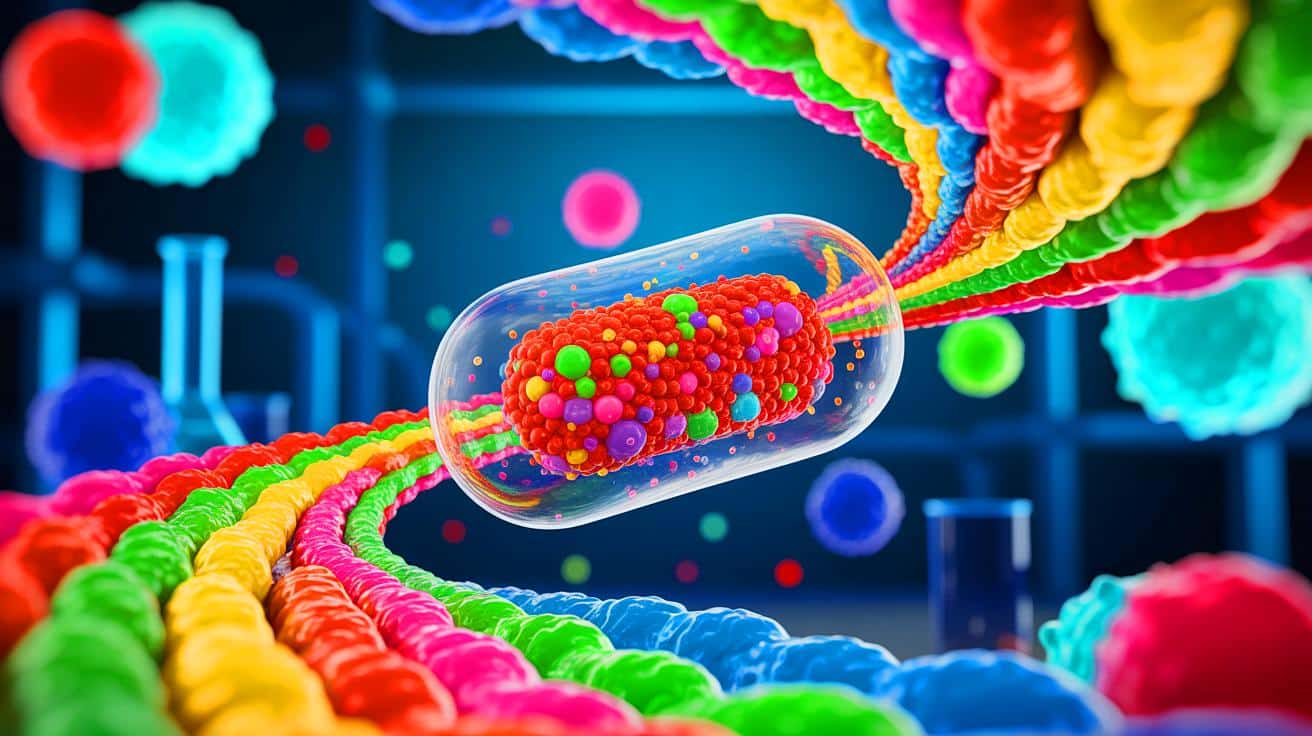
The researchers at IBEC embarked on an intricate journey to decode cellular motion by observing cell-like vesicles exposed to varying concentrations of substances like glucose and urea. These vesicles were equipped with enzymes, such as glucose oxidase or urease, encapsulated within lipid-based structures known as liposomes. The enzymes played a pivotal role in converting these substances into their final products. Essential to this process was the inclusion of a membrane pore protein within the liposomes. The pores acted as channels for chemical exchange, facilitating movement.
This approach can be likened to a boat driven by an engine and navigation system, where the enzyme and pore guide the vesicle toward its target. The researchers leveraged the concept of “breaking symmetry” to generate fluid flow that propels the vesicle in a specific direction. By trapping enzymes inside the vesicle and using pores to swap chemicals, an uneven concentration is created around the particle, resulting in a directed motion. Analyzing over 10,000 vesicles, the IBEC team found that increasing the number of pores enhanced the artificial cells’ chemotactic response, enabling them to move directly toward higher concentrations of desired substances.
Exploring the Fundamentals of Cellular Functioning
Professor Battaglia, ICREA Research Professor at IBEC and leader of the study, underscores the potential of simplifying biological systems to unveil the foundational principles of cellular communication and transport. By constructing an artificial cell with just a fatty shell, a single enzyme, and a pore, researchers aim to demystify the elegant chemistry underlying complex biological processes. This minimalist approach, intrinsic to synthetic biology, offers a blueprint for understanding nature’s navigation systems. “These synthetic cells are like blueprints for nature’s navigation system. Build simple, understand profoundly,” Battaglia explains, emphasizing the profound insights that can be gained from these engineered cells.
The creation of such synthetic cells is not merely an academic exercise; it provides a window into how early, simple cellular units might have evolved into the intricate life forms we observe today. The study illuminates the pathways through which synthetic biology can advance our comprehension of cellular mechanisms, potentially revolutionizing the field of bioengineering.
Implications for Future Research and Applications
The implications of this research extend beyond academic curiosity. The ability to engineer artificial cells offers valuable insights into the evolution of cellular complexity and could pave the way for innovative applications in medicine and biotechnology. By understanding how these minimal cells function, scientists can explore new avenues for drug delivery, targeted therapies, and the development of bio-inspired materials. The study’s findings highlight the potential for synthetic biology to address challenges in fields ranging from healthcare to environmental sustainability.
As researchers continue to delve into the intricacies of cellular behavior, the creation of artificial cells capable of chemotaxis represents a significant step forward. It underscores the potential for synthetic biology to unlock new frontiers in science and technology, offering exciting possibilities for future exploration and application.
The Path Forward: Questions and Challenges
The journey of understanding and engineering artificial cells is fraught with questions and challenges. While the current research provides a robust framework for exploring cellular motion, numerous questions remain. How can these artificial systems be further refined to enhance their functionality and efficiency? What ethical considerations arise from the creation and potential deployment of synthetic cells? As the field of synthetic biology continues to evolve, addressing these questions will be critical to harnessing the full potential of artificial cells.
As scientists push the boundaries of what is possible in synthetic biology, they are tasked with not only advancing scientific knowledge but also navigating the ethical and societal implications of their work. How will the development of artificial cells shape our understanding of life and its origins in the years to come?