




| IN A NUTSHELL |
|
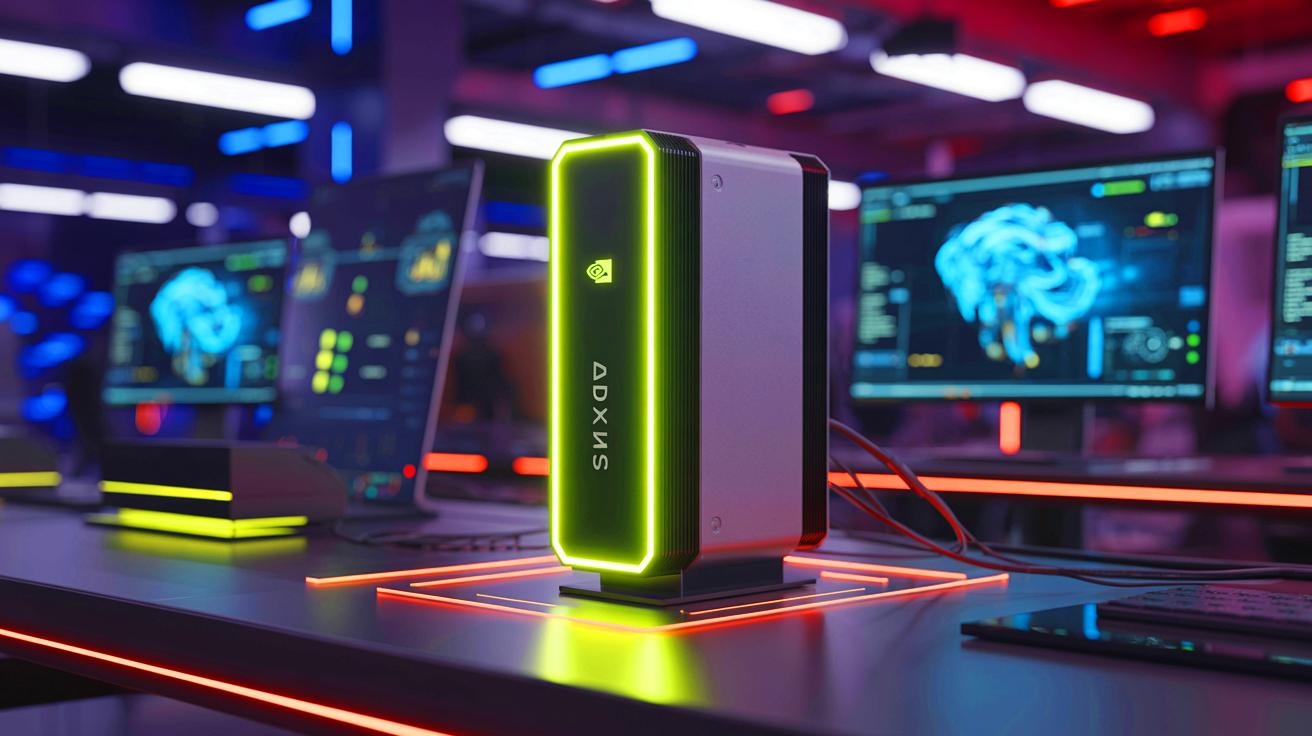
Nvidia’s recent unveiling of its DGX desktop supercomputers marks a new chapter in the evolution of artificial intelligence technology. At the keynote event, CEO Jensen Huang introduced two groundbreaking systems: the DGX Spark and DGX Station. Both systems are powered by the innovative Grace Blackwell platform and are designed to cater to the growing demands of AI developers, researchers, and data scientists. These systems promise to make AI development more accessible, offering the ability to run large AI models locally. This announcement signals a pivotal moment in computing, with significant implications for the future of AI applications and development.
AI Supercomputers for the Desktop
Nvidia’s DGX Spark and DGX Station are being touted as “personal AI supercomputers.” This ambitious concept aims to bring high-performance AI capabilities directly to the desktop, allowing developers to prototype and fine-tune AI models with unprecedented ease. Built on the Grace Blackwell platform, these systems are a response to the rapid transformation AI has brought to computing. Jensen Huang noted,
“AI has transformed every layer of the computing stack.”
In essence, these new systems are designed for AI-native developers who need robust machines capable of handling demanding AI applications.
The DGX Spark features the GB10 Grace Blackwell Superchip, which integrates a Blackwell GPU and fifth-generation Tensor Cores. This setup delivers up to 1,000 trillion operations per second, making it a powerful tool for AI development. Meanwhile, the DGX Station takes things further with its GB300 Grace Blackwell Ultra Desktop Superchip, offering 784GB of coherent memory and networking speeds up to 800Gb/s through the ConnectX-8 SuperNIC. These specifications highlight the systems’ potential to revolutionize desktop AI computing.
A New Era in AI Development
The introduction of DGX systems signifies a shift towards more integrated AI development environments. Prior to this, many AI developers relied on cloud-based solutions to run large AI models, which often posed challenges in terms of cost and latency. The DGX systems, however, offer a hybrid solution: they can function as standalone AI labs or as “bridge systems” that facilitate transitions from desktop to cloud, minimizing code changes. This flexibility is crucial for developers working on complex AI projects.
Moreover, the DGX architecture serves as a prototype for other manufacturers, enabling them to produce similar systems. Asus, Dell, HP, and Lenovo are among the major companies that will develop and sell these systems. This collaborative approach not only democratizes access to advanced AI technology but also encourages innovation across the industry. As Nvidia continues to push the boundaries of AI computing, the DGX systems are likely to become a benchmark for future developments.
Industry Collaboration and Market Impact
With the DGX systems, Nvidia has initiated a collaborative effort with several prominent manufacturers. Companies like Asus, Dell, HP, and Lenovo will be producing and selling the DGX Spark and DGX Station. This collaboration underscores the industry’s recognition of the growing importance of AI in computing. By partnering with these companies, Nvidia aims to expand the reach of its AI solutions, making them accessible to a broader audience.
While Nvidia did not disclose pricing details, it’s clear that the DGX systems are positioned as premium products. In January, the company hinted that a base-level DGX Spark-like computer would retail for around $3,000. This price point reflects the systems’ advanced capabilities and the significant investment in research and development. As more manufacturers come on board, the competition could drive prices down, making these powerful tools available to a wider range of professionals.
Future Prospects and Challenges
The introduction of DGX systems is a testament to Nvidia’s commitment to advancing AI technology. However, integrating such high-performance systems into everyday workflows presents certain challenges. Ensuring compatibility with existing software and infrastructure is crucial for widespread adoption. Additionally, as these systems become more prevalent, there will be a need for skilled professionals who can effectively utilize their capabilities.
Looking forward, the success of the DGX systems will depend on their ability to deliver on their promise of enhanced AI development. As Nvidia continues to innovate, the potential for AI to transform various industries grows ever larger. The company’s vision for AI-native computers could shape the future of technology, but it also raises questions about accessibility and the digital divide. As AI technology becomes more sophisticated, how can we ensure that its benefits are equitably distributed across society?